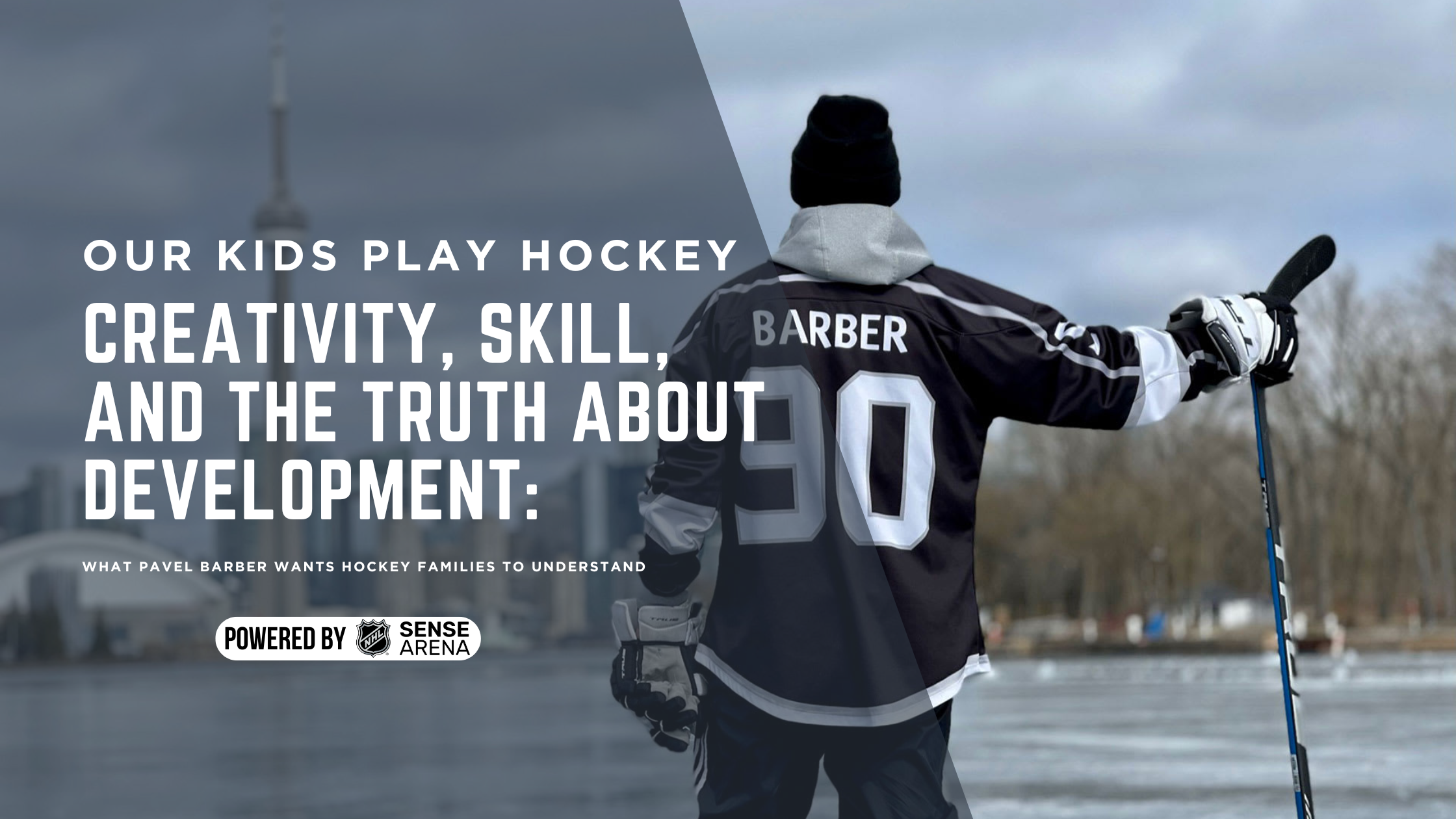
Creativity, Skill, and the Truth About Development: What Pavel Barber Wants Hockey Families to Understand
If you’ve spent any time around youth hockey lately, you’ve probably seen it.
A player pulls off a toe drag at center ice…
Another attempts a Michigan from the corner…
Parents cheer. Coaches cringe. Everyone debates.
So where does creativity fit in today’s game?
In this episode of Our Kids Play Hockey, the hosts sit down with Pavel Barber — one of the most influential skill developers of this generation — to unpack a conversation hockey desperately needs: it’s not about whether kids should have creativity… it’s about whether they understand application.
And coming from Pavel, the message carries serious weight.
Creativity Isn’t the Problem — Misunderstanding Is
One of the most important points Pavel makes is simple but often overlooked:
“It’s one thing to know a move. It’s another thing to apply it in a game.”
Creativity isn’t about being flashy.
It’s about solving problems.
A toe drag isn’t a highlight move — it’s a lateral fake.
Going between the legs isn’t showboating — it’s puck protection.
When kids are taught why a move exists, not just how to perform it, creativity becomes purposeful instead of reckless.
Stop Labeling Skills as ‘Flashy’
Labels matter — especially with kids.
When players hear “don’t be flashy,” what they often hear is:
“Don’t try.”
Pavel challenges parents and coaches to move away from outdated language and instead ask better questions:
What advantage were you trying to create?
What did you see?
Why did you choose that option?
Those conversations preserve creativity while building hockey IQ — and that’s where real development happens.
The Surprising Truth: Skating Still Comes First
This might be the biggest mic-drop moment of the episode.
Despite being known worldwide for puck skills, Pavel is crystal clear:
Skating is the most important skill in hockey.
You can:
Be a great skater with average hands and go far
Have elite hands with poor skating and hit a ceiling fast
Hands create options — but skating creates the time and space to use them.
Skill development without skating is like building a house without a foundation.
Failure Isn’t the Enemy — It’s the Teacher
One of the most powerful segments of the conversation centers on failure.
Pavel breaks it down into two types:
✅ Good failure: Focused effort, clear intent, learning afterward
❌ Bad failure: No focus, no feedback, no growth
Kids don’t need fewer mistakes.
They need better framing around mistakes.
When players understand why something didn’t work, they gain confidence — not fear.
Making the “Boring Stuff” Fun Again
Speed deception. Puck protection. Getting to scoring areas.
These aren’t boring skills — they’re scoring skills.
Pavel emphasizes gamification:
Small-area games
Timed drills
Competitive challenges
Rewarding movement away from the puck
When kids chase improvement instead of perfection, development accelerates naturally.
A Message Every Hockey Family Should Hear
The takeaway from this episode isn’t anti-skill.
It’s pro-understanding.
Let kids explore
Teach them context
Ask questions instead of issuing commands
Celebrate effort and learning — not just results
Creativity thrives when kids feel safe to think, not scared to fail.
And as this conversation makes clear, hockey doesn’t need less imagination — it needs better guidance.
🎧 Be sure to listen to Part 2, where we dive deeper into Pavel’s personal journey, discipline, and what truly separates elite performers from the rest.
Thanks for being part of the Our Kids Play Hockey community — we’ll see you on the next episode. 🏒💙

The Truth About Hockey ID Skates: A Parent’s Guide to Pre-Skates & Tryouts