How Cognitive Training Builds Smarter Hockey Players: Insights from Satoshi Takano
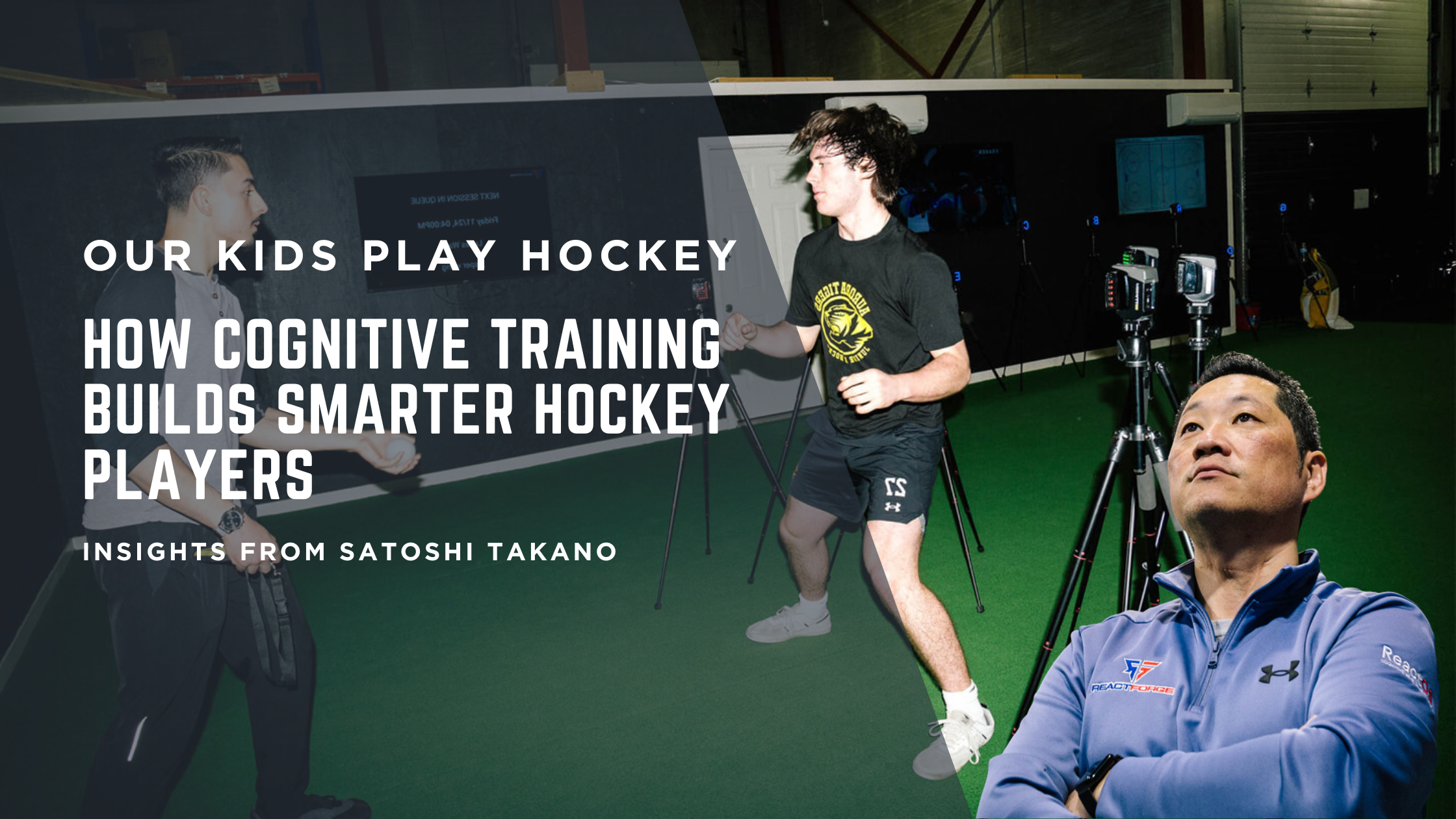
🧠 How Cognitive Training Builds Smarter, More Confident Hockey Players
Featuring insights from cognitive-performance innovator Satoshi Takano
Hockey parents hear it all the time: “Your kid needs more Hockey IQ.”
But what does that actually mean? And more importantly — how do kids learn it?
In this week’s episode of Our Kids Play Hockey, we sat down with Satoshi Takano, founder of ReactForge Cognitive Performance Institute and creator of ReactView, to explore a part of the sport that often goes unnoticed but impacts every single shift: the brain.
And what we learned is reshaping the way families and coaches think about development.
🧩 What Hockey IQ Really Means
Parents often associate “hockey intelligence” with talent, speed, or aggressiveness. But according to Satoshi, none of those things define Hockey IQ.
Hockey IQ is the ability to read, predict, and influence the game — especially when you don’t have the puck.
And since players spend about 95% of the game without it, this skill may matter more than anything else.
Great players aren't just fast.
They’re smart in how, when, and why they move.
They know:
When to accelerate
When to slow down
Where open ice is forming
How to trap defenders
When a teammate is about to turn the puck over
What angle will cut off pressure before it arrives
The game becomes less about reacting and more about anticipating.
🧒 When Should Kids Start Learning Hockey IQ?
Satoshi works with athletes as young as six — but not through lectures or classroom lessons.
At young ages, it’s all about games, creativity, and exploration, not diagrams and whiteboards. Kids learn scanning, awareness, and visual recognition through play, movement, and multi-sport experiences.
As players grow older, more specific patterns and decision-making concepts can be introduced.
His advice to parents:
“Pay attention to what your kid needs — not what other kids are doing.”
Some players devour this type of training. Others warm up to it later. That’s normal.
⚙️ A Garage, a Camera, and an Engineer’s Mindset
One of the most inspiring parts of Satoshi's story is how it all began.
ReactForge didn’t start in a state-of-the-art lab.
It started with:
A small garage
A handful of tools
And one highly skilled kid (Satoshi’s son) who didn’t know how to play the game yet
Together, they built a foundational “if/then” training system that mimicked real hockey situations. If X happens… you do Y. Repeated enough times, patterns become instinct.
What began as a personal project turned into a full cognitive-training ecosystem now used by 1,500+ athletes, including NHL players, and influenced by sports like soccer, basketball, motorsports, and martial arts.
🔥 The Most Overlooked Skill in Youth Hockey: Controlled Failure
Kids come into ReactForge and usually fail immediately — and that’s the point.
They’re challenged in ways they’ve never experienced:
Faster speeds
Unexpected stimuli
Rapid decision-making situations
And when they fall short, the coaching response is simple:
“Good. You’re learning. Try again.”
Parents often worry about mistakes. But the truth?
Mistakes are the only path to better decision-making.
Satoshi puts it perfectly:
“Repetition beats failure — as long as someone is there to support them.”
🚦 Parents: Sometimes Saying Less Helps More
One of the most powerful moments in the conversation comes when Satoshi describes a surprising trend:
The kids who thrive the most often have parents who say… nothing.
They don’t micromanage shifts.
They don’t dissect mistakes in the car.
They don’t bark from the stands.
They let the child take ownership of their hockey life.
These kids:
Pack their own gear
Track their own schedules
Decide when they want to train
Build confidence through independence
It’s not about being uninvolved — it’s about letting the athlete steer.
📹 Why Video Changes Everything (And Why AI Will Change It Even More)
To bridge the gap between training and real-game application, Satoshi built ReactView, a tool that lets coaches telestrate, annotate, and voice-over video clips directly for players.
The result?
Players hear the coach’s actual voice
Mistakes become visual, not abstract
Parents learn along the way
Clips are created in minutes, not hours
AI now helps identify patterns, connect mistakes to specific drills, and personalize development pathways — technology once reserved for the pros.
🏒 How Parents Can Support Smarter, Safer, Happier Players
Here’s what Satoshi recommends:
1. Don’t panic about timelines.
Some kids connect with this type of training early. Others find it later.
2. Encourage multi-sport movement.
Decision-making is shaped by diverse athletic experiences.
3. Allow independence.
Let your child lead more than you think they can.
4. Praise the plays before the plays.
The smart read that led to the goal deserves as much attention as the goal itself.
5. Celebrate mistakes.
They’re not setbacks — they’re data points.
🎯 The Bottom Line: Hockey IQ Is Trainable — And It’s a Game-Changer
The future of youth hockey isn’t just about skating faster or shooting harder.
It’s about thinking faster — and giving kids tools that make the game slow down in front of them.
Satoshi Takano and ReactForge are leading a movement that blends engineering, sport science, AI, and child development into something every family can learn from.
Whether your player is struggling with decision-making or already excelling at it, there has never been a better time to invest in the cognitive side of hockey.
🚀 Want more insights like these?
Listen to the full episode on Our Kids Play Hockey, and follow Satoshi for drills, breakdowns, and cognitive training concepts you can use at home.
Until next time — keep supporting your kids, keep them curious, and keep the game fun.
You've got this, hockey families. 🏒💙

The Truth About Hockey ID Skates: A Parent’s Guide to Pre-Skates & Tryouts