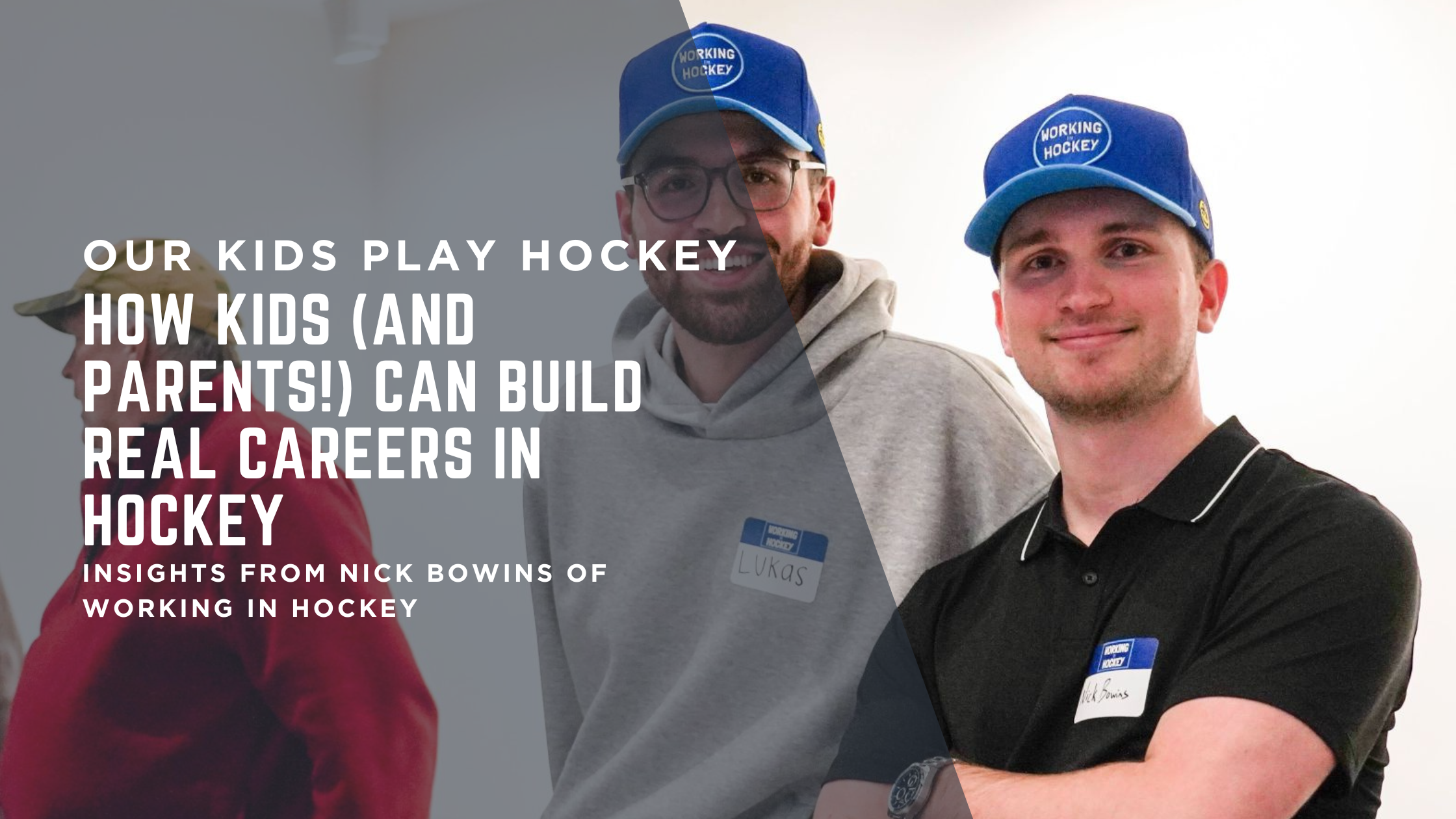
How Kids (and Parents!) Can Build Real Careers in Hockey — Insights from Nick Bowins of Working in Hockey
Introduction: Hockey Isn’t Just a Game — It’s an Entire Ecosystem
Most kids grow up dreaming of playing college hockey, the PWHL, or maybe even the NHL. But what they don’t see — because no one shows them — is the enormous world of opportunity surrounding the sport. Marketing teams. Analytics departments. Ticketing staff. Game ops crews. Coaches. Media creators. Community coordinators.
As today’s guest Nick Bowins, founder of Working in Hockey, reminds us, the hockey world isn’t just made up of players. It's built and sustained by thousands of people who love the game and want to stay connected long after their competitive playing days end.
And here’s the good news for families: there is more opportunity in hockey today than ever before.
Why That “First Opportunity” Matters More Than Anything
One of the strongest messages Nick shared is that the level of your first job doesn’t matter — getting in the door does.
A youth volunteer role.
A high school game-ops job.
A ticket sales internship.
Even wearing the team mascot suit.
Every single one of these roles teaches something valuable: teamwork, adaptability, communication, humility, and the ability to contribute to something bigger than yourself.
Parents often assume the only “real” roles are high-level ones, but the truth — especially in hockey — is that your child’s first opportunity will almost never be glamorous. What it will be is formative.
The Hidden Jobs Your Kids Don’t Know Exist
During the episode, the hosts and Nick rattled off a list of job categories that surprised even seasoned hockey parents.
A typical pro game night can involve hundreds of workers:
Game presentation crews
Digital content and social media managers
Broadcasters and replay technicians
Finance and analytics staff
Strength & performance coaches
Medical and sports science teams
Ticketing and sponsorship sales
Community outreach and youth programming coordinators
Event operations
And yes… mascots
Kids rarely see these jobs because they're designed to be seamless — but they are everywhere. And many of them don’t require a professional playing background.
Networking vs. Socializing: A Lesson for Teens and Parents Alike
One of the biggest insights Nick shared was the difference between networking and socializing.
Most people think they’re networking when they’re really just chatting.
Networking is intentional. It’s curious. It’s specific.
And more often than not, it starts with a simple message like Lee shared:
“My name is ____. I love the game. Could I buy you lunch and learn what you do?”
Parents can model this skill for their children. A thoughtful, well-written email can open doors that talent alone never will.
The Myth of “Years Required” — And Why Passion Wins Every Time
Nick also broke down one of the most discouraging parts of any sports job posting:
“Requires 5 years of experience.”
Kids (and adults) see that line and immediately disqualify themselves.
But as Lee pointed out, the real question isn’t “Do I have five years?”
It’s “Can I gain five years of experience in one year?”
Through volunteering, selling tickets, running video, helping with social media, or working youth events, someone with passion can build a meaningful resume much faster than most people think.
How Parents Can Create Opportunities TODAY
You don’t need a pro team in your backyard to help your child begin building their career skills. Start with what’s around you:
Offer to help your local association fill volunteer gaps
Encourage your child to run video or help with the scoreboard
Have them shadow a coach, trainer, or team manager
Let them try photography, stats tracking, or live-tweeting games
Suggest they interview local hockey figures for a school project
Help them write their first professional email
Every one of these steps builds confidence — and a practical foundation.
For Adults: It’s Never Too Late to Work in Hockey
Some of the most active job-seekers on Nick’s platform are in their 40s, 50s, and 60s.
Retired executives.
Parents of former players.
People who simply miss being around the rink.
Their experience matters — and teams value it.
If you’re a parent who loves the game, there is absolutely room for you too.
Conclusion: Hockey Is a Lifelong Community — And There’s Space For Everyone
Whether your child dreams of playing professionally or simply loves the game, a future in hockey doesn’t end when competitive play does. As Nick Bowins reminds us, the industry is full of passionate people doing meaningful work behind the scenes — and more pathways are opening every year.
The message for families is clear:
If you love the game, there’s a place for you.
If you’re willing to learn, there’s a job for you.
And if you’re authentic, people will want to help you succeed.
Want more insights like this? Make sure to subscribe to both Our Kids Play Hockey and Nick’s Working in Hockey newsletter. The right opportunity might be just one conversation away. 🏒✨

The Truth About Hockey ID Skates: A Parent’s Guide to Pre-Skates & Tryouts