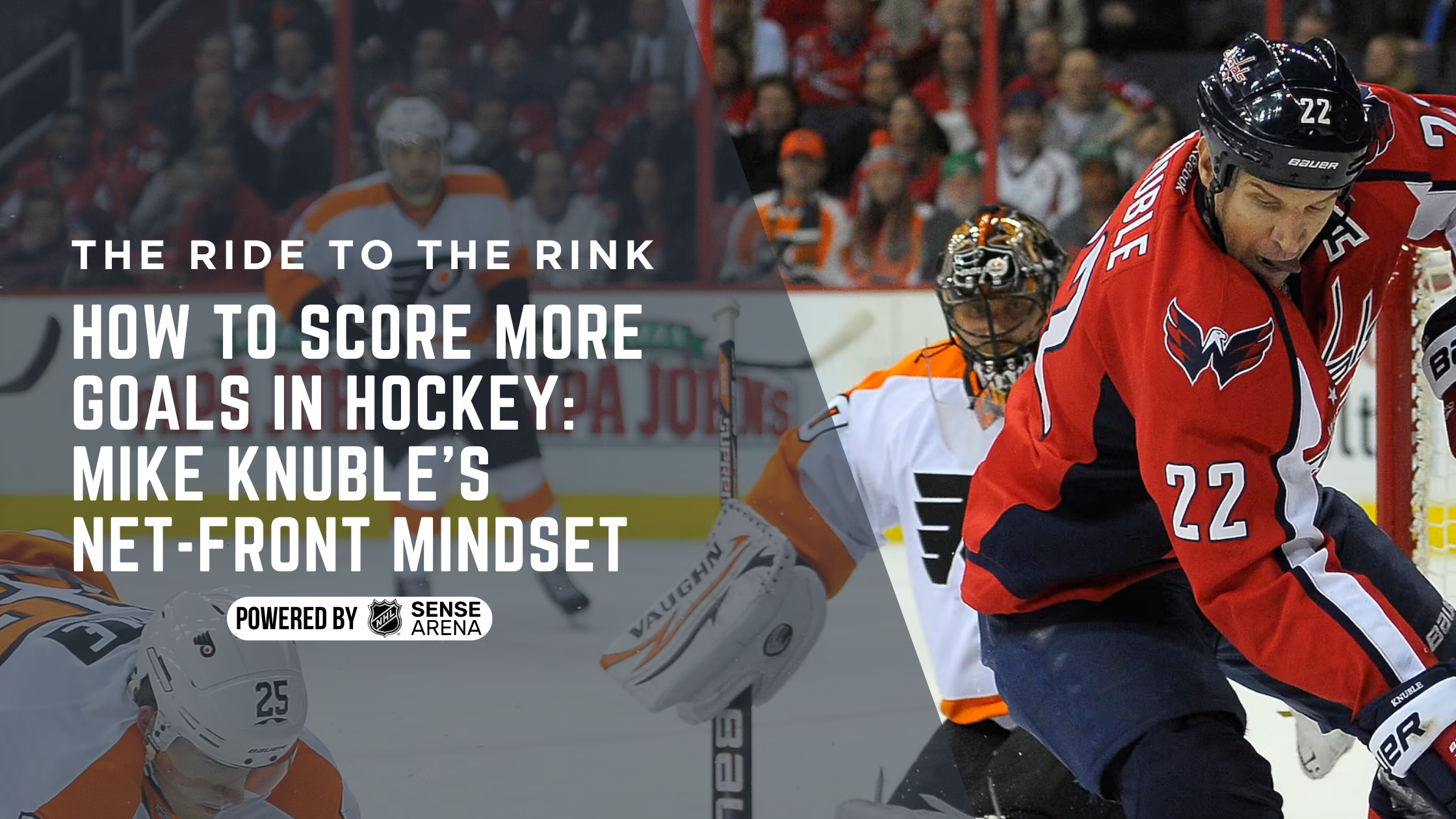
How to Score More Goals in Hockey: Mike Knuble’s Net-Front Mindset
Stop Waiting for Goals—Start Going Where They Happen
If you ask most young hockey players what they want, the answer is simple: score
more goals.
But according to former NHL forward and Stanley Cup Champion Mike Knuble, the
problem isn’t effort—it’s positioning.
Too many players are waiting for the puck instead of going to where it’s going.
And that small shift in mindset? It changes everything.
The “Shark Mentality” Every Player Needs
Knuble shares a simple but unforgettable analogy:
Sharks don’t wander the ocean hoping to find food—they go where the fish are.
Hockey works the same way.
If you’re:
- Standing along the boards
- Floating in low-danger areas
- Waiting for a perfect pass
…you’re making scoring harder than it needs to be.
Instead:
- Drive the net
- Anticipate shots
- Get into high-traffic scoring areas
That’s where goals live.
Your Game Should Always Be Evolving
One of the most valuable lessons from Knuble’s career is adaptability.
Even the best players in the world—like Sidney Crosby—continue to evolve:
- Adding new skills
- Improving weaknesses
- Adjusting their role
Young players often identify as one type of player:
“I’m a scorer.”
“I’m a playmaker.”
But the reality is:The more roles you can play, the more valuable you become.
Self-Awareness Is Your Superpower
Growth starts with honesty.
Ask yourself:
- What am I NOT good at?
- Where do I struggle in games?
- What feedback have coaches given me?
Then—this is the hard part—lean into those weaknesses.
Because:
- It’s easy to practice what you’re good at
- It’s uncomfortable to practice what you’re not
But that discomfort? That’s where real improvement happens.
Practice the Hard Stuff
Knuble emphasizes a key truth:
You won’t get better without failing first.
That means:
- Missing reps
- Struggling with new skills
- Feeling uncomfortable in practice
And that’s okay.
In fact, it’s necessary.
Great players don’t avoid weaknesses—they attack them.
Take Ownership of Your Hockey Journey
At some point, development becomes your responsibility.
Not your coach.
Not your parents.
Not your team.
You.
Ownership looks like:
- Asking for feedback
- Doing extra reps
- Training off the ice
- Staying disciplined when others don’t
And yes—it’s not always easy.
But it’s what separates players who improve from those who stay the same.
Final Takeaway: Be the Player Who Goes First
When you walk into the locker room, there will always be players who:
- Avoid hard work
- Stick to what’s easy
- Stay comfortable
Don’t follow that path.
Be the player who:
- Goes to the net
- Works on weaknesses
- Takes ownership
Because that’s the player who gets better.
Want more insights like this? Listen to the full episode here: ourkidsplayhockey.com
And next time you hit the ice, remember:
Go where the puck is going.
Embrace the hard areas.
Take ownership of your game.
We’ll see you at the rink.

The Truth About Youth Hockey Development (From NHL Veteran Mike Knuble)