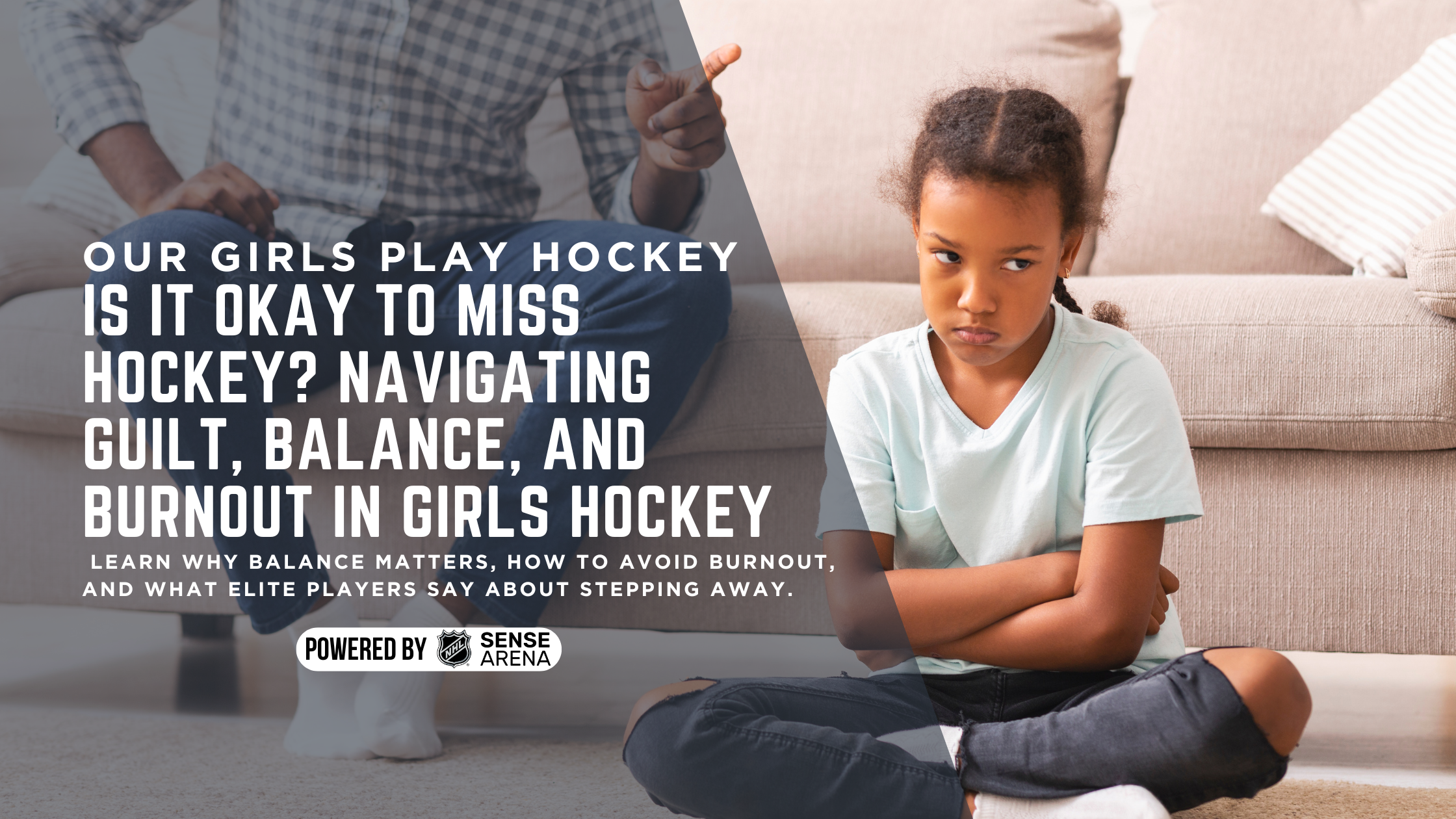
Is It Okay to Miss Hockey? Navigating Guilt, Balance, and Burnout in Girls Hockey
When Hockey Guilt Creeps In: Why It’s Okay to Miss Sometimes
For so many families in girls hockey, the schedule alone can feel overwhelming. Practices. Games. Tournaments. Travel. Add in school, family events, other sports, and the occasional need for rest — and suddenly, something has to give.
Yet when that “something” is hockey, guilt often follows.
In a recent episode of Our Girls Play Hockey, hosts Lee Elias and Hayley Scamurra had an honest, much-needed conversation about the pressure players and parents feel when hockey isn’t the top priority every single time. What emerged was a reminder that balance isn’t a weakness — it’s a strength.
Where Does Hockey Guilt Come From?
Hockey guilt shows up in many forms:
A player worries she’s letting her team down
Parents fear judgment from coaches or other families
Families feel pressure because of the time and money invested
Athletes believe missing one practice will derail development
As Lee points out, much of this guilt is rooted in unspoken expectations — not reality. Youth hockey culture often implies that full commitment means constant presence, even when that presence comes at the expense of health, joy, or family.
But as Hayley emphasizes from her experience at the highest levels of the game, that mindset doesn’t create better players — it creates burnout.
Missing Hockey Doesn’t Mean You Care Less
One of the most important takeaways from this episode is simple, yet powerful:
You can love hockey deeply and still need time away from it.
Missing a practice for a school concert, a family gathering, or another passion doesn’t signal a lack of commitment. In fact, research consistently shows that multi-sport athletes and well-rounded kids develop better long-term — physically, mentally, and emotionally.
Hockey development doesn’t happen in a single practice. It unfolds over years and decades, shaped by consistency, enjoyment, and intrinsic motivation — not guilt.
The Role of Parents: Messaging Matters
Parents often feel caught in the middle — wanting to support their child’s hockey dreams while juggling real life. Lee offers a critical reminder: be careful how you frame sacrifices.
When kids hear:
“Do you know how much we’re spending on hockey?”
They may internalize that money matters more than relationships, rest, or joy. Over time, hockey starts to feel like a job — not a game.
Instead, parents can:
Focus on effort and behavior, not attendance alone
Watch for signs of emotional or physical overload
Reinforce that family, health, and happiness matter
Model balanced decision-making
Sometimes, parenting means encouraging hockey. Other times, it means choosing family dinner or rest — even when hockey is available.
Communication Changes Everything
A recurring theme in this conversation is communication — especially with coaches.
Hayley stresses that players should:
Give advance notice when possible
Be honest and respectful
Ask how they can make up missed work
From a coaching perspective, Lee highlights that how a message is delivered matters. A professional, respectful heads-up goes a long way in building trust and understanding.
Healthy programs create cultures where:
Other interests are respected
Teammates support one another
Missing occasionally isn’t stigmatized
That culture starts with adults.
Choosing, Not Sacrificing
One of the most meaningful reframes from the episode is this:
It’s not a sacrifice — it’s a choice.
Choosing family time.
Choosing music.
Choosing rest.
Choosing to be a kid.
These choices don’t take away from hockey — they often make athletes better when they return.
Even elite players like Hayley Scamurra emphasize that stepping away at times helped her reconnect with her love for the game. That perspective matters, especially for young athletes who feel the weight of expectation early.
Final Takeaway: Hockey Is Part of Life — Not All of It
Hockey is an incredible teacher. It builds resilience, confidence, and lifelong friendships. But it’s not meant to replace everything else.
If your player misses occasionally, it doesn’t mean they’re falling behind.
If your family chooses balance, it doesn’t mean you’re less committed.
If guilt shows up, it’s worth questioning — not obeying.
Because the goal isn’t just to raise better hockey players.
It’s to raise healthy, happy humans who still love the game years from now.
🎧 If this conversation resonated with you, listen to the full episode of Our Girls Play Hockey and share it with another hockey family who might need the reminder.


Inside the Olympic Experience with Hayley Scamurra (Part 1)
