Play Your Role, Love the Game, and Stay Grounded — Lessons from Scott Hartnell’s Hockey Journey
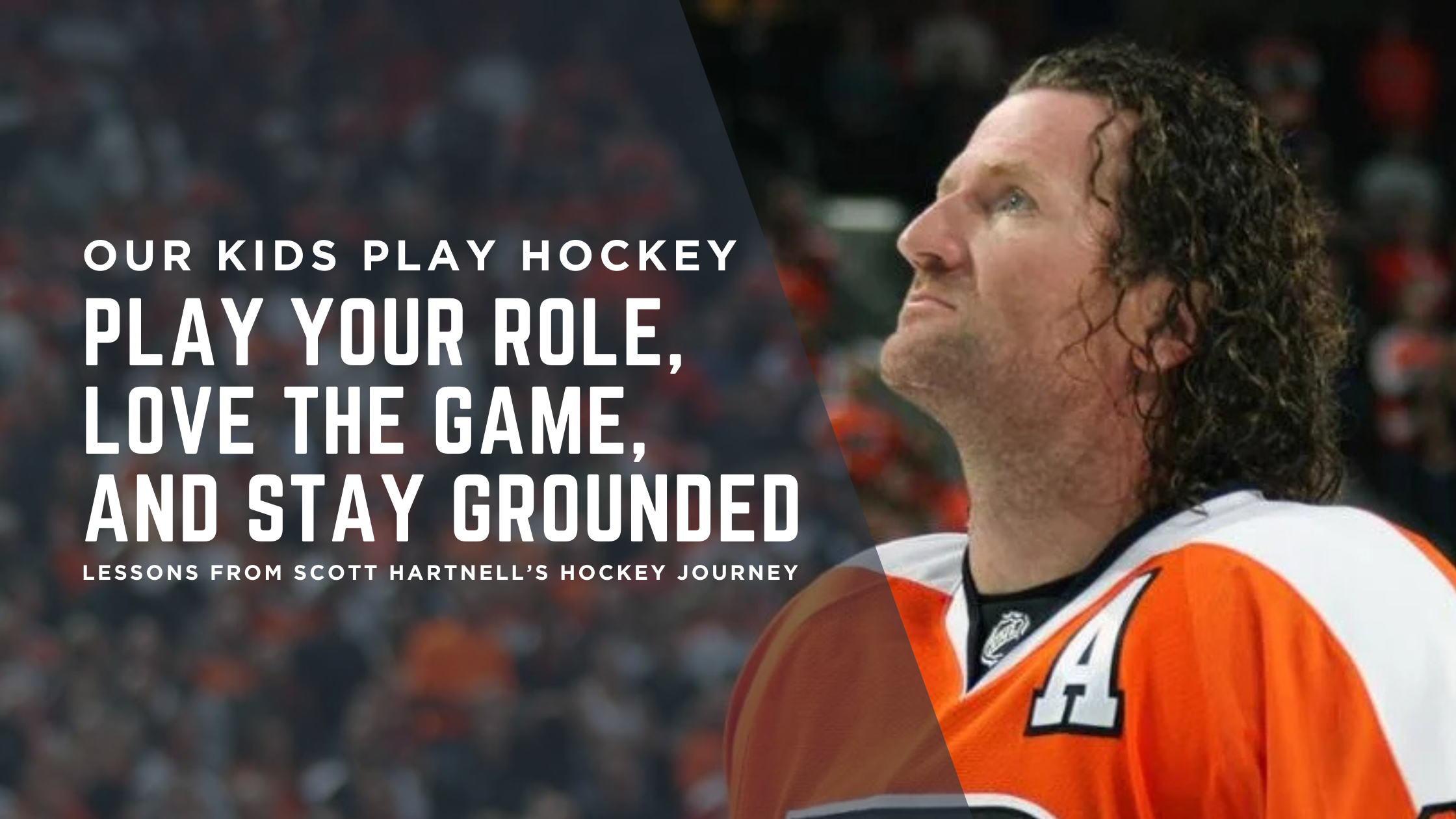
When a player spends 17 seasons in the NHL, plays over 1,200 games, scores more than 300 goals, and still talks about hockey with the excitement of a kid at the outdoor rink — you listen.
That’s exactly what happened when former NHL power forward Scott Hartnell joined the Our Kids Play Hockey podcast. From growing up in small-town Saskatchewan to becoming a fan favorite in Philadelphia, Hartnell’s story is packed with lessons for parents, coaches, and young players navigating youth hockey today.
This conversation wasn’t about stats. It was about development, confidence, roles, family support, and why loving the game matters more than anything else.
Below are the biggest takeaways every hockey family should hear.
Small Town Rinks, Big Dreams
Hartnell’s hockey story started the way so many great ones do — at the local rink.
In his hometown, the rink was always open, older siblings were always playing, and he was always chasing them. That environment helped build his toughness, creativity, and passion for the game.
Kids develop best when they play a lot, play freely, and sometimes play with older or better players.
“I was always chasing my older brothers… playing street hockey, knee hockey, outdoor rink… that probably led to some of the toughness in my game.”
Not every shift needs to be structured. Not every moment needs coaching.
Sometimes the best development happens when kids just play.
Do What Got You There
One of the strongest messages Hartnell shared applies to players at every level.
When players move up — to AAA, juniors, college, or higher — they often try to become someone they’re not. That usually backfires.
“Do what got you there. Don’t try to be someone you’re not… every team needs different roles.”
Not every player will be the goal scorer.
Not every player will run the power play.
Not every player should try to.
Great teams need energy players, defenders, playmakers, net-front players, leaders, and teammates who bring effort every shift. Players who understand this early often go farther.
Roles Matter — Even in Youth Hockey
This part of the conversation hit home for every coach and parent.
In youth sports, we sometimes avoid talking about roles because we don’t want to hurt feelings. But avoiding the conversation can actually slow development.
Hartnell explained that as players move up, they must adapt.
“You can’t have 20 danglers… everyone has to fill a role if you want to win.”
In youth hockey, roles should never limit opportunity, but they can help players understand how to contribute.
A player might be:
A strong forechecker
A reliable defender
A great passer
A high-energy teammate
When coaches explain roles the right way, players feel important instead of discouraged.
Confidence vs. Competition — Finding the Right Level
One of the most valuable parts of this episode was the discussion about team level and development.
Parents often think moving up is always better. Sometimes it is. Sometimes it isn’t.
Hartnell shared an important perspective:
There’s nothing wrong with being the best player on a lower team if it builds confidence and allows growth.
Kids need both challenge years and confidence years.
Too much struggle can hurt motivation.
Too much comfort can slow development.
The goal is balance, not status.
Parents Matter More Than They Think
Hartnell talked about how much his parents influenced his career — not by pushing, but by keeping things simple.
When he went into scoring slumps, his dad didn’t talk about fancy skills.
He gave straightforward advice:
“Go to the net. Something good will happen.”
For parents today, the message is clear:
Encourage effort.
Encourage teamwork.
Encourage smart plays.
Don’t panic over mistakes.
And maybe most important — don’t let the car ride home become the worst part of the game.
Accountability Builds Great Teams
Hartnell also shared what separates good teams from great ones.
The word he used was simple: accountability.
Players need to hold themselves responsible — not just the coach, not just the captain, everyone.
“If you’re not accountable to yourself, you’re not helping the team.”
Great teams at every level have players who:
Show up ready to work
Support teammates
Accept their role
Keep improving
That culture can start in youth hockey.
Love the Game — Or Nothing Else Works
After 17 NHL seasons, Hartnell still talks about hockey like a kid.
That tells you everything.
He loved playing.
He loved competing.
He loved being part of a team.
That love carried him through slumps, trades, role changes, pressure, and eventually into life after hockey.
Kids who truly love the game stay with it longer.
Parents and coaches can’t force that love — but they can protect it.
Final Thoughts for Hockey Families
Scott Hartnell’s story reminds us that success in hockey isn’t about rankings, teams, or stats.
It’s about playing your role, staying grounded, building confidence, being a great teammate, and loving the game.
If we keep those things at the center, kids win — no matter where hockey takes them.
🎧 Be sure to listen to this full episode of Our Kids Play Hockey, and share it with a hockey parent, coach, or player who needs this reminder.
Inside the Olympic Experience with Hayley Scamurra (Part 1)
