What Your Parents Want You to Know About Hockey Boundaries
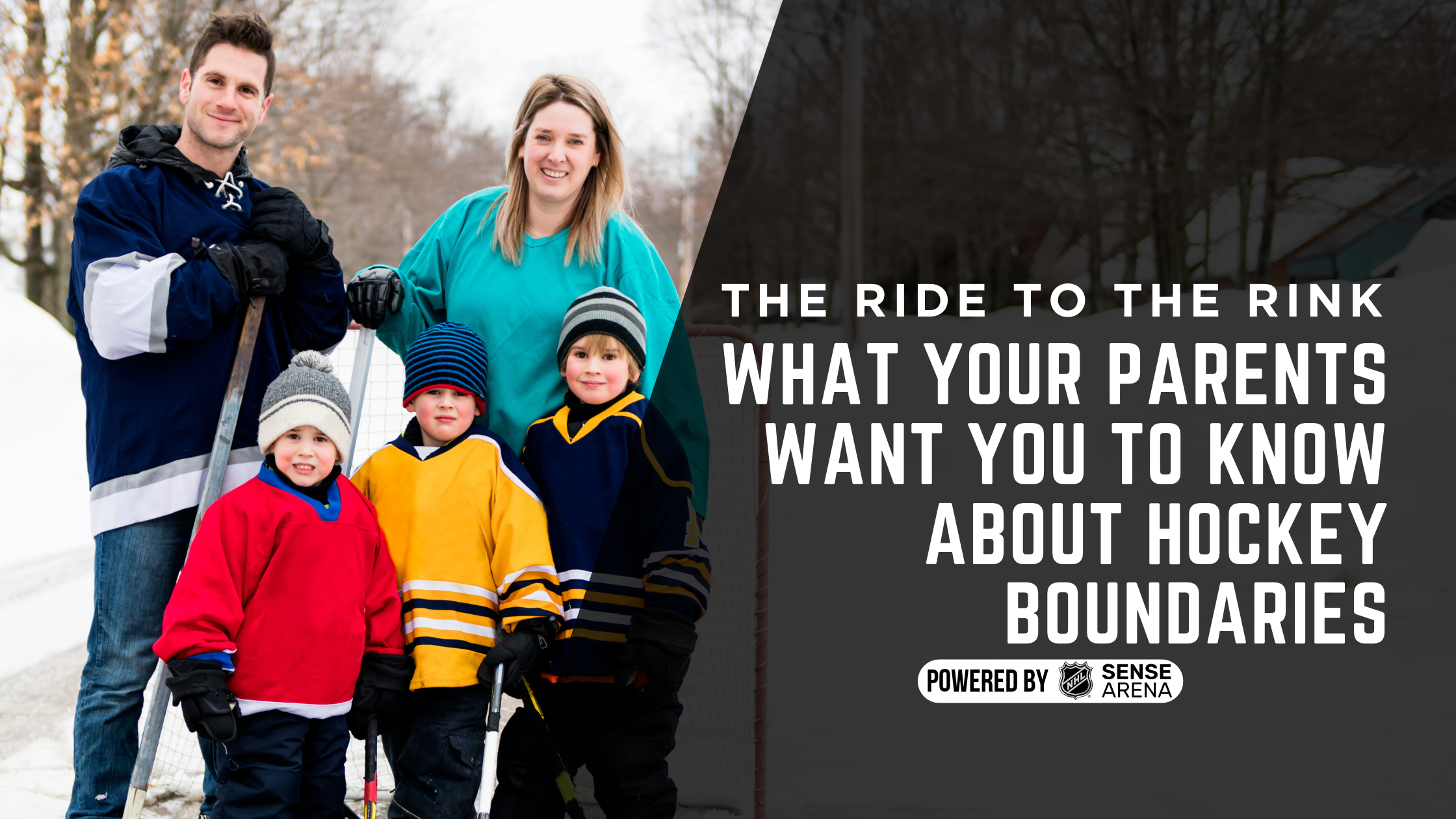
What Your Parents Want You to Know About Hockey Boundaries
Have you ever thought:
“Why are my parents making such a big deal about this?”
Why can't we talk about my game in the car?
Why do I have to take a break from hockey?
Why can't I miss school?
Why do they keep telling me to talk to my coach myself?
Why do they keep saying my stats aren't everything?
Here is something important to know:
You are not the only hockey player hearing those things.
For this episode of The Ride to The Rink, Lee Elias and Mike Bonelli looked at comments from parents throughout the hockey community about the boundaries they use with their kids.
And there were a lot of similarities.
That matters because sometimes, as a young player, it can feel like your family has completely different rules than everyone else.
Usually, they don't.
More importantly, most of those boundaries exist for a reason.
They are not meant to stop you from chasing your hockey dreams.
They are meant to help you enjoy the journey long enough to chase them.
You Do Not Have to Break Down the Game on the Ride Home
Let's start with one of the biggest topics.
The car ride home.
You know the situation.
Game ends.
Equipment goes in the trunk.
You sit down.
The doors close.
And then:
“So...what happened on that second goal?”
Or:
“Why didn't you pass there?”
Or:
“You looked tired today.”
Sometimes you want to talk about the game.
Sometimes you absolutely do not.
And according to the parents who responded to the show, many families agree:
The player should be allowed to decide.
It Is Okay to Say, “I Don't Want to Talk About It Yet”
That is not disrespectful.
You just competed.
You may be tired.
Frustrated.
Hungry.
Excited.
Disappointed.
Or simply ready to think about something else.
Your brain needs recovery just like your body does.
Talk later.
Talk tomorrow.
Talk at practice.
Or maybe after some time passes, you realize there is nothing you actually need to discuss.
If You Want to Talk, That's Fine Too
Maybe you played the best game of your life.
Maybe your teammate scored an unbelievable goal.
Maybe something hilarious happened.
If you jump into the car and want to tell the story, go for it.
The important thing is that you get some ownership of the conversation.
Hockey already takes up a lot of your life.
Every car ride does not need to become another coaching session.
Taking Time Off Will Not Ruin Your Hockey Career
This may be hard to believe when you see other players:
Going to summer camps.
Joining spring teams.
Training every weekend.
Posting workouts online.
You might start thinking:
“If I stop, everyone is going to pass me.”
Lee and Mike want you to know something:
Taking a break can be part of development.
Your body needs recovery.
Your brain needs recovery.
And sometimes the best thing that can happen is that you actually start missing hockey.
You Are Allowed to Miss the Rink
Think about your favorite food.
If you ate it three times a day every day, would it still feel special?
Maybe for a while.
Eventually?
Probably not.
Hockey can work the same way.
Time away can help you return excited.
You miss the sound of the rink.
The smell of the locker room.
Your teammates.
Skating.
Shooting.
Playing.
That excitement matters.
Taking a Break Does Not Mean Becoming a Couch Potato
This is an important distinction.
Taking time away from hockey does not necessarily mean doing nothing.
Play another sport.
Ride your bike.
Swim.
Run.
Shoot a basketball.
Play soccer.
Go hiking.
Try something completely different.
You are still an athlete.
You are simply giving your hockey muscles—and your hockey brain—a different challenge.
Your Coach Actually Wants You to Ask Questions
Here is something some young players do not realize.
Good coaches generally love questions.
Not:
“Why aren't you playing me?”
screamed in the middle of the game.
But real questions.
“Coach, what should I have seen there?”
“Why did you want me on that side?”
“What should I do differently next time?”
“Was there another option?”
Those questions show that you care about learning.
You Can Disagree With Your Coach Respectfully
This may surprise you too.
Sometimes you and your coach will see a play differently.
That is okay.
Maybe the coach says:
“You needed to pass that puck.”
And you thought:
“I saw open ice, so I carried it.”
You can explain that.
Try:
“Coach, I saw the defender back off and thought I had space. What did you see?”
Now you are learning.
Maybe the coach explains something you missed.
Maybe the coach realizes your decision made sense.
Either way, you had a hockey conversation.
Timing Matters
There is a right time to ask.
The middle of a one-goal game?
Probably not the best time for a five-minute debate.
Before practice?
After practice?
During a calm moment?
Much better.
Learning how to communicate with adults respectfully is one of the life skills hockey can teach you.
You Should Feel Comfortable Talking to Your Coach
This is important.
You may feel nervous.
That's normal.
But you should feel like you can approach your coach with a respectful question.
If you feel like you absolutely cannot speak to your coach about anything, talk to a trusted adult about why.
Good developmental environments should include communication.
School Is Still Part of the Deal
Nobody on The Ride to The Rink is telling you that hockey does not matter.
It matters a lot to you.
That's why you are listening.
But hockey is not your only responsibility.
School matters too.
Different families have different rules about missing school.
Some never allow it.
Others allow occasional tournament travel.
Lee's family has a straightforward rule:
If school is going well, there may be flexibility.
If school is not going well, hockey does not become an excuse to miss more.
Communication Can Solve a Lot
Suppose you know three months from now you are missing Friday for a tournament.
Don't wait until Thursday night.
Talk to your teacher.
Explain what is happening.
Ask:
“What will I miss?”
“Can I do anything early?”
“What do I need to make up?”
That shows maturity.
The same thing works in the other direction.
Maybe you are missing hockey for:
A family wedding.
A school event.
A concert.
A vacation.
Tell your coach.
Do it early.
Communicate.
Coaches can usually work with information.
What frustrates people is being surprised.
You Are Allowed to Miss Hockey for Life
Yes, hockey matters.
So does life.
Sometimes there will be an event your family decides matters more than one game.
That is okay.
There will be more hockey games.
You will not get every family experience back.
A healthy hockey life makes room for both.
Your Stats Are Not Your Identity
Now for one of the biggest traps in youth hockey.
Stats.
Goals.
Assists.
Save percentage.
Points.
Wins.
Everybody notices them.
And it is completely okay to be proud of them.
Score a goal?
Celebrate it.
Have an amazing season?
Be proud.
But do not start believing that your statistics tell the entire story of who you are as a hockey player.
They don't.
The Scoresheet Misses a Lot
Imagine your team scores.
The scoresheet might show:
Goal: Player A
Assist: Player B
Assist: Player C
But maybe Player D:
Won the puck battle.
Player E:
Drove the defender away from the play.
And the goalie:
Made a huge save 15 seconds earlier that started the transition.
None of that necessarily appears beside their names.
Did those players matter?
Absolutely.
Real Hockey People Notice More
As you get older, knowledgeable coaches and scouts are watching for things beyond points.
Do you compete?
Do you make smart decisions?
Can you defend?
Do you support teammates?
Do you win battles?
Do you communicate?
Do you make players around you better?
Do you respond well after mistakes?
Those qualities matter.
Do Not Become a “Stat Hound”
Mike uses that phrase in the episode.
A stat hound is somebody who becomes obsessed with their own numbers.
Did I score?
Did I get the assist?
Did they give me credit?
Where am I on the team leaderboard?
That mindset can make you forget the point of playing on a team.
Celebrate your success.
Then ask:
“What did I do to help us?”
That's the better question.
Some Teams You Will Be the Star
There may be a season where you score constantly.
Awesome.
Enjoy it.
There may also be another team where you are:
A defensive player.
A depth player.
A penalty killer.
Someone who wins battles.
Someone who creates space.
Someone who barely gets on the scoresheet.
You need to learn how to contribute in both situations.
That versatility can keep you in the game much longer.
Wins and Losses Don't Tell the Whole Story Either
Your team can win and play badly.
Your team can lose and improve tremendously.
Sometimes your coach sees progress you cannot see.
Maybe three weeks ago you couldn't make a breakout read.
Now you can.
Maybe you used to stop moving when you didn't have the puck.
Now you are supporting every play.
Maybe your goalie tracking has improved.
Those things matter even if the scoreboard does not reward them immediately.
Great Players Help Build Great Culture
The last major message from parents was about character.
Integrity.
Respect.
Team culture.
And this is where you have more power than you may realize.
You can influence your team.
Be the Culture Warrior
Mike gives players a great challenge:
Be a culture warrior.
Be the player who knows what the right thing looks like.
Maybe teammates start yelling at an official.
You don't join in.
Maybe somebody trashes another teammate.
You shut it down.
Maybe everyone wants to complain about the coach.
You refuse to pile on.
Maybe your parents are getting too worked up.
You can even remind them:
“Hey, we're okay.”
Culture is not something only adults create.
Players create it too.
Your Parents Need Reminders Sometimes Too
Adults are human.
Parents get emotional.
Coaches get emotional.
Everybody makes mistakes.
If your family has agreed that screaming at referees is not part of your culture, there is nothing wrong with respectfully reminding each other of that.
The whole family can work together.
Hockey Should Make You a Better Person
This may be the biggest idea in the entire episode.
You want to become a better hockey player.
Good.
Chase that.
Dream of:
College hockey.
Junior hockey.
The PWHL.
The NHL.
The national team.
Whatever your dream is.
Lee and Mike want you dreaming as big as possible.
But there is another goal happening at the same time.
Become a better person.
Hockey Gives You Practice at Life
Think about everything hockey makes you experience.
You win.
You lose.
You get nervous.
You fail.
You succeed.
You make friends.
You deal with difficult people.
You sit.
You play.
You get praised.
You get criticized.
You work toward goals.
You deal with disappointment.
You learn responsibility.
That is a lot of life practice inside one sport.
Do not waste it.
Great People Often Become Great Teammates
Talent matters.
Skill matters.
Skating matters.
Shooting matters.
But when coaches build teams, they also need people they trust.
Players who care about teammates.
Players who work.
Players who listen.
Players who respond to adversity.
Players who do the right thing when nobody is watching.
Character and performance are not completely separate.
They can strengthen each other.
Your Parents Are Probably Not Trying to Ruin Your Fun
Sometimes boundaries feel annoying.
Take a break.
Do your homework.
Talk to your coach yourself.
Stop worrying about your stats.
No, we aren't going to that extra tournament.
Leave the game at the rink.
It might feel like your parents just do not understand.
But hearing from so many parents around the hockey community reveals something different.
Most of them are trying to protect:
Your health.
Your development.
Your education.
Your family.
Your relationship with the game.
And your ability to keep enjoying hockey for years.
The Biggest Boundary of All: Hockey Should Still Be Fun
Not every practice will be fun.
Not every game will be fun.
You will have bad days.
Hard coaches.
Tough losses.
Painful mistakes.
That's sports.
But if hockey has stopped being fun all the time, something needs attention.
Because underneath the travel teams, standings, rankings, tournaments, equipment, and dreams—
Hockey is still a game.
And games are meant to be played.
Dream Big Without Losing the Joy
Work hard.
Compete.
Ask questions.
Take responsibility.
Chase your goals.
But also:
Take a break.
Laugh with your teammates.
Try another sport.
Spend time with your family.
Listen to music on the ride home.
Be a good student.
Be a good teammate.
Become someone other people want beside them when things get difficult.
That's development too.
And wherever you are headed today, remember the message that closes every Ride to The Rink:
We believe in you. You should too.
Skate hard.
Have fun.
And go learn something.
The Boundaries That Keep Youth Hockey Healthy for Your Family