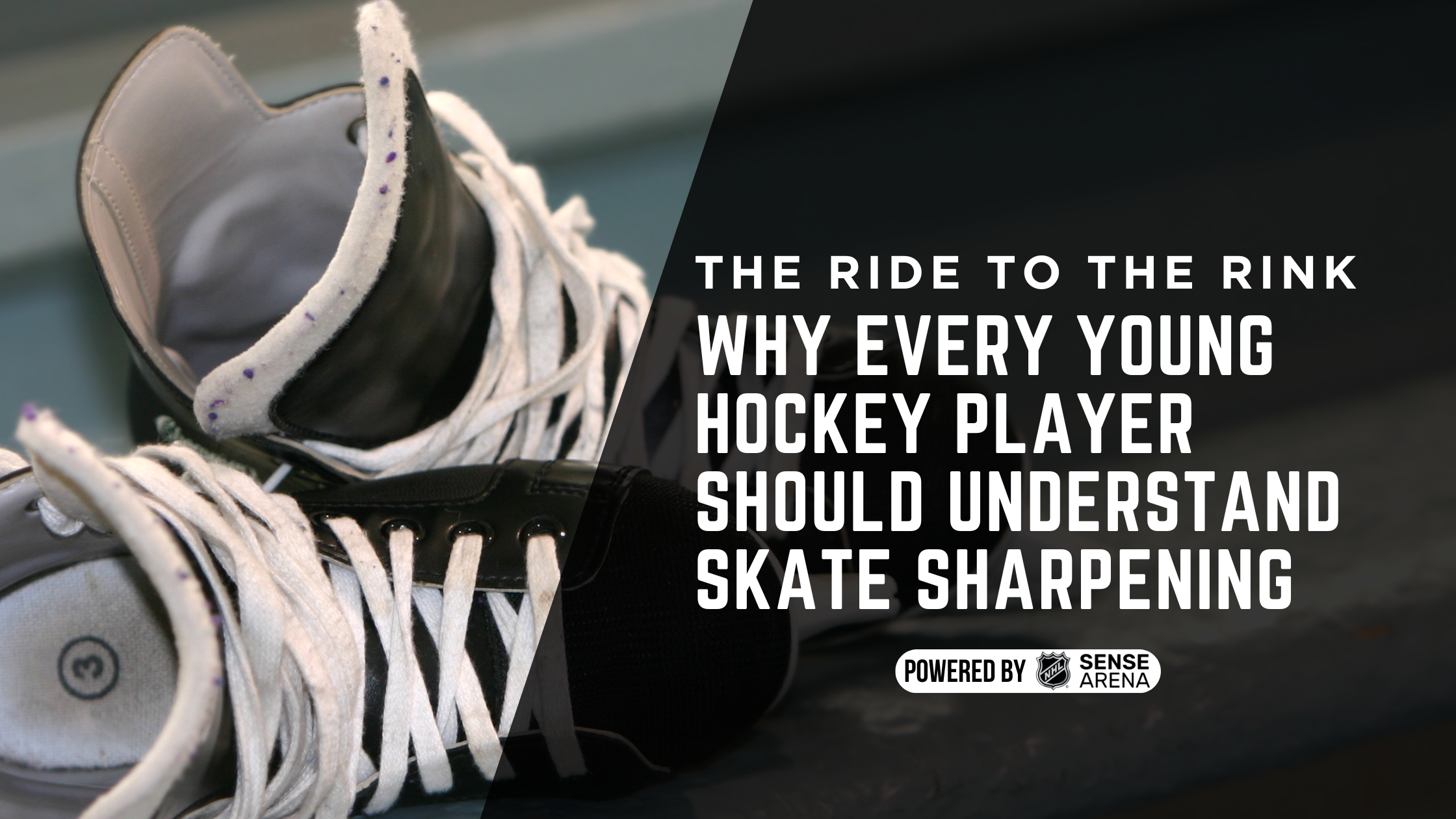
Why Every Young Hockey Player Should Understand Skate Sharpening
Your Skates Are Talking to You. Are You Listening?
Young hockey players spend plenty of time thinking about sticks, gloves, helmets, jerseys, and the latest gear.
But there is one piece of equipment that literally connects everything you do to the ice.
Your skates.
Every stop. Every turn. Every crossover. Every acceleration. Every defensive recovery. Every drive toward the net.
It all starts at the blade.
That is why understanding the basics of skate sharpening isn’t something that should be left entirely to Mom, Dad, a coach, or the person working behind the counter at the pro shop.
On The Ride To The Rink, Lee Elias and Christie Casciano Burns welcomed Russ Layton, founder and CEO of Sparx Hockey, to give young players a practical education on skate sharpening, blade maintenance, hollow, and equipment responsibility.
And the lesson starts with something incredibly simple:
Pay attention to how your skates feel.
You Are the Only Person Who Knows How Your Skates Feel
Parents do a tremendous amount for young hockey players.
They drive to practices. They pack snacks. They wash equipment. They buy gear. And quite often, they are the ones responsible for getting skates sharpened.
But there is one problem.
Your parents aren’t the ones skating on your blades.
If you finish a practice and notice that stopping in one direction feels different than stopping in the other, your parents probably won't know unless you tell them.
Maybe a turn suddenly feels less secure.
Maybe one edge feels like it is slipping.
Maybe something simply feels different.
That information matters.
Instead of throwing the skates into the bag and forgetting about it until the next practice, make equipment communication part of your routine.
On the car ride home, say something.
“Mom, my left skate felt weird tonight.”
“Dad, I was slipping when I stopped to my right.”
“I think we should check my edges before the next practice.”
That may sound like a small habit, but it is a big part of learning to take responsibility for your game.
Build a Skate-Care Routine
Good equipment habits don't need to be complicated.
They just need to be consistent.
Russ described a routine built around one major principle:
Keep your skates dry and protect your edges.
Sweat and moisture naturally collect inside your skates during a practice or game. Simply zipping them inside your hockey bag and forgetting about them until the next session isn't ideal.
Instead, players should develop a routine after skating.
After You Get Off the Ice
Once you return to the locker room:
- Dry your skate blades.
- Put soft skate soakers back over the blades.
- Pack the skates carefully.
- When you get home, take them out of the hockey bag.
- Remove the footbeds.
- Allow the skates to dry thoroughly.
It is a small amount of work that can help keep your equipment in better condition.
And perhaps more importantly, it teaches something every athlete eventually needs to learn:
Taking care of your equipment is part of taking care of your performance.
Protect Your Edges Before You Even Reach the Ice
Blade damage doesn't only happen while you're skating.
Locker rooms, hallways, benches, and rink areas can contain all kinds of things that you don't want your freshly sharpened steel stepping on.
That is why Russ recommends keeping soft soakers on your skates for as long as possible while getting dressed.
Only remove them when you're ready to head toward the ice.
Then watch where you're walking.
A perfectly sharpened pair of skates doesn't help much if you damage an edge before warmups even begin.
That level of awareness may seem overly detailed to a young player, but elite habits often begin with basic things done consistently.
What Is a Skate Sharpening Hollow?
This is one of those hockey terms players hear constantly without necessarily understanding it.
“What's your hollow?”
“Do you skate on a half-inch?”
“Do you want more bite?”
Young players don't have to become skate sharpening experts, but knowing the basics helps.
The bottom of a hockey blade is not simply flat.
Sharpening creates a curved groove between the two edges of the blade. The shape and depth of that groove influence how the skate interacts with the ice.
In simple terms, there is a tradeoff between grip and glide.
A setup that gives you more bite may help your edges feel more aggressive in the ice.
A flatter setup can offer more glide.
Neither is automatically “better.”
The right choice depends on the player.
Your size, skating ability, position, style, experience, and personal preference can all matter.
That is why players should at least know what hollow is being put on their skates.
Don't Be Afraid to Ask the Sharpening Question
One of the most practical messages from the episode is also one of the easiest to apply.
When you hand over your skates for sharpening, know what you're getting.
Ask:
“What hollow are you sharpening these at?”
That little question can make a huge difference in consistency.
If you love how your skates feel one week but suddenly hate them after another sharpening, you want to know whether something changed.
You can't track what works if you don't know what you're using.
As players develop, they can begin experimenting carefully with different options and paying attention to how each feels.
Do you feel more confident stopping?
Do your turns feel stronger?
Do you like having a little more glide?
Equipment knowledge doesn't replace skating practice.
It helps you understand the tool you're practicing with.
Why Your Edges Affect Confidence
One of the most important points Russ made goes beyond equipment.
It is about trust.
A player needs to believe that when they lean into a turn, the skate will hold.
When they stop hard, the edge needs to respond.
When they change direction to defend an opponent or attack open ice, they shouldn't be wondering whether the blade underneath them will cooperate.
That uncertainty can affect confidence.
Think about how different you skate when you trust your equipment.
You're more willing to push.
You lean harder.
You react instead of hesitating.
You play.
That's why reliable skate edges matter so much.
Your skates don't score the goal for you.
But they help put you in position to make the play.
Your Stick Can't Help You If You Can't Get There
Young players understandably love sticks.
They notice flexes, curves, colors, brands, and new releases.
But here's an important reminder from this conversation:
Your ability to use your stick depends on your ability to get where you need to go.
Need to close a defensive gap?
Skates.
Need to explode toward a loose puck?
Skates.
Need to cut toward the net?
Skates.
Need to stop and change direction when a play breaks down?
Skates.
The rest of your equipment matters. But so much of hockey performance is built on your ability to move efficiently and confidently across the ice.
And that starts with dependable edges.
You Don't Have to Know Everything—Just Start Learning
For young players, there is another lesson hiding underneath this entire conversation.
You don't need to wait until you're older to start understanding your equipment.
Ask questions.
Learn what hollow you're using.
Learn how to dry your skates properly.
Pay attention to how your edges feel.
Notice when something changes.
Resources such as the Sparx Hockey Hollow Finder, which Russ discussed during the episode, can also give families a starting point when learning about sharpening options based on factors such as player size, position, ability, and skating preference.
The goal isn't to turn every 10-year-old into a skate technician.
The goal is to help players become more aware.
Because awareness leads to better communication.
Better communication leads to more consistent equipment.
And consistent equipment gives players one less thing to worry about when the puck drops.
Take Ownership of the Things You Can Control
There are plenty of things in hockey you cannot control.
You can't control every bounce.
You can't control the officials.
You can't control the other team.
You can't control whether every shot goes in.
But you can take care of your equipment.
You can speak up when something feels wrong.
You can learn.
You can ask questions.
You can develop better habits.
And those little habits add up.
So the next time you finish a practice or game, don't just kick off your skates and forget about them.
Think about how they felt.
Take care of the blades.
Dry the skates.
And if something wasn't right, make sure someone knows before your next trip to the rink.
Because when you trust your edges, you can spend less time thinking about your equipment—and more time playing the game you love.
Keep asking questions, keep learning about your game, and keep enjoying the ride.
Listen to more episodes of The Ride To The Rink from the Our Kids Play Hockey family, and remember: wherever you are in your hockey journey, believe in yourself and keep moving forward.
Your Skates Are Talking to You. Are You Listening?
Young hockey players spend plenty of time thinking about sticks, gloves, helmets, jerseys, and the latest gear.
But there is one piece of equipment that literally connects everything you do to the ice.
Your skates.
Every stop. Every turn. Every crossover. Every acceleration. Every defensive recovery. Every drive toward the net.
It all starts at the blade.
That is why understanding the basics of skate sharpening isn’t something that should be left entirely to Mom, Dad, a coach, or the person working behind the counter at the pro shop.
On The Ride To The Rink, Lee Elias and Christie Casciano Burns welcomed Russ Layton, founder and CEO of Sparx Hockey, to give young players a practical education on skate sharpening, blade maintenance, hollow, and equipment responsibility.
And the lesson starts with something incredibly simple:
Pay attention to how your skates feel.
You Are the Only Person Who Knows How Your Skates Feel
Parents do a tremendous amount for young hockey players.
They drive to practices. They pack snacks. They wash equipment. They buy gear. And quite often, they are the ones responsible for getting skates sharpened.
But there is one problem.
Your parents aren’t the ones skating on your blades.
If you finish a practice and notice that stopping in one direction feels different than stopping in the other, your parents probably won't know unless you tell them.
Maybe a turn suddenly feels less secure.
Maybe one edge feels like it is slipping.
Maybe something simply feels different.
That information matters.
Instead of throwing the skates into the bag and forgetting about it until the next practice, make equipment communication part of your routine.
On the car ride home, say something.
“Mom, my left skate felt weird tonight.”
“Dad, I was slipping when I stopped to my right.”
“I think we should check my edges before the next practice.”
That may sound like a small habit, but it is a big part of learning to take responsibility for your game.
Build a Skate-Care Routine
Good equipment habits don't need to be complicated.
They just need to be consistent.
Russ described a routine built around one major principle:
Keep your skates dry and protect your edges.
Sweat and moisture naturally collect inside your skates during a practice or game. Simply zipping them inside your hockey bag and forgetting about them until the next session isn't ideal.
Instead, players should develop a routine after skating.
After You Get Off the Ice
Once you return to the locker room:
- Dry your skate blades.
- Put soft skate soakers back over the blades.
- Pack the skates carefully.
- When you get home, take them out of the hockey bag.
- Remove the footbeds.
- Allow the skates to dry thoroughly.
It is a small amount of work that can help keep your equipment in better condition.
And perhaps more importantly, it teaches something every athlete eventually needs to learn:
Taking care of your equipment is part of taking care of your performance.
Protect Your Edges Before You Even Reach the Ice
Blade damage doesn't only happen while you're skating.
Locker rooms, hallways, benches, and rink areas can contain all kinds of things that you don't want your freshly sharpened steel stepping on.
That is why Russ recommends keeping soft soakers on your skates for as long as possible while getting dressed.
Only remove them when you're ready to head toward the ice.
Then watch where you're walking.
A perfectly sharpened pair of skates doesn't help much if you damage an edge before warmups even begin.
That level of awareness may seem overly detailed to a young player, but elite habits often begin with basic things done consistently.
What Is a Skate Sharpening Hollow?
This is one of those hockey terms players hear constantly without necessarily understanding it.
“What's your hollow?”
“Do you skate on a half-inch?”
“Do you want more bite?”
Young players don't have to become skate sharpening experts, but knowing the basics helps.
The bottom of a hockey blade is not simply flat.
Sharpening creates a curved groove between the two edges of the blade. The shape and depth of that groove influence how the skate interacts with the ice.
In simple terms, there is a tradeoff between grip and glide.
A setup that gives you more bite may help your edges feel more aggressive in the ice.
A flatter setup can offer more glide.
Neither is automatically “better.”
The right choice depends on the player.
Your size, skating ability, position, style, experience, and personal preference can all matter.
That is why players should at least know what hollow is being put on their skates.
Don't Be Afraid to Ask the Sharpening Question
One of the most practical messages from the episode is also one of the easiest to apply.
When you hand over your skates for sharpening, know what you're getting.
Ask:
“What hollow are you sharpening these at?”
That little question can make a huge difference in consistency.
If you love how your skates feel one week but suddenly hate them after another sharpening, you want to know whether something changed.
You can't track what works if you don't know what you're using.
As players develop, they can begin experimenting carefully with different options and paying attention to how each feels.
Do you feel more confident stopping?
Do your turns feel stronger?
Do you like having a little more glide?
Equipment knowledge doesn't replace skating practice.
It helps you understand the tool you're practicing with.
Why Your Edges Affect Confidence
One of the most important points Russ made goes beyond equipment.
It is about trust.
A player needs to believe that when they lean into a turn, the skate will hold.
When they stop hard, the edge needs to respond.
When they change direction to defend an opponent or attack open ice, they shouldn't be wondering whether the blade underneath them will cooperate.
That uncertainty can affect confidence.
Think about how different you skate when you trust your equipment.
You're more willing to push.
You lean harder.
You react instead of hesitating.
You play.
That's why reliable skate edges matter so much.
Your skates don't score the goal for you.
But they help put you in position to make the play.
Your Stick Can't Help You If You Can't Get There
Young players understandably love sticks.
They notice flexes, curves, colors, brands, and new releases.
But here's an important reminder from this conversation:
Your ability to use your stick depends on your ability to get where you need to go.
Need to close a defensive gap?
Skates.
Need to explode toward a loose puck?
Skates.
Need to cut toward the net?
Skates.
Need to stop and change direction when a play breaks down?
Skates.
The rest of your equipment matters. But so much of hockey performance is built on your ability to move efficiently and confidently across the ice.
And that starts with dependable edges.
You Don't Have to Know Everything—Just Start Learning
For young players, there is another lesson hiding underneath this entire conversation.
You don't need to wait until you're older to start understanding your equipment.
Ask questions.
Learn what hollow you're using.
Learn how to dry your skates properly.
Pay attention to how your edges feel.
Notice when something changes.
Resources such as the Sparx Hockey Hollow Finder, which Russ discussed during the episode, can also give families a starting point when learning about sharpening options based on factors such as player size, position, ability, and skating preference.
The goal isn't to turn every 10-year-old into a skate technician.
The goal is to help players become more aware.
Because awareness leads to better communication.
Better communication leads to more consistent equipment.
And consistent equipment gives players one less thing to worry about when the puck drops.
Take Ownership of the Things You Can Control
There are plenty of things in hockey you cannot control.
You can't control every bounce.
You can't control the officials.
You can't control the other team.
You can't control whether every shot goes in.
But you can take care of your equipment.
You can speak up when something feels wrong.
You can learn.
You can ask questions.
You can develop better habits.
And those little habits add up.
So the next time you finish a practice or game, don't just kick off your skates and forget about them.
Think about how they felt.
Take care of the blades.
Dry the skates.
And if something wasn't right, make sure someone knows before your next trip to the rink.
Because when you trust your edges, you can spend less time thinking about your equipment—and more time playing the game you love.
Keep asking questions, keep learning about your game, and keep enjoying the ride.
Listen to more episodes of The Ride To The Rink from the Our Kids Play Hockey family, and remember: wherever you are in your hockey journey, believe in yourself and keep moving forward.

Want to Try That Hockey Move in a Game? Put in the Reps First