Why One Voice Matters: Fixing Over-Coaching and Bench Chaos in Youth Hockey
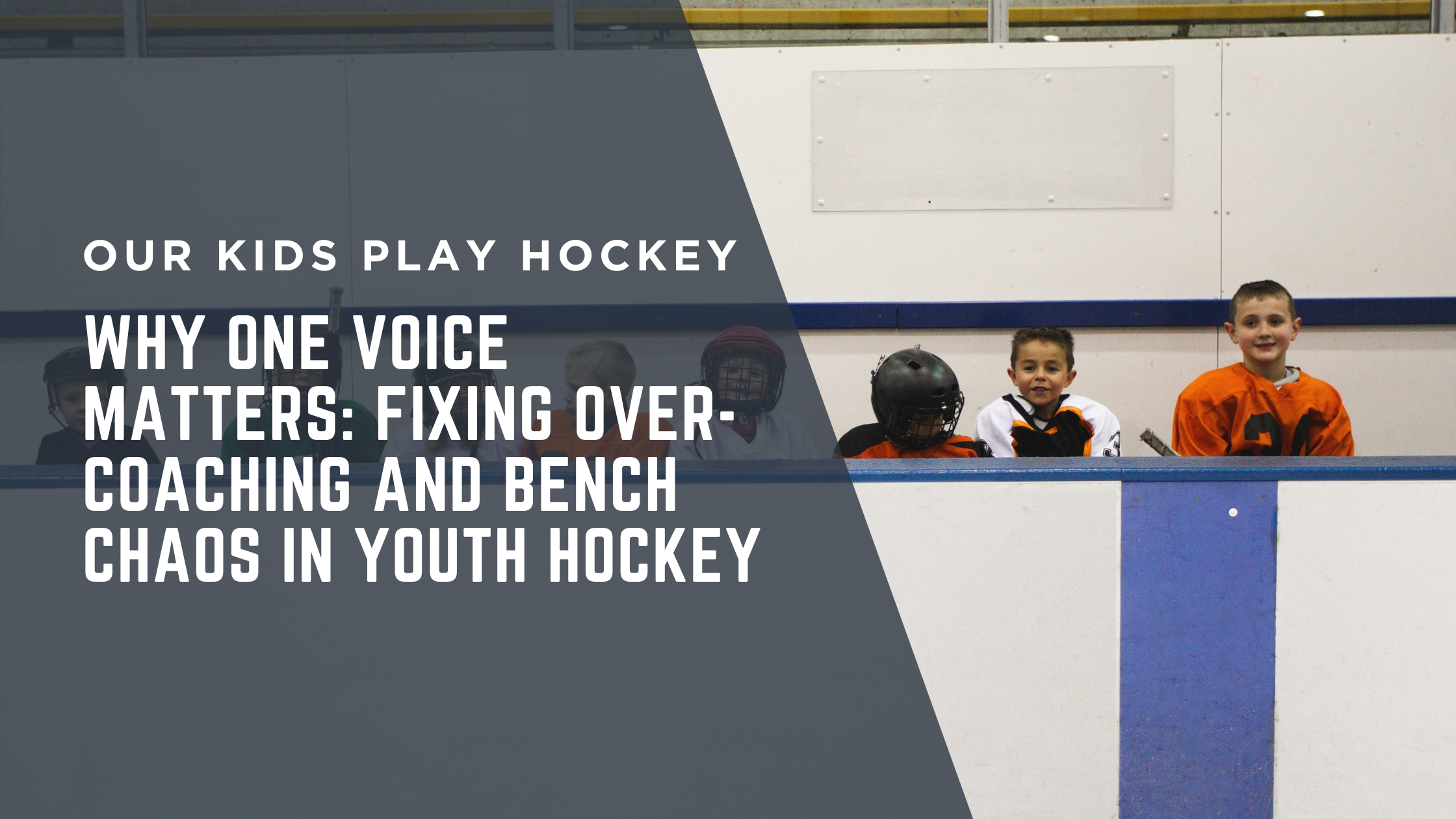
Every hockey parent has had a moment where they look at the bench and think: Does it really take this many adults to coach a youth hockey team?
For one listener, that question became impossible to ignore — and the letter he sent us started a conversation every family can learn from.
In this episode, we dug into a relatable coaching dilemma: a first-year 10U team with four coaches, two who yelled nonstop during games, a head coach who didn’t provide direction, and a parent-coach stuck in the middle wondering whether he was “being too dramatic.”
Spoiler alert: he wasn’t.
Let’s break down why this issue is so common, why it matters, and how teams can fix it.
The Real Problem: Too Many Voices, Not Enough Leadership
At the heart of the letter was a simple but powerful observation:
Kids were being coached by multiple people at once — often loudly — and they didn’t know who to listen to.
Research in youth development tells us this loud, chaotic environment increases confusion, anxiety, and hesitation. Our hosts echoed the same from experience: kids literally stop on the ice because they don’t know which adult to respond to.
A 10U player isn’t choosing which system to run. They’re just trying to skate, track the puck, and have fun. When four voices are firing directions at them, the game becomes overwhelming instead of enjoyable.
That’s not development. And it’s definitely not good coaching.
Why “One Voice” Is a Golden Rule
Lee summed it up perfectly:
“Play-by-play is not coaching.”
Yelling where to skate next doesn’t teach decision-making; it teaches dependence.
The real coaching happens:
on the bench
between shifts
in quick, clear conversations
through encouragement, not noise
If every assistant coach is whispering something different into a player’s ear — and another is shouting new instructions onto the ice — kids can’t learn skills, instincts, or confidence. They just learn confusion.
That’s why most experienced staffs designate:
One head coach voice during games
One or two assistant coaches with clearly defined roles
Helpers or door-openers who support the team without adding noise
The best teams are structured, not crowded.
What Great Coaching Actually Looks Like at 10U
The conversation uncovered something youth sports often forget:
10U players don’t need tactical brilliance — they need a joyful, supportive experience.
The best coaches:
praise effort and hustle
encourage kids after mistakes
keep instructions short and simple
stay calm during chaos
help kids get back out there with confidence
Christy reminded us that if coaches don’t speak up about issues on the bench, kids are the ones who suffer. And Mike reinforced that even assistant coaches need to respect the head coach’s decisions — otherwise the entire system breaks down.
At this age, the goal isn’t to “out-strategize” the opponent.
It’s to help kids love hockey enough to keep coming back.
Why Ego and Fear Create Chaos
A surprising moment in the episode was the hosts discussing the root of the problem:
ego and fear of judgment.
Coaches (especially parent-coaches) often fear:
being judged if the team loses
being seen as uninvolved if they’re quiet
not appearing knowledgeable enough
So they talk more. They shout more. They over-coach.
But as the episode reminds us:
Your job as a coach is not to win the game — it’s to support the kids.
And ironically, the more you coach from fear, the worse the kids play.
Lessons from the NHL: Calm Wins Championships
In a great moment, Lee pointed out that the last several Stanley Cup–winning coaches—Jon Cooper, Jared Bednar, Paul Maurice—share a trait:
Relationship-first coaching.
Not screaming. Not micromanaging.
Leading through clarity, connection, and calm.
If it works for NHL teams, it will absolutely work for 10U players.
How Teams Can Fix Over-Coaching This Week
Here are practical steps the episode highlighted:
1. Define roles clearly
Head coach, assistant coach, helper. Everyone should know their lane.
2. Establish “one voice” during games
Only one coach communicates with players during shifts.
3. Delegate non-coaching tasks
Door opening, line management, bench organization — not everyone has to “coach.”
4. Rotate who is on the bench
With four coaches, someone can sit in the stands each game. It offers clarity and perspective.
5. Have honest conversations
Not two minutes before puck drop — but scheduled, respectful staff meetings.
6. Put kids first. Always.
If your behavior isn’t helping them — it needs to change.
Final Thoughts: You’re Not the Problem — The System Is
One of the most powerful lines in the show came near the end:
“You’re not crazy — the hockey world is crazy.”
If you’re feeling overwhelmed by chaotic coaching environments, you’re not alone. Most youth teams struggle with this at some point. But with honest conversations, clear roles, and a commitment to creating a calm, supportive experience, teams can turn things around quickly.
Your kids deserve a bench environment where they can thrive — not one they have to tune out.
If you’ve dealt with this before or have your own story to share, we’d love to hear from you.
Send us your questions anytime at team@ourkidsplayhockey.com— your story might help the next hockey family.
Thanks for reading, and thanks for being part of a community that wants youth hockey to be better, kinder, and more joyful for everyone. 🏒💙

What Happens After Olympic Gold? Inside Haley Scamurra’s Return to Pro Hockey
