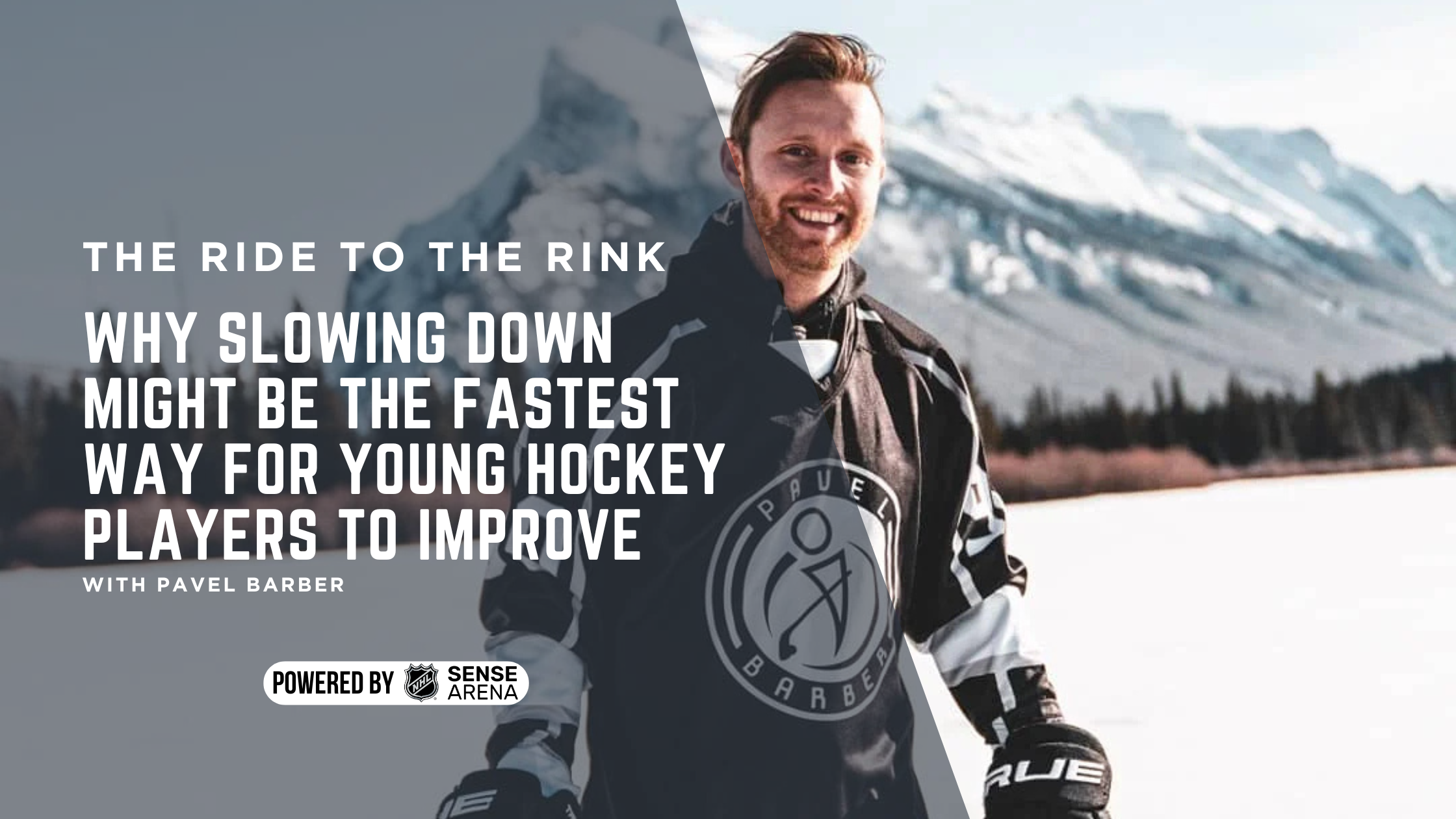
Why Slowing Down Might Be the Fastest Way for Young Hockey Players to Improve
If you spend time around youth hockey, it’s easy to feel like the game is moving faster than ever.
Kids are pulling off moves at eight years old that many adults didn’t learn until much later — if at all. Social media is filled with Michigan goals, elite edge work, and perfectly edited clips that make development look instant and effortless.
But during a recent Ride to the Rink conversation inspired by our Our Kids Play Hockey episode with Pavel Barber, an important reminder stood out:
The players who get better fastest are often the ones who slow down the most — mentally, emotionally, and developmentally.
Let’s unpack why that matters for players, parents, and coaches.
Today’s Kids Are More Skilled — And That’s a Good Thing
Pavel openly acknowledges something many older players notice right away:
today’s kids are incredibly skilled.
Better skating at younger ages
More advanced puck control
Earlier exposure to creative moves
More learning resources than ever before
The ceiling for young players is higher than it’s ever been — and that should be exciting, not overwhelming.
The key message?
Just because the ceiling is high doesn’t mean you need to rush to hit it.
Skill Without Application Is Just a Trick
One of Pavel’s strongest points is that real skill isn’t about what move you can do — it’s about when and why you use it.
That “unsexy” part of hockey development often gets skipped:
Where does the move work in a game?
What’s the read before the skill?
How does it fit into flow and timing?
For young players, this is where slowing down pays off. Understanding application turns creativity into confidence — and confidence into consistency.
The Highlight Reel Trap
Social media has changed the way kids see development.
Pavel reminds players that:
Every clip is a highlight, not the whole story
Failures happen off-camera
Everyone struggles — just at different rates
When kids compare themselves to highlight reels, they often miss the most important comparison of all:
👉 Am I better than I was last month? Last season? Last year?
That’s the comparison that fuels real growth.
Creativity and Discipline Can Coexist
One of the most powerful takeaways from this conversation is that creativity isn’t the opposite of discipline — it works with it.
The best players:
Dream big
Experiment freely
Fail often
Stay patient
Put in the work
That blend is what keeps hockey fun and productive.
A Message for the Ride to the Rink
For families listening together, this episode offers a simple but powerful takeaway:
You don’t need to rush development
You don’t need to copy someone else’s path
You don’t need to win social media
You just need to:
✔ Love the game
✔ Learn from failure
✔ Focus on progress
✔ Trust the process
Slowing down doesn’t mean falling behind.
More often than not, it’s how players move ahead — faster than they ever expected.
🎧 Keep these conversations going in the car, in the locker room, and at home. That’s where the real development happens.
—
Thanks for riding along with The Ride to the Rink. If this episode sparked a great conversation in your car, make sure to share it with another hockey family and keep the discussion going. 🏒💙

How a 14-Year-Old Goalie Is Redefining Youth Hockey Success | Estela Vazquez Story