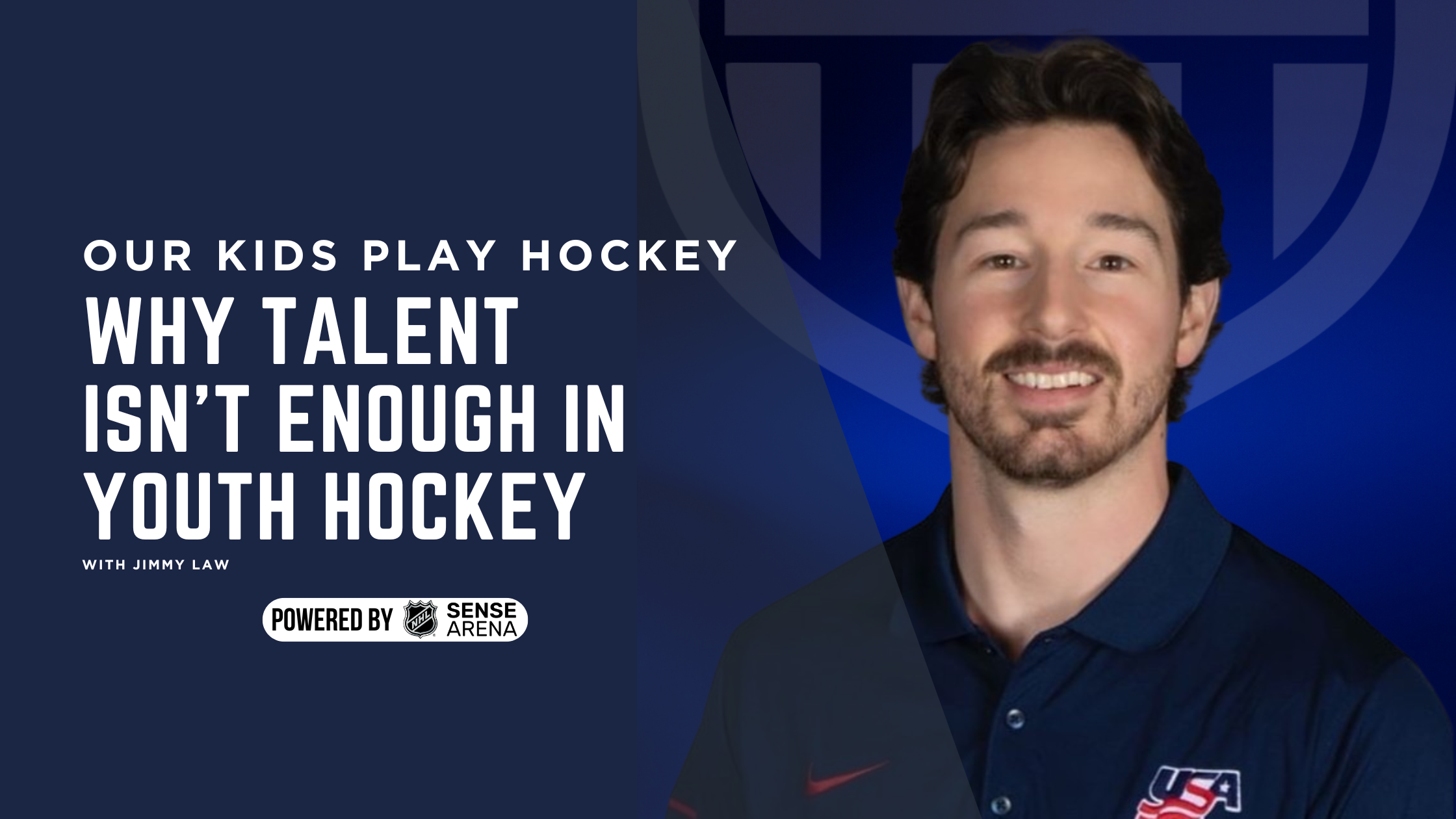
Why Talent Isn’t Enough in Youth Hockey with Jimmy Law
f talent were enough, every “best 9-year-old in the country” would end up in the NHL.
They don’t.
And in this week’s episode of Our Kids Play Hockey, Jimmy Law explains exactly why.
Jimmy — Director of Sports Performance at TPH Academy and founder of Habits of Hockey — has worked with hundreds of athletes across every level. And his message is clear:
Hockey development is personal development.
Let’s unpack what that really means for you and your family.
The Myth of “More Hockey”
Today’s youth hockey culture pushes one thing: more.
More ice time.
More tournaments.
More travel.
More exposure.
But Jimmy sees something different inside elite development environments.
The players who rise aren’t just skating more.
They’re building habits.
The Six Core Habits That Change Everything
Jimmy’s framework is built around six non-negotiables:
Work Ethic – Doing what needs to be done, even when you don’t feel like it.
Accountability – Owning your performance.
Preparation – Planning ahead instead of reacting.
Consistency – Showing up daily, not occasionally.
Focus – Being present when it’s time to work.
Character – Doing the right thing when nobody’s watching.
These habits transfer beyond the rink.
And here’s the truth:
Colleges and junior teams are asking about these traits before they offer spots.
What Recruiters Really Want to Know
It’s not just:
How fast can he skate?
How hard does she shoot?
It’s:
What’s he like in the locker room?
How does she treat teammates?
What happens when things go wrong?
Talent gets you noticed.
Character gets you chosen.
The Academy Model: Why Environment Matters
At TPH Academy, athletes operate under a “Study. Train. Play.” model.
Academics first.
Structured strength training.
Intentional on-ice development.
Built-in recovery and mindfulness.
The result?
Athletes aren’t just busy. They’re intentional.
And that’s the difference.
A Message for Parents
This might be the most important takeaway.
Your role isn’t to analyze the power play in the car ride home.
It’s to support.
Try this instead:
“I love watching you play.”
“What felt good out there today?”
“What do you think you learned?”
Your child doesn’t need another coach at home.
They need a safe place to land.
The Future of Hockey Development
With video access, exposure platforms, and constant comparison, skill is easier than ever to evaluate.
But character?
That still requires intentional development.
The next wave of elite players won’t just be skilled.
They’ll be disciplined, self-aware, and prepared for life beyond hockey.
That’s the real edge.
Final Thoughts
If your child wants to chase big hockey dreams, encourage the habits — not just the highlight reels.
Because when hockey ends (and it ends for everyone), what’s left is the person.
And that’s who we’re really developing.
Keep building. Keep supporting. And remember — the cream always rises to the top. 🏒
See you at the rink.


Hurt vs Injured in Hockey: Lessons from NHL Ironman Karl Alzner
