🏒 What NOT to Say Before a Hockey Game (And What to Say Instead)
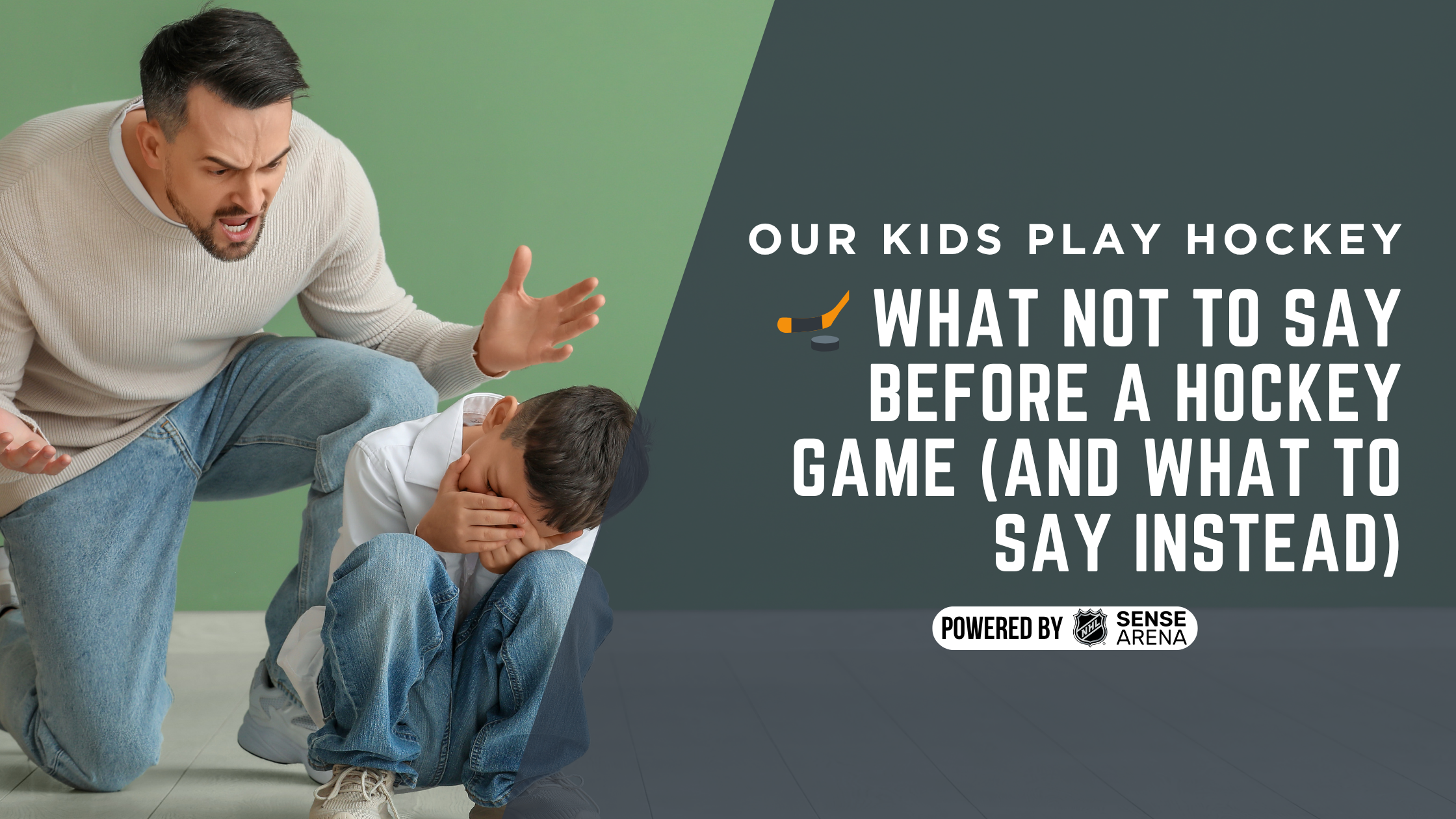
What you say before your child steps on the ice can shape their entire game.
As parents, we all want to help. We want to motivate, encourage, and give our kids that extra edge before the puck drops.
But here’s the reality…
👉 Some of the most common pregame phrases — even the well-meaning ones — can actually hurt performance.
In this episode of Our Kids Play Hockey, we break down the biggest pregame communication mistakes parents make — and how to turn them into powerful, confidence-building messages.
🚫 The Problem With “Helpful” Pregame Advice
Let’s start with intent.
Most parents say things like:
-
“You need to score today”
-
“Don’t mess up”
-
“Coach is watching you”
…because they care.
But these phrases do three dangerous things:
-
They create pressure
-
They shift focus to outcomes
-
They trigger overthinking
And in a fast, instinct-driven game like hockey — that’s a recipe for hesitation and mistakes.
🧠 The Psychology: Why Words Matter
Young athletes don’t process pressure the same way adults do.
When a parent says:
“Don’t turn the puck over”
The brain hears:
👉 “Turn the puck over.”
When you say:
“You need to score”
The player feels:
👉 “If I don’t… I failed.”
This leads to:
-
Fear-based decision making
-
Tunnel vision
-
Loss of creativity
-
Increased anxiety
And ultimately… worse performance.
🥅 The 3 Biggest Pregame Mistakes
1. ❌ “You Need to Do X Today”
(Score, skate, pass, win…)
This puts the entire game outcome on your child.
Better:
👉 “You can impact the game in a lot of ways today.”
2. ❌ “Don’t…” Statements
(Don’t mess up, don’t be nervous, don’t turn it over)
Negative language creates negative focus.
Better:
👉 “Play with confidence.”
👉 “Make strong decisions.”
3. ❌ “Someone Is Watching You”
(Coach, scouts, evaluators)
This creates performance anxiety instead of freedom.
Better:
👉 “Just go play your game.”
❤️ What Your Player Actually Needs
At the end of the day, your child doesn’t need a speech.
They need support, safety, and belief.
One of the most powerful messages shared in this episode is:
“I love you no matter what happens out there… and I love watching you play.”
That’s it.
That’s the message that:
-
Reduces fear
-
Builds confidence
-
Encourages effort
-
Keeps the game fun
🔑 The Shift: From Pressure → Freedom
The best athletes don’t perform their best when they’re tight.
They perform when they’re:
-
Loose
-
Confident
-
Present
-
Enjoying the moment
And parents play a HUGE role in creating that environment.
Top 10 Things You Should Never Say to Your Kid Before They Take the Ice
-
“You need to score today.”
Turns the game into a results test instead of an experience. -
“Don’t mess up.”
Puts the player in mistake-avoidance mode instead of confident play. -
“Don’t turn the puck over.”
The brain hears turn the puck over, increasing hesitation. -
“The coach is really watching you today.”
Creates evaluation anxiety instead of letting the kid play freely. -
“You better skate today.”
Sounds like motivation but carries an undertone of disappointment or threat. -
“Remember what we practiced.”
Pre-game instruction can trigger overthinking instead of instinct. -
“We really need this win today.”
Makes the child feel responsible for the outcome of a team sport. -
“You need to show the coach what you can do.”
Encourages “impress mode,” which often leads to forcing plays. -
“You’re the best player out there.”
Sounds supportive but adds pressure to live up to a label. -
“Don’t be afraid out there.”
Introduces the idea of fear right before the puck drops. - 🏁 Final Thoughts
There’s no such thing as a perfect sports parent.
We all say the wrong thing sometimes.
But awareness is everything.
If you can shift your words from:
👉 Pressure → Support
👉 Outcome → Process
👉 Fear → Confidence
You’ll give your child something far more valuable than a goal or a win…
You’ll give them a lifelong love for the game.
🎧 If this episode resonated with you, share it with another hockey parent — you never know who might need to hear it.
And as always… we’ll see you at the rink.

From Gold Medal to Las Vegas: Hayley Scamurra’s Next Chapter