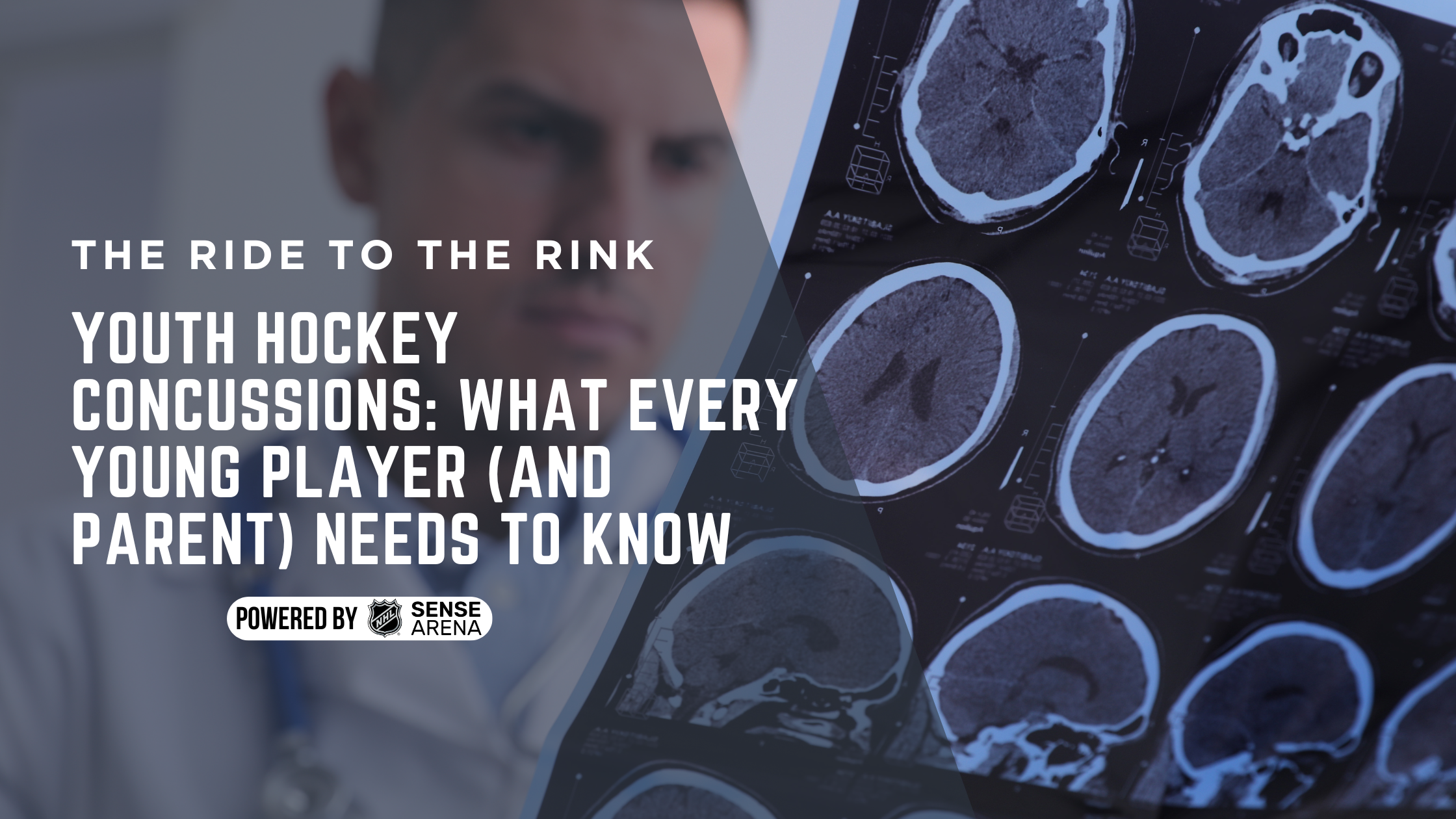
Youth Hockey Concussions: What Every Young Player (and Parent) Needs to Know
🧠 The Hit That Matters Most
Not every hit in hockey shows up on the scoreboard—but some can impact your future far beyond the game.
In this episode of The Ride to the Rink, we tackle one of the most important (and often misunderstood) topics in youth hockey: concussions. With insight from concussion expert Dr. Baric, this conversation is designed specifically for young players—helping them understand what’s happening inside their bodies and what to do when something doesn’t feel right.
🚨 What Actually Happens During a Concussion?
A concussion isn’t just “getting your bell rung.”
When your head takes a hit:
-
Your brain struggles to process energy properly
-
It can swell slightly
-
It loses efficiency in clearing out waste
That combination affects how your entire body functions—from thinking clearly to sleeping well.
And here’s the key: you can’t always see it from the outside.
👀 The Signs You Should Never Ignore
One of the biggest challenges with concussions is that you’re often the first—and only—person who knows something is wrong.
Players should watch for:
-
Feeling dizzy or off-balance
-
Trouble remembering simple things
-
Slower thinking or confusion
-
Poor sleep
-
Mood changes like irritability
Even subtle changes matter. If something feels “off,” it probably is.
🧪 A Simple Self-Check for Players
Dr. Baric shared a quick awareness tool young athletes can use:
Try moving your eyes quickly between different points—like the boards, the scoreboard, and a teammate.
If your vision or processing feels delayed or unusual compared to normal, that’s a red flag.
🛑 The Biggest Mistake Young Players Make
Hockey culture celebrates toughness—and that’s not a bad thing.
But there’s a line.
Playing through a bruised leg? That’s one thing.
Playing through a brain injury? That’s something entirely different.
Too many players say:
“I’m fine. I’m fine. I’m fine.”
Until they’re not.
Because here’s the reality:
-
One concussion increases your chances of another
-
A second hit too soon can be far more serious
-
Careers can end—not from one hit, but from going back too early
🏒 Think Bigger Than the Next Game
Every player wants to be on the ice. We get it.
But this episode reframes the decision:
👉 Is this game more important than next season?
👉 Is it worth risking your long-term health?
The smartest athletes aren’t the ones who push through everything—they’re the ones who protect their future.
💬 What Should You Do If Something Feels Wrong?
If you suspect a concussion:
-
Tell your coach immediately
-
Talk to your parents
-
Sit out and get checked
Even at the highest levels of hockey, players take head injuries seriously. That’s not weakness—that’s professionalism.
❤️ Final Takeaway for Players and Parents
There is no:
-
Championship
-
Playoff game
-
Big moment
…that is worth risking your brain health.
Especially for young athletes whose brains are still developing.
🎯 Keep the Ride Going
This is one of those conversations every hockey family needs to have—and revisit.
🎧 If you haven’t already, share this episode with a teammate or parent.
💬 Talk about it on the way to the rink.
🧠 And most importantly, remember: being smart is what keeps you in the game.
We’ll see you on the next ride.

What Really Makes a Great Young Goalie? Lessons from Andrew Raycroft