Doug Smith on Building Your Hockey Identity Beyond the Ice
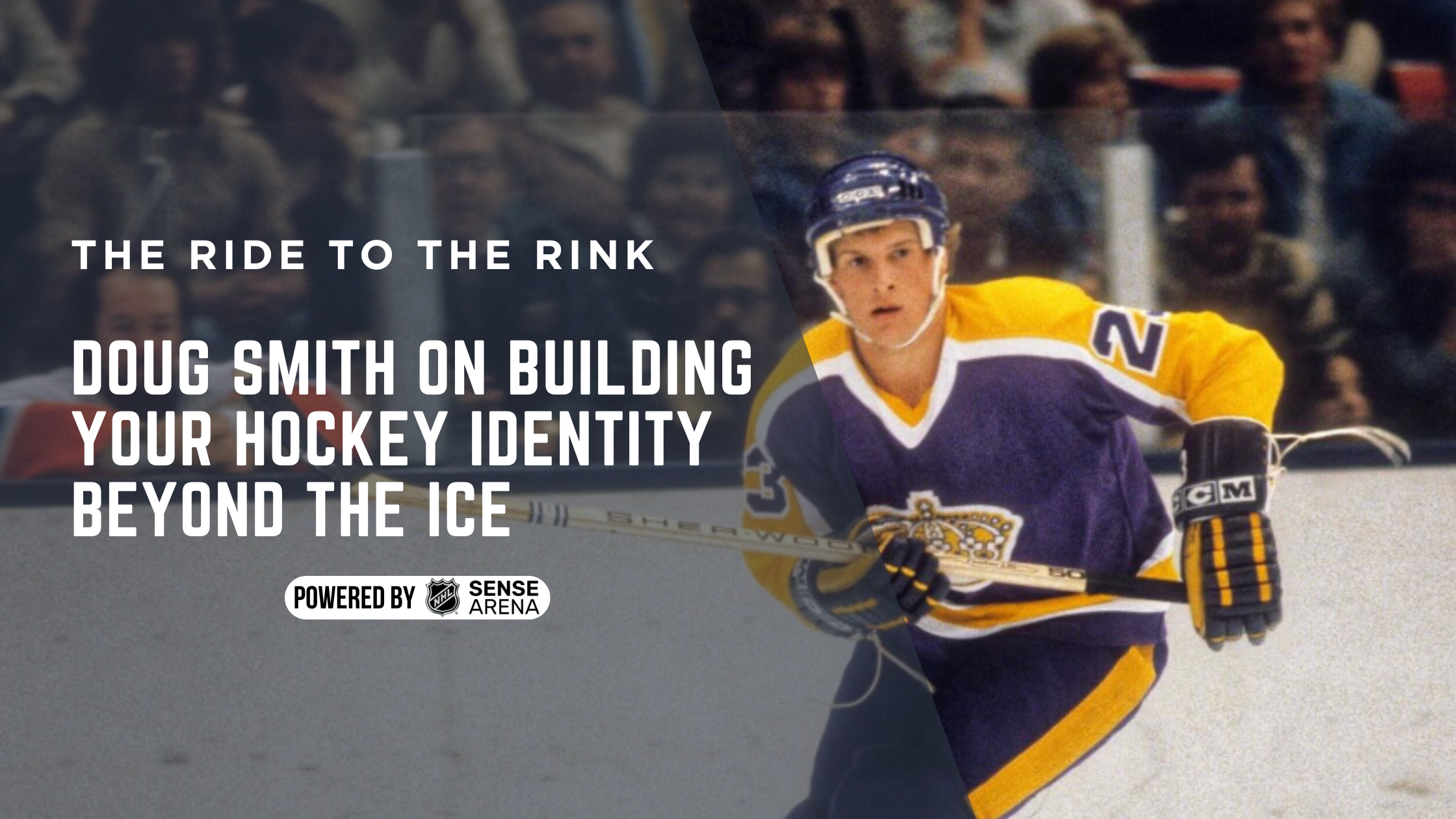
You Are More Than a Hockey Player
For young hockey players, it is easy to fall in love with the game so deeply that hockey starts to feel like your whole identity.
You practice. You train. You dream about making the next team, scoring the next goal, getting the next save, or skating faster than you did last week. That passion is a beautiful thing. It is one of the reasons hockey families spend so much time together in cars, locker rooms, cold rinks, and early morning practices.
But on this episode of The Ride to the Rink, powered by NHL Sense Arena, former NHL player Doug Smith joined Lee and Mike for a conversation every young athlete needs to hear:
You are not only a hockey player.
You are a whole person.
And who you become away from the rink matters just as much as who you become on the ice.
Doug Smith knows the game at the highest level. He was a second overall NHL Draft pick, played in the NHL, and was part of the legendary Miracle on Manchester, one of the most famous comebacks in Stanley Cup Playoff history. But in this conversation, Doug’s message was not about fame, stats, or highlight reels.
It was about identity, influence, courage, communication, and growth.
“You Become What You’re Around”
Doug’s biggest message to young players was direct and powerful:
You become what you’re around.
That means the people you spend time with, the attitudes you listen to, the habits you copy, and the standards you accept all shape who you are becoming.
For a young hockey player, this matters everywhere:
- In the locker room
- On the bench
- During practice
- At school
- In friend groups
- Online
- At home
- Around other hockey families
If you spend time around people who work hard, treat others well, stay curious, and want to improve, those qualities start to rub off on you.
If you spend time around people who complain, cut corners, blame others, or make fun of kids who are trying, that affects you too.
Doug’s point was not that kids need to be perfect or only hang around perfect people. It was that young athletes should pay attention to what is influencing them.
Because there is no neutral.
The people around you are either helping you grow or pulling you away from the person you want to become.
Find People Who Help You Get Better
Lee shared a great example from his own hockey journey. When he was young, he looked for better players to skate with. Better skaters. Better shooters. Better passers. Older kids. Harder workers.
That is one of the best things a young player can do.
When you get around people who challenge you, you naturally rise. You start seeing what is possible. You learn what better habits look like. You realize that improvement is not magic — it is something you can study, practice, and build.
Doug shared his own version of this lesson. He talked about arriving with a choppy skating stride and studying another player who was winning races around the rink. Doug watched, learned, adapted, and improved. Eventually, he became one of the fastest skaters in the NHL.
That is a huge lesson for young players:
You do not have to have everything figured out right now.
You can learn from others.
You can borrow good habits.
You can study what works.
You can grow into a stronger version of yourself.
The best players are not always the ones who start out the most talented. Many times, they are the ones who stay curious and keep learning.
Peer Pressure Is Real — But It Does Not Have to Lead You
This episode also tackled something every kid understands: peer pressure.
When you are young, it can feel really important to fit in. You might worry about what other kids think. You might feel pressure to act a certain way, dress a certain way, talk a certain way, or pretend you do not care as much as you actually do.
Lee gave young listeners permission to think differently.
If you are listening to a hockey podcast because you want to learn, grow, and become better, that already says something about you. It means you are curious. It means you care. It means you are willing to spend time improving your mind, not just your shot or your stride.
That is uncommon — in the best way.
And here is the encouraging part: like-minded people find each other.
When you commit to becoming better, you will eventually find other kids and families who value the same things. You do not have to follow the crowd just because the crowd is loud. You can choose your path. You can look for teammates and friends who make you better.
That choice takes courage, but it is one of the most important choices a young athlete can make.
Parents Are Part of the Village
This episode is called The Ride to the Rink for a reason. Many kids hear these conversations while sitting next to a parent, grandparent, or caregiver on the way to practice or a game.
So Mike asked Doug an important question: what can parents do to help their kids find the right path?
Doug’s answer came back to the same principle.
Parents are influenced by the people around them too.
Hockey parents are also part of the environment. The conversations they have, the people they spend time with, the way they talk about coaches, players, referees, and other families — all of that shapes the experience for the child.
A strong hockey village is not built by accident. It is built by adults who choose to lead with care, perspective, and support.
Parents can help their kids by:
- Encouraging positive friendships
- Modeling respectful communication
- Helping kids talk through difficult team dynamics
- Supporting effort and growth, not just results
- Looking for families who share healthy values
- Reminding kids that hockey is something they do, not all of who they are
The goal is not to control every part of a child’s hockey life. The goal is to help them build the tools to navigate it.
Communication Is a Skill — Practice It
One of the strongest moments in the episode came when Lee talked about communication.
Kids sometimes worry they will say the wrong thing. Parents sometimes worry their kids will say something too honest, too emotional, or too unexpected.
But communication is how kids learn.
Just like skating, shooting, passing, or making saves, communication takes reps.
Young players need practice saying what they think, asking questions, expressing concerns, and learning how to handle feedback. They will not always say it perfectly. That is okay. The point is to start building the skill.
The “human reps,” as Lee put it, matter too.
A player who can communicate clearly is better equipped to:
- Talk to coaches
- Build trust with teammates
- Ask for help
- Handle disappointment
- Manage conflict
- Advocate for themselves
- Learn from mistakes
- Lead others
These are not just hockey skills. These are life skills.
And the earlier kids begin practicing them, the stronger they become.
Your Identity Should Be Bigger Than the Game
Hockey can teach so much: discipline, teamwork, resilience, courage, focus, and joy.
But young players need to know that their value does not depend on making a team, scoring a goal, winning a tournament, or being the best player on the ice.
You are allowed to love hockey deeply without letting hockey define your entire worth.
You can be a hockey player and also be:
- A great friend
- A thoughtful teammate
- A curious student
- A kind sibling
- A creative person
- A leader
- A hard worker
- Someone who is still figuring things out
That is not weakness. That is balance.
The players who understand who they are beyond the game often become stronger inside the game too. They are more grounded. They are more resilient. They can handle setbacks because they know one bad game does not define them.
Doug Smith’s Final Advice: Get Faster
Doug ended the episode with a classic hockey message:
Get faster. The faster you are, the safer you are.
It is simple, memorable, and true to the game. Speed matters. Skating matters. Development matters.
But in the bigger context of this conversation, “get faster” also feels like a challenge to keep moving forward.
Get faster at recognizing good influences.
Get faster at choosing the right people.
Get faster at speaking up.
Get faster at learning from others.
Get faster at becoming the person you want to be.
Because growth in hockey is not only about what happens during drills. It is about what happens in the car, at home, in the locker room, in conversations, and in the choices young players make every day.
Final Thought for Hockey Families
This episode of The Ride to the Rink is a great listen for kids and parents together because it opens the door to an important conversation:
Who are you becoming?
Not just as a hockey player, but as a person.
Doug Smith’s message is a reminder that every young athlete has more control than they may realize. You can choose your influences. You can seek out people who help you grow. You can communicate. You can build confidence. You can love the game while still remembering that your identity is bigger than hockey.
Wherever you are on your hockey journey, keep skating, keep learning, and keep becoming the kind of person others are proud to be around.
And as always, we believe in you. You should too.

What NHL Goalie Coaches See That Youth Hockey Often Misses