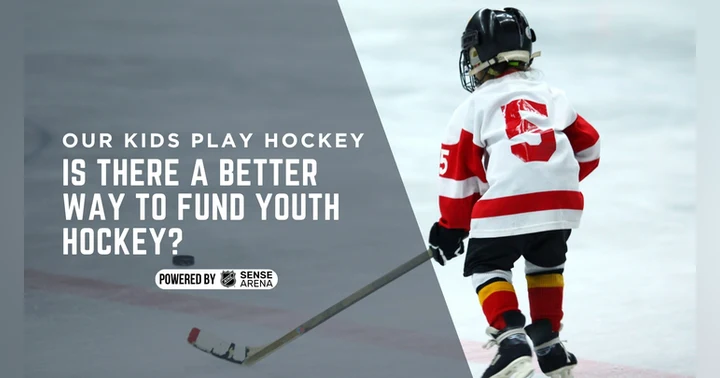
From Second Overall to Starting Over: Doug Smith’s Powerful Message for Hockey Families
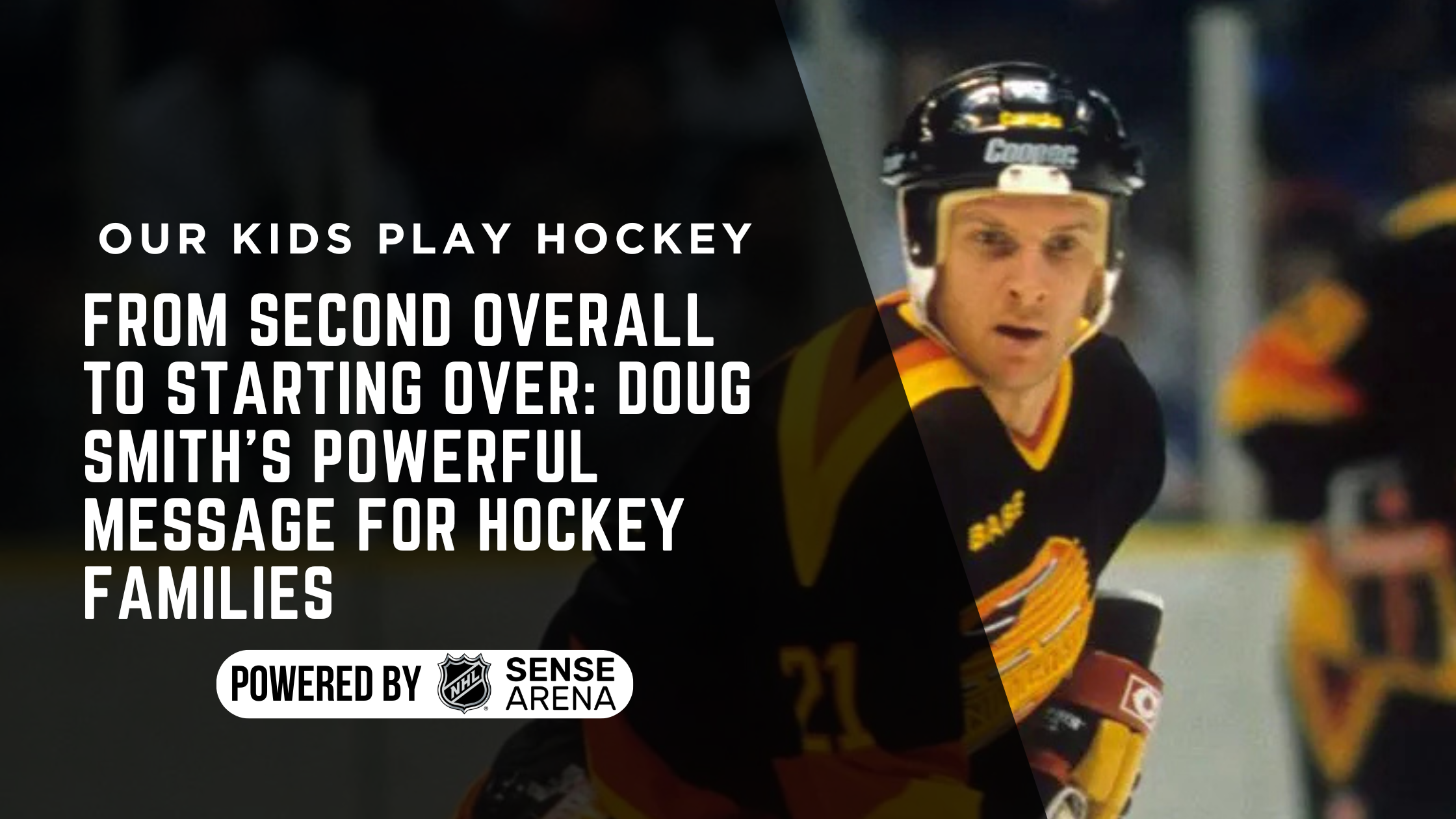
When Hockey Is Taken Away, What Is Left?
For many young athletes, hockey can feel like everything.
The practices. The travel. The teammates. The tournaments. The rankings. The pressure. The dream.
But in this episode of Our Kids Play Hockey, former NHL player Doug Smith offers hockey families a powerful reminder: our kids are not just becoming hockey players. They are becoming people.
Doug knows the highest highs of the game. He was selected second overall in the 1981 NHL Draft, starred with the Ottawa 67s, won the Bobby Smith Award for Outstanding Academic Achievement, and went on to play for multiple NHL organizations, including the Los Angeles Kings, Buffalo Sabres, Edmonton Oilers, Vancouver Canucks, and Pittsburgh Penguins.
He also knows what it means to have the game taken away.
In 1992, Doug suffered a catastrophic spinal injury while playing overseas. The prognosis was devastating. But through an extraordinary journey of recovery, resilience, support, and purpose, Doug rebuilt his life — and now dedicates his work to helping others understand performance, recovery, and transformation in a much deeper way.
His message for hockey families is clear: the game matters, but who our kids become through the game matters more.
The Hidden Pressure of Being “The Hockey Player”
One of the most important themes in this conversation is identity.
When a young athlete is talented, ranked, drafted, or labeled as “elite,” it can be easy for their entire sense of self to become wrapped around the sport. Doug experienced that firsthand. Being drafted second overall came with enormous expectations, and at 18 years old, he was stepping into a world filled with pressures he could not fully see yet.
That is a critical lesson for today’s hockey families.
A child who loves hockey should absolutely be encouraged. Passion is a gift. Commitment is valuable. Big dreams can be healthy.
But when a young person believes they are only valuable because of hockey, the foundation becomes fragile.
Injuries happen. Rosters change. Coaches change. Development is not linear. And for almost every youth athlete, there will come a day when the game is no longer the center of daily life.
That is why parents and coaches have such an important responsibility. We need to help kids understand that the qualities they build through hockey — discipline, creativity, resilience, teamwork, focus, courage, and accountability — can be applied everywhere.
The goal is not to make hockey smaller.
The goal is to make the child bigger than the game.
“Build the Bridge” to the Future
Doug shares a powerful concept in this episode: moving from your current reality to your desired future requires a bridge.
That bridge cannot be built for you. A parent cannot buy it. A coach cannot hand it over. A team cannot magically provide it.
The athlete has to participate in building it.
That idea applies directly to youth hockey culture today. Too often, families chase the next team, the next tournament, the next ranking, or the next opportunity without asking whether the player has built the habits, mindset, and foundation to truly benefit from it.
A better question for hockey families might be:
- What is our process?
- What habits are we building?
- What environment are we creating?
- What kind of person is hockey helping our child become?
- Are we teaching our kids how to handle adversity, ask for help, and stay grounded?
Doug’s story shows that success is not just about talent. It is about awareness, support, adaptability, and the willingness to keep searching for better ways forward.
The Power of Environment: “You Become What You’re Around”
One of the strongest takeaways from Doug’s conversation is this simple but profound idea:
You become what you’re around.
That applies to players. It applies to parents. It applies to coaches. It applies to locker rooms, car rides, team cultures, and rink lobbies.
If a player is surrounded by negativity, blame, pressure, and fear, that environment will shape them. If a parent constantly focuses on points, rankings, missed shifts, and comparison, that becomes part of the child’s hockey experience.
But the opposite is also true.
When players are surrounded by support, accountability, perspective, and love, they have a much better chance to grow — not only as athletes, but as human beings.
This is why team culture matters so much. It is why parent behavior matters. It is why coaches must be intentional with the environments they create.
A child’s hockey experience is never just about what happens on the ice.
It is also about what surrounds the ice.
Recovery, Performance, and Resilience Are Connected
Doug’s recovery from his spinal injury is almost impossible to hear without being moved. He speaks honestly about the physical pain, the emotional toll, the support of his wife and family, and the slow process of rebuilding.
But what makes his perspective especially valuable for hockey families is how he connects recovery and performance.
In Doug’s view, recovery, performance, and longevity are not separate ideas. They are connected through a systematic approach to human development.
That matters in youth hockey.
We often think of performance as skating faster, shooting harder, making the team, or scoring more goals. But performance also includes emotional regulation. It includes the ability to recover from disappointment. It includes being able to ask for help. It includes learning how to stay focused when things get hard.
A young player who can handle adversity is developing performance skills.
A young player who learns to breathe, reset, and respond instead of react is developing performance skills.
A young player who understands that failure is feedback is developing performance skills.
Resilience is not separate from hockey development. It is part of hockey development.
The Transformation Process Hockey Families Can Use
Doug outlines a sequence that he believes supports transformation:
Awareness. Purpose. Motivation. Focus. Belief in self. Trust. Asking for help. Emotional control.
For hockey parents, this sequence is worth sitting with.
Many adults want kids to jump straight to emotional control. We want them to stop being frustrated, stop reacting, stop getting down on themselves, and stop melting down after a bad game.
But emotional control is not the first step. It is the result of a process.
A child first needs awareness. They need to recognize what they are feeling and what is happening around them. Then they need purpose. They need to understand why they are doing something. From there, motivation and focus become more meaningful. Belief and trust can grow. Asking for help becomes possible.
Only then does emotional control become realistic.
That same lesson applies to parents.
When a parent loses control in the stands, yells at officials, criticizes a coach, or turns the car ride home into a performance review, that is not just “passion.” It is a lack of awareness and emotional regulation.
Youth hockey gives all of us the chance to grow.
Not just the kids.
What Should Hockey Parents Focus On?
Doug admits that he never spent much time obsessing over his points, even as a professional player. His mind did not work that way. He focused more on experience, learning, and moving forward.
That is a valuable perspective in today’s hockey world, where it can feel like everything is measured.
Stats. Rankings. Teams. Tournaments. Recruiting. Social media. Comparisons.
But long-term success is rarely built on obsession with short-term measurements.
Parents can help their kids more by focusing on:
- Effort and preparation
- Habits and consistency
- Coachability
- Team contribution
- Emotional control
- Curiosity and creativity
- Recovery and rest
- Love for the game
- Identity beyond hockey
This does not mean goals are bad. It does not mean competition is bad. It does not mean kids should not dream big.
It means the foundation has to be stronger than the scoreboard.
The Bigger Purpose of Youth Hockey
At its best, hockey is a vehicle.
It teaches kids how to work with others. It teaches them how to fail and try again. It teaches them how to prepare, compete, recover, communicate, and care about something bigger than themselves.
But that only happens when the adults keep the bigger picture in view.
Doug’s story is a powerful reminder that the game can change in an instant. A career can end. A role can shift. A dream can take a different shape.
But the person remains.
That is why we have to help young athletes build tools they can carry into every part of life.
The confidence to ask for help.
The resilience to keep going.
The awareness to make better choices.
The humility to learn.
The courage to be vulnerable.
The purpose to become not just the best in the world, but the best for the world.
Final Thoughts
Doug Smith’s journey is not just a hockey story. It is a human story.
It is about pressure, identity, injury, recovery, family, purpose, and the power of choosing a new path when the old one disappears.
For hockey parents, the message is both simple and challenging: support the player, but raise the person.
Celebrate the goals, but notice the growth.
Chase development, but do not lose perspective.
And remember that the greatest lessons our kids learn through hockey may be the ones they use long after they leave the rink.
🎧 Listen to the full episode of Our Kids Play Hockey and share it with a parent, coach, or player who needs a reminder that resilience, support, and purpose are at the heart of the game.

Want to Try That Hockey Move in a Game? Put in the Reps First