How Hayley Scamurra’s Historic PWHL Hat Trick Teaches Young Players to Score More Goals
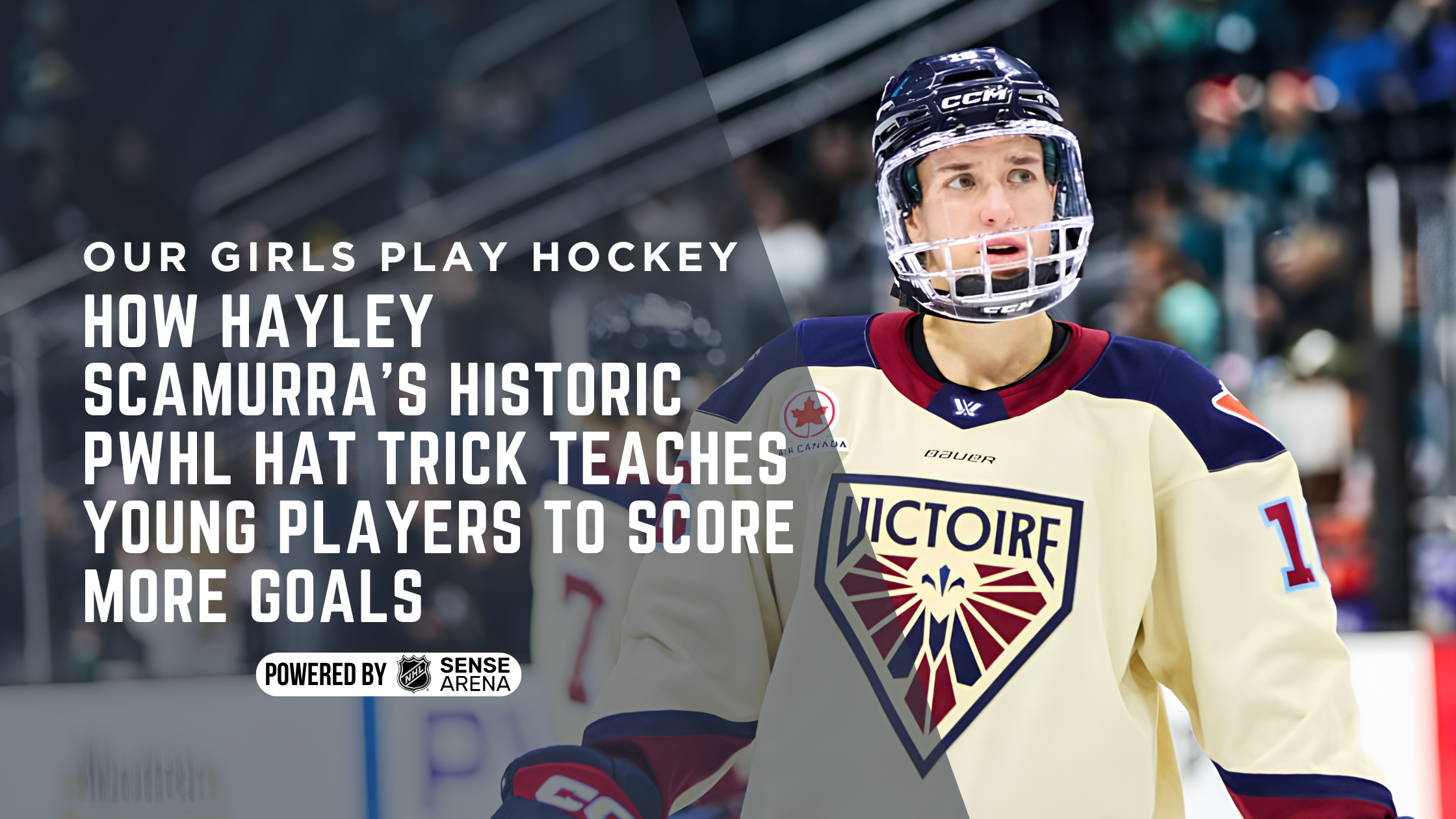
How Hayley Scamurra’s Historic Hat Trick Can Help Young Players Score More Goals
🏒 Sometimes the biggest hockey lessons come from the smallest areas on the ice.
When Hayley Scamurra scored the fastest hat trick in PWHL history — three goals in just 2 minutes and 44 seconds — it wasn’t built on flashy breakaways or viral highlight moves.
It was built on something every young hockey player can learn:
✅ Net-front presence
✅ Timing
✅ Hockey IQ
✅ Competing in traffic
✅ Redirecting pucks
And that’s exactly why this moment matters so much for youth hockey players.
In the latest episode of Our Girls Play Hockey, Hayley joined Lee Elias and Mike Bonelli to break down not only the goals themselves, but the mindset and skill set required to consistently score around the net.
The lesson was clear:
Scoring around the crease isn’t luck. It’s a skill.
Why Net-Front Players Are So Valuable
One of the most important points discussed in the episode was how misunderstood the net-front role can be in youth hockey.
Too often, players think being placed in front of the net means:
- “I’m not controlling the puck.”
- “I’m not part of the play.”
- “I’m just standing there.”
In reality, the opposite is true.
Elite net-front players:
- Create chaos
- Screen goalies
- Open passing lanes
- Draw defenders
- Create rebounds
- Finish scoring chances
As Hayley explained, being in front of the net forces defenders and goalies to constantly react. Even without touching the puck, a great net-front player changes the entire offensive sequence.
That’s why coaches love players willing to battle in those areas.
The “Tip and Turn” Skill Every Young Player Should Learn
One of the biggest teaching moments in the episode centered around redirecting pucks.
Many young players think tipping a puck means taking a giant swing at it.
That’s not what elite players do.
Instead, Hayley described the skill as:
- Tracking the puck
- Guiding the puck
- Soft hands
- Minimal movement
- Reacting quickly after contact
Lee called it “tip and turn” — because the redirect is only half the play.
After the tip, players must immediately:
- Turn toward the net
- Hunt rebounds
- Stay engaged
- Continue the play
That second effort often leads to goals.
For young players, this is a huge mindset shift:
The play is not over after the first touch.
Timing Matters More Than Standing Still
Another major takeaway was that great net-front players don’t simply park in front of the goalie.
They arrive at the right time.
Hayley explained how offensive-zone reads and puck movement create “cues” that tell players when to attack the net.
For example:
- A puck retrieval battle is won
- Possession is secured
- The puck moves low-to-high
- The defense backs off pressure
That’s the moment elite players attack the front of the net.
This is hockey IQ in action.
Young players often struggle because they either:
- Arrive too early
- Stay stationary
- Miss the cue entirely
The best players feel the timing of the play.
And that timing creates goals.
You Don’t Need to Be the Biggest Player
One of the best parts of the conversation was Hayley addressing a common misconception:
You do NOT need to be the tallest player to dominate net-front situations.
While size can help with screening goalies, smaller players often bring:
- Better agility
- Faster reactions
- Strong balance
- Quick hands
- Excellent anticipation
The real separator is:
- Competitiveness
- Awareness
- Hand-eye coordination
- Willingness to battle
That’s encouraging news for young players still growing into their bodies.
Other Sports Help Build These Skills
Another fantastic point from the episode was how multi-sport athletes naturally develop net-front abilities.
Hayley credited sports like:
- Soccer
- Tennis
- Backyard baseball
for helping build:
- Hand-eye coordination
- Timing
- Tracking
- Spatial awareness
This is another reminder that young athletes benefit enormously from playing multiple sports.
The crossover skills matter.
A baseball swing, a tennis volley, or tracking a soccer ball through traffic all help develop the reactions needed to redirect pucks in hockey.
Simple Ways Young Players Can Practice Redirects
The good news?
Players don’t need complicated drills to improve.
Some easy ways to practice:
- Tennis ball redirects at home
- Soft wrist shots from a parent or teammate
- Point-shot redirect drills after practice
- Hand-eye coordination games
- Tracking pucks through traffic
The key is repetition.
As Hayley shared, she stayed after practice the day before her historic hat trick and worked specifically on redirects.
The next night?
Three tipped goals.
That’s not coincidence.
That’s preparation meeting opportunity.
Final Thoughts: The “Dirty Areas” Win Hockey Games
Highlight-reel goals are fun.
But the players who consistently succeed at higher levels understand something important:
Games are often won in uncomfortable areas.
Right at the top of the crease.
In traffic.
Through rebounds.
Through screens.
Through second efforts.
That’s where opportunities live.
And for young players looking to stand out, earn ice time, and become more valuable to their team, learning net-front hockey may be one of the smartest investments they can make.
Because as this episode proves:
The players willing to go to the hard areas are often the ones celebrating the biggest moments.
🎧 Be sure to check out this full episode of Our Girls Play Hockey featuring Hayley Scamurra’s incredible breakdown of scoring, hockey IQ, and net-front play. It’s packed with practical advice for players, parents, and coaches alike.
And if your player starts practicing redirects after listening… don’t be surprised when the goals start coming too. 🏒✨

What Goalie Parents Wish Every Hockey Family Understood