How Young Hockey Players Can Handle Conflict With Teammates, Coaches, and Parents
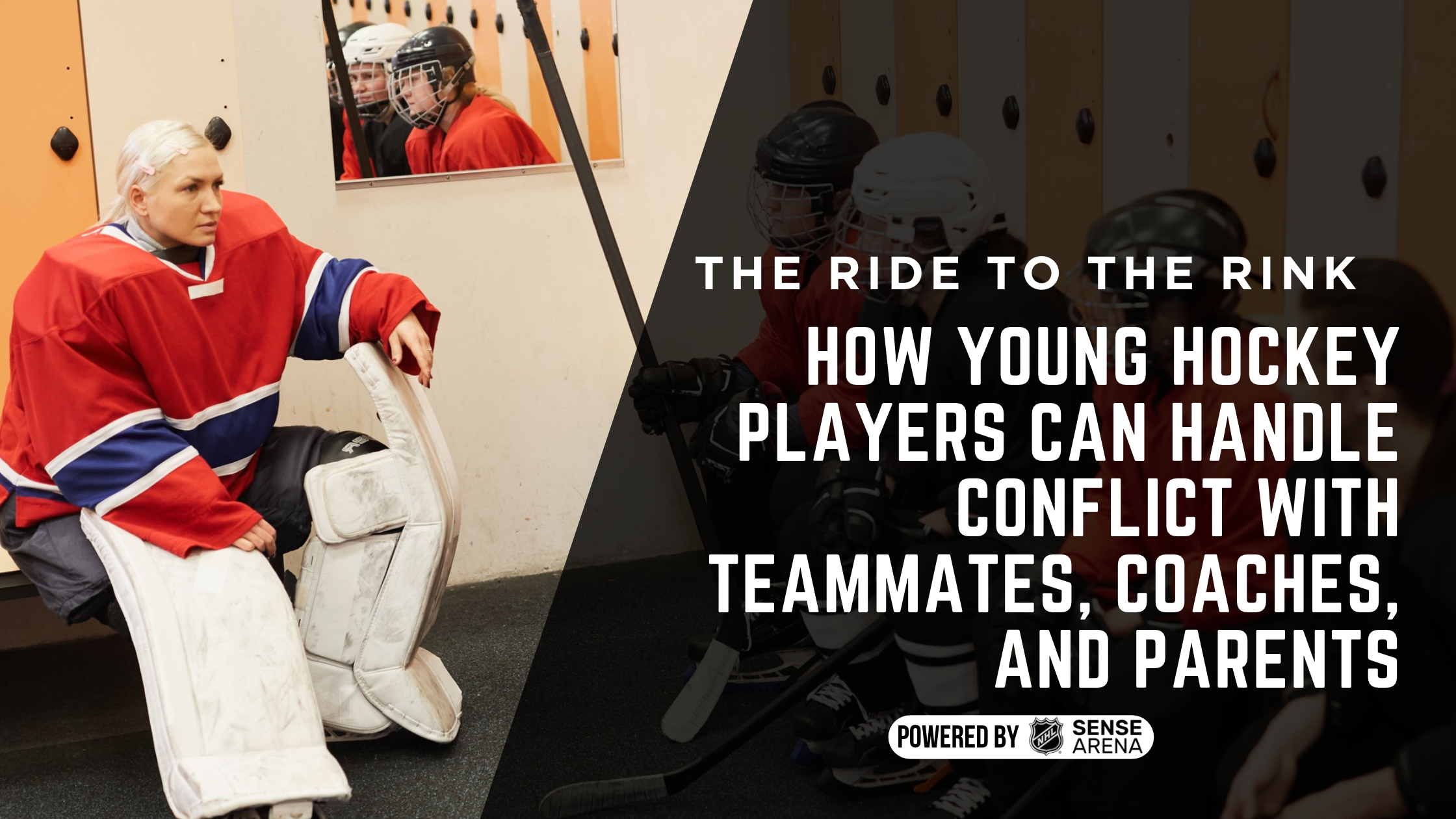
Conflict is going to happen during a hockey season.
A teammate is going to do something that frustrates you. A coach is going to make a decision you don’t understand. Your parents may have expectations that feel different from your own.
And sometimes, the person you’re frustrated with is going to be yourself.
Young hockey players often hear that they should be good teammates, respect their coaches, listen to their parents, and put the team first. All of that matters. But there is another skill that deserves just as much attention:
Learning how to have a difficult conversation when something isn’t right.
That was the focus of this episode of The Ride to The Rink, where Lee, Christie, Mike, and Bill explored how young athletes can approach conflict with more confidence, curiosity, and maturity.
The goal isn’t to eliminate conflict.
It’s to learn how to work through it.
Conflict Is Part of Being on a Team
Any time you bring a group of players together, there are going to be disagreements.
Players have different personalities. They see the game differently. They communicate differently. They want different things. Add competition, pressure, playing time, mistakes, coaching decisions, and expectations from parents, and there are plenty of opportunities for frustration.
That doesn’t mean something is wrong with your team.
It means you’re on a team.
The important question is what you do next.
Do you complain about your teammate to everybody except your teammate?
Do you stay angry at your coach without asking why a decision was made?
Do you argue with your parents without ever explaining what you actually want from hockey?
Or do you find a productive way to talk about it?
The players who learn that last skill are developing something that will help them far beyond hockey.
Talk to the Person, Not About the Person
One of the strongest themes from the conversation was simple: when possible, go directly to the person involved.
If you don’t understand something your coach is asking you to do, ask the coach.
If something a teammate is doing is affecting you, talk to the teammate.
If you and your parents seem to want different things from hockey, try to have a conversation about those expectations.
That sounds simple.
It isn’t always easy.
Talking about someone can feel safer than talking to them. Avoiding the conversation can feel easier than risking an awkward moment. Young athletes may worry:
-
What if my teammate gets mad at me?
-
What if my coach thinks I’m being disrespectful?
-
What if my parents don’t understand?
-
What if I say the wrong thing?
Those concerns are real.
But avoiding every uncomfortable conversation doesn’t make conflict disappear. In many cases, it allows frustration to grow.
Start With Questions, Not Accusations
Imagine you have a teammate who keeps carrying the puck into traffic instead of passing.
You could skate over and say:
“You’re a puck hog. Pass the puck.”
That probably isn’t going to create a productive conversation.
The episode offers a better starting point: ask questions.
Maybe you ask what they saw on the play. Maybe you ask why they decided to hold onto the puck. Maybe you talk about what the team was trying to accomplish in that situation.
Questions create room for a conversation.
Accusations often create a defense.
That difference matters.
Your teammate may have seen the play differently. They may genuinely believe they are helping the team. They may not even realize that other players are frustrated.
And that leads to another important lesson.
The Other Person Might Not Know There Is a Problem
Something can feel incredibly obvious to you without being obvious to the other person.
You may think everybody knows a teammate isn’t passing enough.
But does that teammate know?
Maybe nobody has ever told them.
Young athletes sometimes assume that another person's behavior is intentional:
“They know exactly what they're doing.”
“They don’t care about the team.”
“They just want all the attention.”
But those are assumptions.
Before deciding why someone is behaving a certain way, give them an opportunity to explain.
That doesn’t mean every behavior is acceptable. It means productive communication usually begins with curiosity instead of mind-reading.
Assume Positive Intent Until You Have a Reason Not To
One of the most valuable approaches young players can practice is entering a conversation believing that the other person probably wants something positive, too.
Maybe the teammate holding onto the puck believes they can create a scoring chance.
Maybe your coach is correcting you because they see something that can improve your game.
Maybe your parents are pushing you because they believe they are helping.
Their approach may still frustrate you. You may still disagree.
But beginning with the assumption that somebody wants a positive outcome changes the tone of the conversation.
Instead of:
“You only care about yourself.”
Try to understand:
“What are you trying to accomplish here?”
That mindset gives both people a better chance to find common ground.
You Cannot Control Their Reaction
Here’s something every young athlete should understand before having a difficult conversation:
You can do everything right and the other person may still react badly.
You can be respectful.
You can ask thoughtful questions.
You can choose your words carefully.
And your teammate might still become defensive.
That does not automatically mean the conversation was pointless.
As Bill explains in the episode, sometimes a person reacts defensively in the moment and thinks about the conversation later.
Maybe they never come back and say, “You were right.”
But perhaps they start passing the puck more.
Perhaps they become more aware of what teammates are seeing.
Perhaps the conversation plants a seed.
Don't judge the entire value of speaking up based only on the first 30 seconds of another person's reaction.
Players and Parents Need to Understand Each Other's Expectations
Conflict in youth hockey doesn't only happen inside the locker room.
It can happen in the car.
Players and parents may believe they are talking about the same goals while actually wanting very different things from the experience.
A parent might be focused on development, effort, advancement, or opportunity.
A player may simply love playing with friends.
Or the player may have big competitive goals that their parents don't fully understand.
There isn't necessarily a wrong answer.
The problem comes when nobody talks about it.
Players can benefit from thinking about questions such as:
Why do I play hockey?
What do I enjoy most about it?
What do I want to accomplish this season?
What do I need from my parents?
Parents can have their own answers, too.
When those expectations are discussed ahead of time, families have a better chance of being on the same page when stressful moments arrive.
Sometimes the Hard Conversation Is With Yourself
There is another side to conflict that can be even harder.
What if the other person has a point?
Maybe you really aren't passing enough.
Maybe your effort hasn't been as consistent as you thought.
Maybe your coach's correction is something you need to hear.
Maybe you keep making the same mistake and blaming someone else for the result.
Self-awareness is one of the toughest forms of honesty in sports.
It's much easier to notice what a teammate is doing wrong than to examine your own habits.
Strong players learn to ask themselves the same kinds of questions they might ask somebody else.
What could I have done differently?
Is there truth in the feedback I'm receiving?
Am I helping the team the way I think I am?
That doesn't mean assuming everything is your fault.
It means being willing to examine your own role.
Hard Conversations Are a Leadership Skill
Young players sometimes think leadership is reserved for the captain or the best player on the team.
It isn't.
Leadership can look like calmly addressing a problem instead of gossiping about it.
Leadership can mean asking a teammate a thoughtful question.
Leadership can mean approaching a coach respectfully when you don't understand something.
Leadership can mean telling your parents what you actually need from them.
And leadership can mean admitting when you need to change.
These skills become even more valuable as players advance.
Higher levels of hockey demand communication, accountability, and the ability to work through disagreements. Players who can handle difficult moments without turning every disagreement into a personal battle become valuable teammates.
Prepare for Conflict Before It Happens
One of Mike's observations in the episode is especially useful early in a season: teams should understand from the beginning that conflict is going to happen.
That allows players to think about how they want to handle it before emotions are high.
Some conflict will be resolved quickly.
Some will take time.
And some situations may never be completely resolved.
The goal isn't to create a hockey season where everyone agrees about everything.
The goal is to develop strategies that allow you to keep showing up, contributing to the team, and handling challenges in a healthy way.
Be Brave Enough to Do the Hard Thing
There is nothing comfortable about an uncomfortable conversation.
That's why it takes courage.
But courage in hockey isn't limited to blocking shots, battling in the corner, or stepping onto the ice in an important game.
Sometimes courage is walking up to a teammate and starting a conversation you're nervous to have.
Sometimes it's asking your coach a respectful question.
Sometimes it's explaining something honestly to your parents.
And sometimes it's looking at yourself and admitting that you need to improve.
As Bill reminds young players in the episode, part of the value of sport is learning to grow, be brave, and do hard things.
Those lessons travel with you long after the final buzzer.
So the next time conflict shows up during your hockey season, don't automatically run from it.
Ask questions.
Listen.
Assume positive intent.
Be willing to hear something you didn't expect.
And have the courage to start the conversation.
Keep learning, keep skating, and keep becoming the kind of teammate others can trust. And as always, tune in to The Ride to The Rink for more conversations designed to help young hockey players enjoy the game, grow through its challenges, and believe in where their hockey journey can take them.

Why Healthy Conflict Can Make Youth Hockey Teams Stronger