More Than a Celebration: What She Weekend Meant for Hayley Scamurra and Women’s Sports
There is a difference between being recognized and being celebrated.
Recognition means your name appears on a list. Your accomplishment is mentioned during a broadcast. You receive a nomination, a headline, or a brief moment of applause.
Celebration is different.
Celebration means people show up. It means creating an experience that reflects the work, sacrifice, and significance behind the achievement. It tells athletes that what they accomplished deserves more than acknowledgment—it deserves joy.
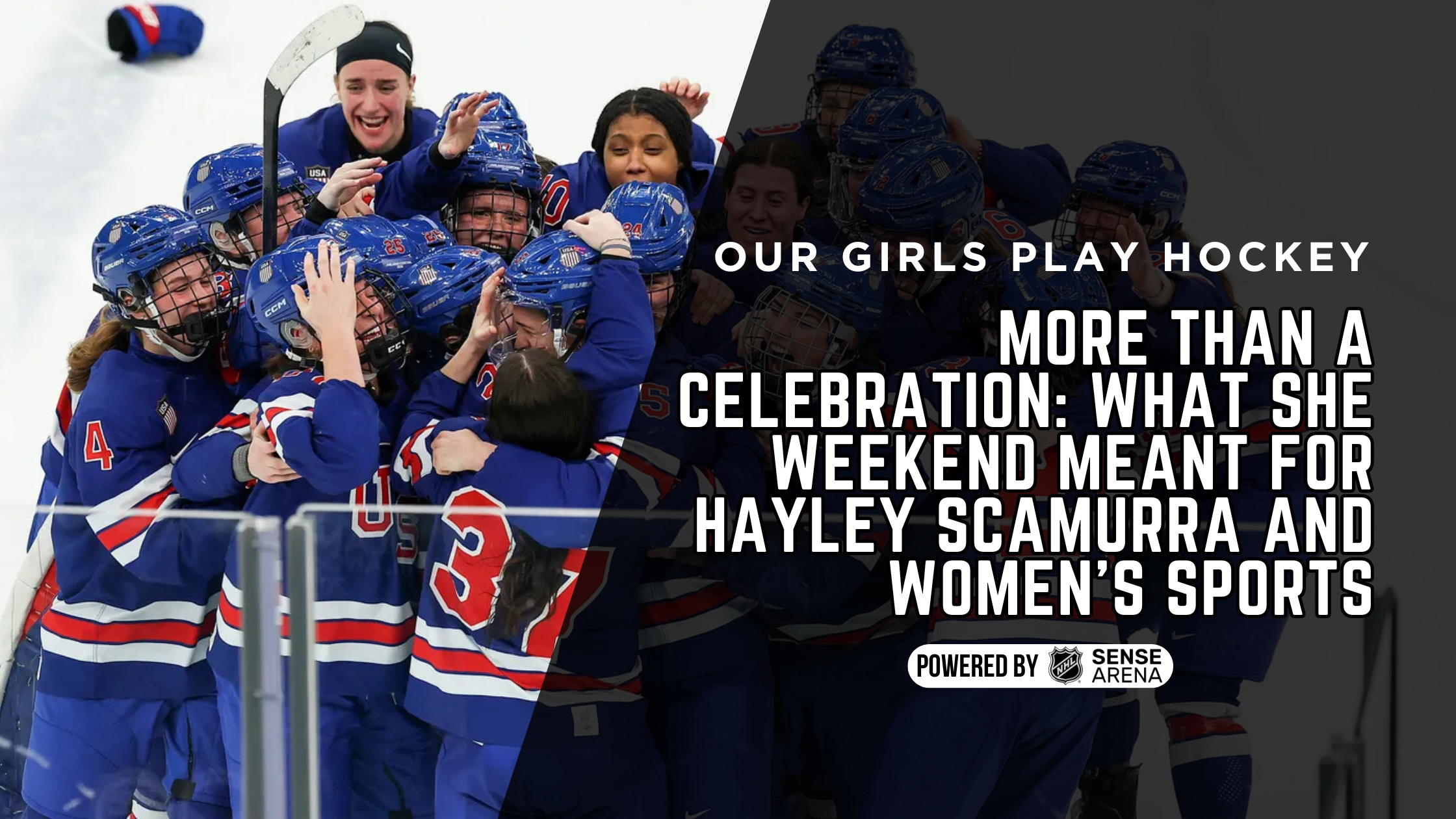
That difference was at the center of a special Our Girls Play Hockey conversation with Olympic gold medalist and Walter Cup champion Hayley Scamurra, who joined Lee Elias and Mike Bonelli to recap an unforgettable She Weekend in Las Vegas.
Organized by Flavor Flav and supported by Paris Hilton, MGM, sponsors, entertainers, and advocates for women’s sports, the weekend brought together female Olympic and Paralympic medalists for something women athletes have not always received: a full-scale celebration created specifically for them.
The concerts, gifts, red carpets, and celebrity appearances made the weekend memorable. But the larger meaning went far beyond the events themselves.
It was a glimpse of what women’s sports can look like when support becomes action.
A Celebration That Felt Long Overdue
For years, women athletes have competed at the highest level while receiving fewer resources, smaller financial opportunities, and less public attention than their male counterparts.
They have trained just as intensely. They have represented their countries. They have won championships and Olympic medals. They have helped build leagues and create opportunities that did not exist for the generation before them.
Yet the celebrations surrounding those accomplishments have often felt smaller than the achievements themselves.
A Stanley Cup or Walter Cup championship creates a natural gathering point for a team and its community. International competition works differently. After winning an Olympic medal, athletes may attend ceremonies or special events, but the team eventually separates. Players return to their hometowns, professional teams, families, and training programs.
There is not always a city-wide parade waiting for them.
She Weekend helped fill that gap.
From the moment the athletes arrived, the organizers made it clear that this was not an afterthought. Some participants traveled together from Salt Lake City on a flight operated by an all-female flight crew. Athletes arriving in Las Vegas were welcomed with interviews, cheering supporters, signs, and a parade through the city.
The mayor of Las Vegas presented the athletes with individual keys to the city. Flavor Flav personally greeted the participants. Fans lined the route, and the athletes were welcomed onto a main stage near T-Mobile Arena.
For Hayley, that location carried additional meaning. The arena is connected to her next professional chapter in Las Vegas, making the experience feel like both a celebration of the past and a preview of what is ahead.
When Support Becomes Tangible
One of the strongest messages from the episode was that supporting women’s sports requires more than posting a message or saying the right thing.
It requires participation.
Flavor Flav has become a visible advocate for women athletes, but his involvement has gone beyond public statements. He has financially supported athletes, attended competitions, helped teams with travel, and created opportunities for women who often have to fund significant portions of their athletic journeys themselves.
That distinction matters.
It is easy for individuals and companies to say they support women’s hockey. Meaningful support happens when they purchase tickets, sponsor athletes, attend games, invest in programming, share women’s sports content, and help create sustainable opportunities.
She Weekend demonstrated what can happen when people use their platforms, relationships, and resources intentionally.
Flavor Flav may have initiated the celebration, but the weekend grew as others decided to participate. Hotels, brands, entertainment venues, stylists, sponsors, and public figures contributed to the experience.
That collective investment sent a clear message: these athletes were worth celebrating.
Behind the Scenes of She Weekend
The weekend included the kind of experiences often associated with major professional sports celebrations and entertainment events.
There were interviews with local media outlets, a parade through Las Vegas, a red-carpet arrival, a casino-style tournament, concerts, athlete gatherings, and a gifting lounge filled with products from participating sponsors.
Hayley described walking into a room with gifts lining the walls, including headphones, speakers, fitness technology, jewelry, skincare products, apparel, pet accessories, and other items created or customized for the event.
For athletes who have watched similar gifting experiences become routine at major men’s sporting events, the moment represented another small but meaningful step toward equality.
The athletes also attended a Backstreet Boys concert at the Sphere, where they participated in a meet-and-greet before the show. The group received a public acknowledgment during the concert, giving the entire arena an opportunity to recognize their accomplishments.
The weekend concluded with another major concert experience, this time featuring Ed Sheeran.
These moments were fun, but they were not frivolous. They allowed athletes who spend much of their lives following demanding schedules to enjoy what they had accomplished together.
Athletes Are Allowed to Celebrate
Elite athletes are often praised for discipline, sacrifice, and relentless preparation. Those qualities are essential, but they can also create the impression that athletes must always be training, recovering, or preparing for the next competition.
That expectation can become even more restrictive for women.
Female athletes are frequently expected to be competitors, ambassadors, public speakers, community leaders, and perfect role models at all times. Their behavior is often examined differently from that of male athletes, especially when they are seen enjoying themselves away from competition.
Hayley addressed that double standard directly.
Being a professional athlete does not prevent someone from being an adult. Celebrating a victory, attending a concert, taking a few days away from structured training, or enjoying time with teammates does not erase the work required to reach the highest level.
In fact, learning to celebrate can be an important part of a healthy athletic career.
Hayley admitted that earlier in her career, stepping away from training could create anxiety. Missing a day or two felt uncomfortable because elite athletes are conditioned to believe that every session matters.
Experience helped change her perspective.
Championship moments pass quickly. A player can win a title and find herself on a different team days later. A national team can capture a gold medal and then immediately separate as players return to their individual lives.
Success should never be taken for granted, but it should be enjoyed.
“You don’t know if it’ll be the last one,” Hayley explained during the conversation.
That is a valuable lesson for athletes at every level.
Celebrate the tournament win. Take the team picture. Enjoy the bus ride home. Thank the people who helped. Remember the moment before immediately turning your attention toward the next objective.
Ambition and gratitude can exist together.
Why Visibility Matters for Young Girls
The value of She Weekend extends beyond the athletes who attended.
Young players are watching.
They see Olympic champions participating in parades. They see women athletes receiving keys to a city. They see fans lining the streets, brands investing in the event, entertainers offering public support, and major venues welcoming women’s sports.
Those images influence what young athletes believe is possible.
For previous generations of girls, playing professional hockey may have seemed unlikely or impossible. Today’s players can watch women compete in a growing professional league, represent their countries, sign endorsement agreements, appear in major media campaigns, and receive recognition from fans around the world.
The next step is making those opportunities feel normal.
Hayley expressed the hope that celebrations like She Weekend eventually become “second nature” for women athletes. The goal is not for every event involving women’s sports to be treated as unusual or groundbreaking.
The goal is for people to say, “Of course they had a parade. Of course people showed up. Of course their success was celebrated.”
That normalization is one of the clearest signs of progress.
Recognition, Awards, and Hockey’s Place in Sports Culture
The episode also included a passionate discussion about the ESPYs and the broader recognition of hockey accomplishments.
Both the men’s and women’s national teams had delivered remarkable Olympic performances. The women’s team, in particular, completed a dominant tournament and won a dramatic gold-medal game against Canada.
The hosts questioned whether achievements of that magnitude received the attention they deserved compared with more heavily followed professional sports.
The conversation was not about diminishing another team’s accomplishment. It was about asking how sports awards define excellence.
Should popularity influence the outcome? Should annual professional championships carry more weight than Olympic victories? How do fan voting, television audiences, and business considerations affect which moments receive the greatest attention?
There are no simple answers, but the discussion reflects a familiar reality for hockey fans: extraordinary accomplishments within the sport do not always receive equivalent attention in the broader sports media landscape.
That makes events like She Weekend even more important.
When traditional institutions fall short, new advocates and communities can create their own ways to honor athletes.
Staying Grounded While the Spotlight Grows
Despite the major accomplishments, public attention, and celebrity experiences surrounding the weekend, Hayley remained characteristically humble throughout the conversation.
Lee playfully asked whether she had accepted that she had become a celebrity.
Her answer was simple: no.
That humility is part of what makes her perspective so valuable for young players and hockey families.
Success has not changed her sense of gratitude. She recognizes the work that led to these opportunities, but she also recognizes the people who made them possible. Throughout the episode, she repeatedly thanked the organizers, sponsors, hotel staff, stylists, performers, and support teams behind the weekend.
Confidence does not require entitlement.
Athletes can understand that they deserve recognition while remaining appreciative of the people who provide it. They can enjoy the spotlight without allowing it to define them.
That balance is an important example for young athletes navigating their own successes.
The Bigger Meaning of She Weekend
She Weekend was filled with extraordinary moments, but its most important contribution may have been the message behind them.
Women athletes should not have to apologize for wanting to be celebrated.
They should not have to prove that their achievements are valuable enough to deserve investment. They should not be expected to carry an entire sport, serve as flawless role models, and accept limited recognition without question.
They have earned the right to compete, succeed, celebrate, and enjoy the opportunities created by their work.
The weekend also offered a model for supporters of women’s sports.
Do more than say you care.
Attend the games. Buy the tickets. Share the stories. Sponsor the athletes. Support the leagues. Introduce young players to the women competing at the highest level. Use your influence to create opportunities rather than simply commenting on the lack of them.
Progress happens when support becomes visible, financial, consistent, and personal.
Keep Celebrating the Women’s Game
For hockey families, coaches, and young players, this episode offers an important reminder: the journey is not only about the next practice, game, tryout, or championship.
It is also about appreciating how far the game has come.
Women like Hayley Scamurra have helped build the foundation that today’s girls are standing on. The next generation will have opportunities that once felt impossible because current and former players continued competing, advocating, and believing in a better future.
There is still work to do. But moments like She Weekend show what progress can look like—and how much joy can be created when people come together to celebrate it.
Listen to the full episode of Our Girls Play Hockey, share it with a young athlete, and continue supporting the players and organizations moving the women’s game forward.
Every ticket purchased, game watched, story shared, and voice added to the conversation helps create a future where celebrating women athletes is not a special exception.
It is simply what we do.
Keep playing, keep supporting one another, and keep making room for the next generation to dream even bigger.

What Really Makes a Great Young Goalie? Lessons from Andrew Raycroft