Team GG at Wish Cup: Roller Hockey, Youth Hockey, and Growing the Game
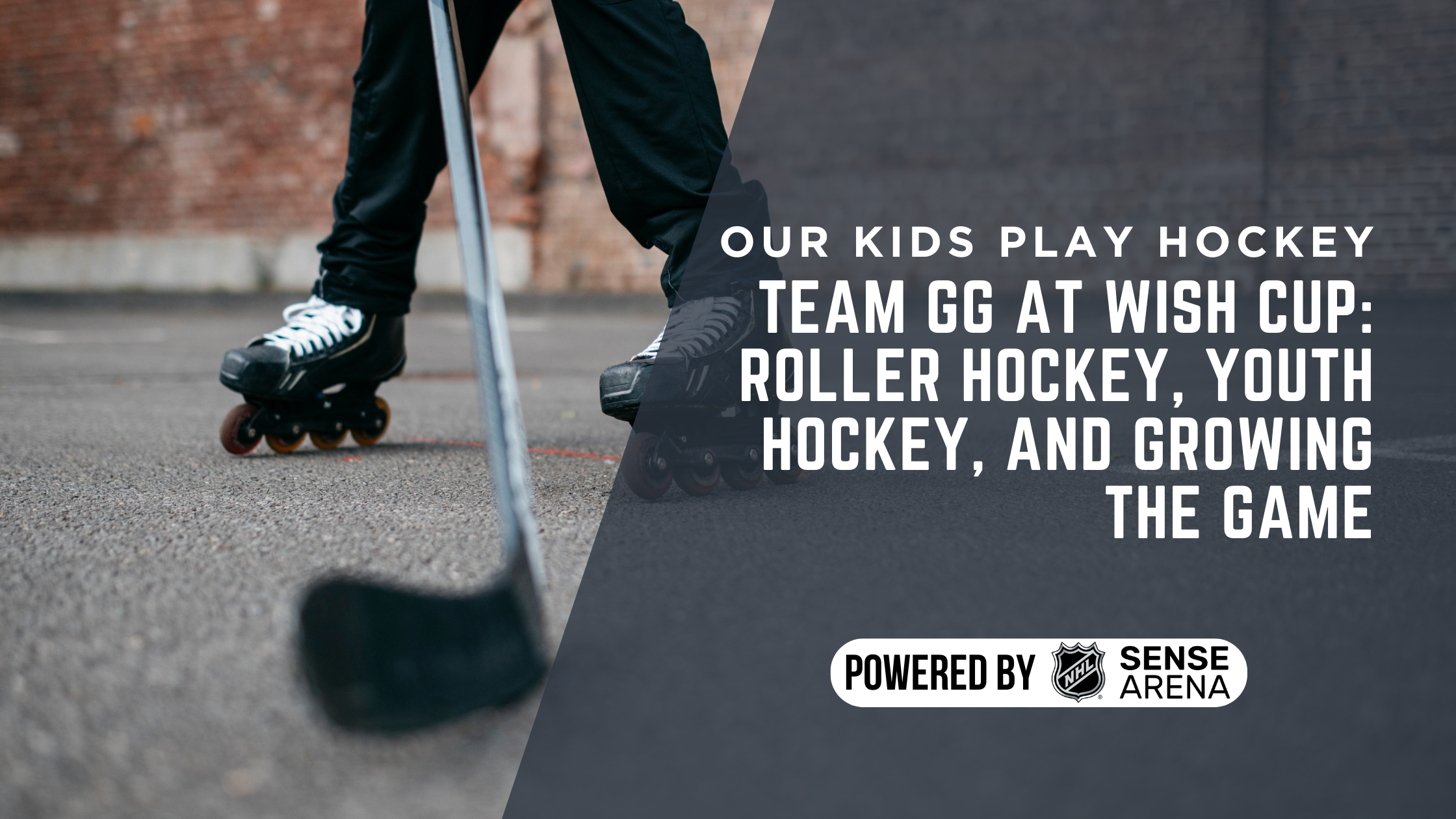
Team GG at Wish Cup: Why Hockey’s Future Might Start Beyond the Ice
🏒 Hockey families know tournament weekends can become some of the most unforgettable experiences in a young player’s life.
Yes, the games matter. The goals, saves, wins, losses, and trophies all become part of the story. But ask almost any player what they remember years later, and the answers usually go beyond the scoreboard.
They remember the hotel hallway.
The team meal.
The car ride.
The locker room laugh.
The teammate who became a lifelong friend.
That was the heart of this special episode of Our Kids Play Hockey, recorded with Team GG live from the Wish Cup in Nashville, Tennessee.
This episode brought together hockey creators Kaxzi, Danny / DB16 Media, Hintzy, Keegan Olivera, and Zachary Hockey for a conversation about tournament culture, roller hockey, online community, real-life connection, and how we can keep growing the game for the next generation.
And while the setting was fun, the message was bigger than one weekend.
Hockey grows when people feel welcome. Hockey grows when kids can access it. Hockey grows when we remember that joy is not separate from development — it is part of development.
The Best Tournament Memories Usually Happen Away From the Scoreboard
One of the first themes Team GG brought up was something every hockey parent can relate to: the games are only one part of the tournament experience.
The team talked about how much they value the moments away from the rink — hanging out at the Airbnb, getting food together, spending time as a group, and simply being teammates.
That is not just true for adult players or content creators. It is true for youth hockey players, too.
For kids, tournament weekends are often where team culture really forms. They spend more time together than they do during a normal practice week. They learn each other’s personalities. They build inside jokes. They experience wins and losses together in a concentrated environment.
Those moments create bonds.
For hockey parents, this is a helpful reminder: the tournament is not only about how your child performs. It is also about how they connect, grow, and learn to be part of something bigger than themselves.
The car rides, meals, downtime, and team activities matter. Sometimes, they matter more than the games themselves.
Online Hockey Creators Are Making Real-World Impact
Team GG is made up of hockey creators with strong online followings, but this episode focused heavily on what happens when online community becomes real-life connection.
The group talked about what it is like to meet people face-to-face who know their videos, commentary, stories, and personalities. Online comments are one thing. But having someone walk up and say, “Your content made me want to play hockey,” is something different.
Kaxzi shared that multiple people have told him they started playing hockey because they watched his journey learning the game. That is a powerful example of how visibility can create possibility.
For a new player, especially one who may not have grown up in a traditional hockey environment, seeing someone else learn can be the spark that says, “Maybe I can do this too.”
Keegan Olivera also shared a memorable moment from Nebraska, where a young fan recognized him for his Chicago Blackhawks commentary content. That moment stuck with him because it showed how far hockey content can reach, even beyond the city or market it may seem connected to.
That is the power of today’s hockey community.
A kid does not have to live next to an NHL arena to be inspired. A player does not have to come from a traditional hockey market to fall in love with the game. A single video, post, or story can open the door.
Wish Cup Shows What Hockey Can Be at Its Best
The Wish Cup is not just another tournament. As Team GG discussed, it is connected to the Make-A-Wish mission, and that gives the event a deeper purpose.
The group described the tournament as feeling more like a family event than a simple “show up, pay the fee, play the games” tournament. There are events, energy, community, and a clear sense that the weekend is about more than wins and losses.
That matters.
Hockey is competitive by nature. It should be. Competing is part of the fun. But competition becomes even more meaningful when it is placed inside a culture of respect, community, and purpose.
Team GG captured that balance perfectly. Some players admitted they get extremely competitive once the games begin. Others were more focused on enjoying the weekend and not getting “absolutely worked.” But underneath the jokes was a bigger truth:
You can compete hard and still keep the game joyful.
That is an important lesson for youth hockey.
The goal is not to remove competition. The goal is to place competition in a healthy context. Kids should learn to battle, care, prepare, and push themselves. But they should also learn that hockey is supposed to be fun, and that the relationships they build are part of the reward.
Roller Hockey Does Not Ruin Ice Hockey — It Can Expand It
One of the most valuable parts of the episode was the discussion around roller hockey and ice hockey.
There is still a myth in some hockey circles that roller hockey can hurt an ice hockey player’s stride or development. Team GG pushed back on that idea.
They were honest: roller hockey and ice hockey are different. The stride is different. The surface is different. The stopping is very different. The strategy can be different, especially with no offsides and more open offensive play.
But different does not mean harmful.
In fact, the group highlighted several benefits of roller hockey:
- It encourages offensive creativity.
- It helps players develop quicker hands.
- It gives players more chances to make plays.
- It can improve hockey IQ in a different environment.
- It is often more accessible than ice.
- It gives players another way to fall in love with the game.
For families, this is a major takeaway.
Not every hockey rep has to happen on ice. Not every developmental moment needs a coach, whistle, or structured drill. Roller hockey, street hockey, and driveway hockey can give kids something incredibly valuable: freedom.
Freedom to try moves.
Freedom to make mistakes.
Freedom to create.
Freedom to play without pressure.
That kind of unstructured play has helped shape countless hockey players.
Accessibility May Be Hockey’s Biggest Challenge
The episode also touched on one of the most important topics in youth hockey: accessibility.
Ice hockey is expensive. Ice time is limited. Equipment costs add up. Travel can be overwhelming. For many families, the traditional hockey path is simply difficult to access.
That does not mean ice hockey is going away. But it does mean the hockey community needs to think bigger.
Team GG talked about roller hockey, outdoor rinks, street hockey, smaller formats, and alternative ways to play as important entry points into the sport. The message was clear:
If we want hockey to grow, we need more ways for kids to play.
That may mean rollerblades in the driveway.
It may mean a stick and ball in the street.
It may mean small-area games.
It may mean outdoor roller rinks.
It may mean giving kids permission to play without structure.
One of the strongest points in the conversation was that growing the game starts by getting sticks in kids’ hands. Not every child’s first hockey experience has to be a full-equipment ice session. Sometimes, the first spark happens in sneakers.
Or rollerblades.
Or on a driveway.
Or at a local outdoor rink with a friend.
Parents: Let Them Play
For hockey parents listening to this episode, one of the most practical takeaways is also one of the simplest:
Let your kids play hockey away from the rink.
That does not mean replacing their team practices or ice sessions. It means adding opportunities for creativity and joy.
Ask yourself:
- Does my child have a stick they can use outside?
- Do they have a safe place to shoot, stickhandle, or play?
- Could they try rollerblades or inline hockey?
- Are there neighborhood kids who might join in?
- Can I resist the urge to turn every moment into a drill?
That last question matters.
Unstructured play is where kids experiment. It is where they discover moves. It is where they build confidence. It is where they learn problem-solving without a coach giving them every answer.
And maybe most importantly, it is where they remember that hockey belongs to them.
Hockey Is Bigger Than One Surface
This episode with Team GG was fun, fast-moving, and full of laughs. But underneath the humor was a powerful message for the entire hockey community.
Hockey is bigger than ice.
Hockey is bigger than one tournament.
Hockey is bigger than one path.
Hockey is bigger than the scoreboard.
For some kids, the game starts on a frozen pond. For others, it starts at a rink. For others, it starts in a driveway, on rollerblades, or watching a creator online who makes the game feel possible.
All of those entry points matter.
If we want more kids to play hockey, we need to celebrate more ways to play hockey.
That means supporting events like the Wish Cup. It means recognizing the role creators can play in inspiring new players. It means valuing roller hockey, street hockey, and small-area games. It means helping families see that development and fun are not opposites.
They are teammates.
Final Thoughts
Team GG’s appearance on Our Kids Play Hockey is a great reminder that the future of the game depends on connection, creativity, accessibility, and joy.
For parents, the message is simple: do not underestimate the value of the moments outside the rink. The tournament memories, the driveway games, the street hockey sessions, the roller reps, and the friendships all matter.
Because at the end of the day, the goal is not just to build better hockey players.
It is to help kids build a lifelong relationship with the game.
🎧 Listen to the full episode of Our Kids Play Hockey and follow Team GG throughout the Wish Cup as they continue growing the game with energy, personality, and purpose.
Keep finding ways to make hockey fun, welcoming, and accessible — because every stick in a kid’s hands is a chance for the game to grow.

How to Be More Coachable—and Learn More From Every Hockey Shift