The One Standard That Can Change a Young Hockey Player’s Journey
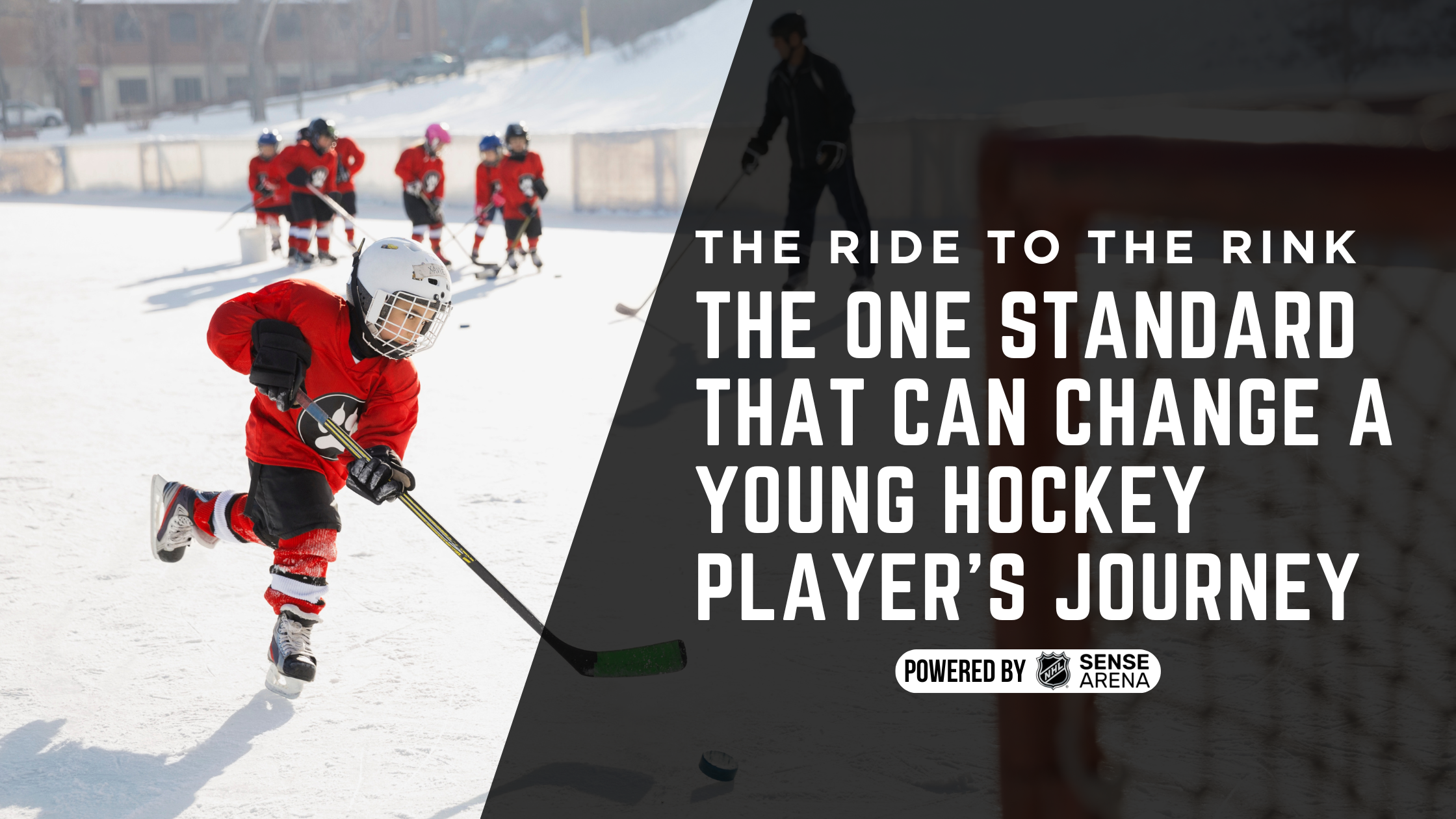
Every young hockey player has goals.
Some want to score more goals. Others want to make a higher-level team, earn more ice time, become a starting goalie, or simply feel more confident when they arrive at the rink.
Goals can provide direction, but goals alone do not determine what a player does every day. That is where standards become important.
A standard is a guideline a player chooses to follow consistently. It is a personal expectation that influences preparation, effort, recovery, schoolwork, and behavior as a teammate.
In this episode of The Ride to the Rink, Lee Elias and Mike Bonelli challenge young players to stop waiting for someone else to create those expectations. Instead, players can begin establishing their own standards—starting with one manageable commitment.
The message is straightforward: do not attempt to change everything at once. Choose one habit, practice it, and build from there.
What Is a Personal Standard?
A personal standard is a commitment that helps guide your decisions.
For a young hockey player, a standard could be:
- Arriving at the rink one hour before a game
- Being completely dressed ten minutes before practice
- Packing equipment the night before
- Eating a useful pregame meal or snack
- Completing schoolwork before leaving for practice
- Putting screens away before a game
- Supporting teammates in every situation
- Giving the best effort available that day
- Getting enough sleep and recovery
These standards are not predictions about results. A player cannot guarantee a goal, a win, a shutout, or a roster decision.
A player can, however, control preparation.
That distinction matters. When players build their confidence entirely around outcomes, their emotions can rise and fall with every shift. When they build confidence around controllable standards, they have something more stable to rely on.
They can ask, “Did I prepare properly? Did I support my teammates? Did I give the best effort I had today?”
Those questions create opportunities for honest growth.
Standards Are Not the Same as Perfection
Setting a standard does not mean a player will follow it perfectly every day.
There will be rushed mornings, forgotten equipment, difficult practices, late homework assignments, poor sleep, and games when the player knows more effort was available.
That does not make the standard useless.
Standards develop through repetition, failure, adjustment, and maturity. The important step is recognizing when the standard was missed and deciding what to do differently next time.
A productive response might sound like this:
“I was not ready when practice started today. Tomorrow, I will pack earlier and leave the house ten minutes sooner.”
That response is more valuable than making excuses or deciding the entire habit has failed.
The purpose of a standard is not to prove that a player is perfect. It is to provide a clear direction when things become difficult.
Start With One Standard
One of the most important points in this episode is the instruction to start with one.
A motivated player may hear a conversation about discipline and immediately create a long list:
- Wake up earlier
- Eat perfectly
- Train every day
- Study game film
- Stretch after every practice
- Complete all homework early
- Eliminate screen time
- Arrive first
- Leave last
- Never have a bad attitude
That list may sound impressive, but it is unlikely to last.
Trying to change too many behaviors at the same time can leave a player feeling overwhelmed. When several habits inevitably slip, the player may conclude that they lack discipline.
The problem is often not the player. The problem is the plan.
Choose one standard that is specific and realistic. Practice it until it becomes normal. Then consider adding another.
For example:
First standard: Pack the hockey bag before going to bed.
Once that becomes consistent:
Second standard: Prepare breakfast or a snack the night before.
Later:
Third standard: Arrive early enough to complete a proper warmup.
Each habit supports the next. Over time, the player is not simply completing a checklist. The player is developing an identity as someone who prepares well.
Align Personal Standards With Team Expectations
Young players are also part of a team. That means personal standards should work alongside the expectations established by coaches.
A coach may have rules covering:
- Arrival times
- Dress codes
- Warmups
- Meals
- Locker-room behavior
- Equipment preparation
- Communication
- Academic eligibility
Players should understand those expectations and make sure their own habits support them.
However, a team’s minimum expectation does not have to become a player’s maximum effort.
Suppose a coach says only that everyone must be present before practice begins. A player can still decide to arrive earlier, warm up properly, dress on time, and be fully prepared before stepping onto the ice.
That is not about showing off or proving superiority. It is about taking responsibility for personal readiness.
High standards do not need to wait for a higher-level team, a championship game, or a future coach. Players can begin practicing them at their current age and level.
Preparation Reduces Avoidable Stress
Some of the most useful standards are also the simplest.
Packing equipment the night before can prevent a rushed search for gloves, jerseys, water bottles, or skate guards. Putting the bag in the car can make an early-morning departure easier. Preparing clothing and breakfast can reduce the number of decisions that must be made while everyone is tired.
These actions may seem small, but small actions can shape the entire experience of arriving at the rink.
A player who arrives rushed and worried may begin the game mentally distracted. A player who arrives prepared has more time to settle in, connect with teammates, warm up, and focus.
Preparation does not guarantee a great performance, but it gives the player a better opportunity to perform.
Effort Is a Daily Standard
“Work as hard as possible” is a valuable standard, but it also requires perspective.
A player’s available energy may be different from one day to the next. School stress, illness, travel, poor sleep, or a demanding schedule can affect how the body and mind feel.
That does not mean effort no longer matters.
It means players should evaluate effort honestly rather than comparing every day to their highest-energy performance.
After a practice or game, a player can ask:
- Did I stay engaged?
- Did I respond after mistakes?
- Did I support my teammates?
- Did I listen to my coach?
- Did I give the best effort available today?
- What can I improve tomorrow?
This kind of reflection creates accountability without turning every imperfect performance into a crisis.
Standards Extend Beyond the Ice
Hockey standards are not limited to skating, shooting, passing, or goaltending.
As players get older, academic requirements become more important. Teams, schools, and programs may require athletes to maintain certain grades to remain eligible.
A player who waits until those requirements appear may struggle to build new study habits under pressure. A player who already has standards for homework, organization, and sleep will be better prepared.
The same principle applies to recovery.
A player may love staying up late, watching videos, gaming, or talking with friends. Those activities are part of being young, but players also need to understand how their choices affect the next day.
The goal is not to remove every enjoyable activity. The goal is to make intentional decisions.
Standards help players recognize when an immediate choice may work against a larger goal.
Parents and Coaches Can Help Players Choose Wisely
Young athletes do not need to develop their standards alone.
Parents and coaches can help players identify habits that are age-appropriate, useful, and achievable. The most effective conversations are collaborative rather than controlling.
Instead of giving a player fifty new rules, an adult might ask:
- What part of getting ready for hockey feels rushed?
- What could you prepare the night before?
- What would help you feel more confident at practice?
- What does being a great teammate look like to you?
- Which habit would you like to improve first?
These questions give the player ownership.
That ownership matters because a standard is more likely to last when the player understands why it matters and participates in choosing it.
Adults can also recognize progress. A simple acknowledgment—“You have packed your bag without being reminded all week”—helps reinforce the behavior without turning every habit into a reward or punishment.
What Happens After the First Standard?
Once a player has maintained one standard consistently, another can be added.
The goal is not to create an enormous list of rules. Lee and Mike suggest that a small number of meaningful standards can provide a strong path forward.
A player’s standards might eventually include:
- Prepare equipment the night before.
- Arrive early enough to warm up.
- Complete schoolwork before practice.
- Be a supportive teammate.
- Evaluate effort honestly after each session.
Those five commitments cover preparation, academics, teamwork, and self-awareness.
They are also flexible. Standards can change as a player matures, joins a different team, takes on more schoolwork, or learns what preparation methods are most effective.
Changing a standard is not necessarily lowering it. Sometimes it means making the habit more useful, specific, or appropriate for the player’s current stage.
The Challenge for Young Hockey Players
Think about one part of your hockey routine that could become more consistent.
Do not choose ten things. Choose one.
Write it down in a simple sentence:
“My standard is…”
Then decide what following that standard will look like in real life.
For example:
“My standard is to pack my equipment before bed on every hockey night.”
Share it with a parent or coach. Ask them to help you stay accountable, and evaluate your progress after a week.
You will not be perfect. That is not the goal.
The goal is to begin becoming the kind of teammate, student, athlete, and person who follows through on meaningful commitments.
One standard may feel like a small beginning, but every strong routine has to begin somewhere.
Keep learning, keep building, and keep believing in the player you are becoming. Listen to The Ride to the Rink for more practical conversations that help young athletes sharpen their edges on and off the ice.

How Young Hockey Players Can Handle Conflict With Teammates, Coaches, and Parents