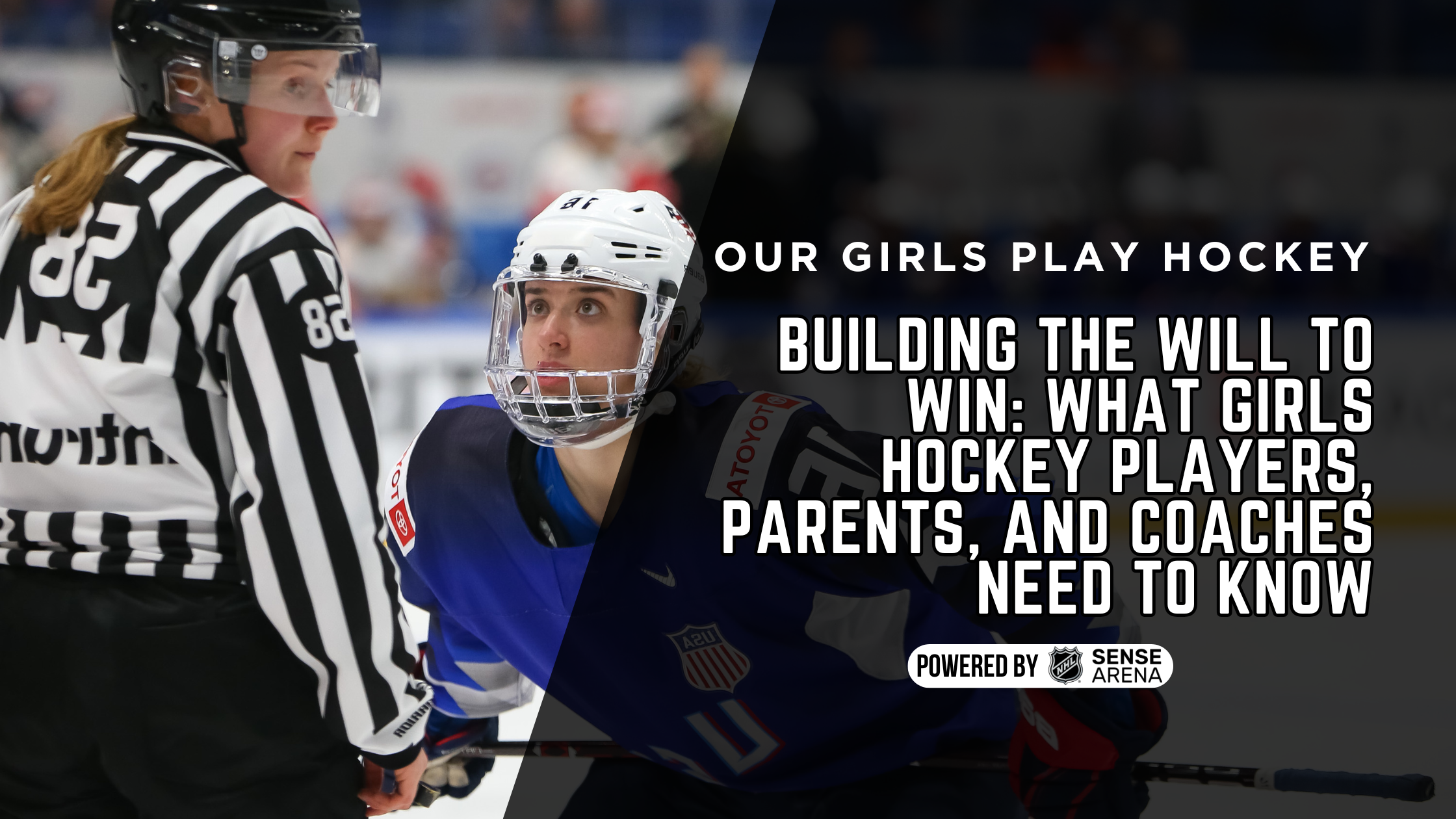
Building the Will to Win: What Girls Hockey Players, Parents, and Coaches Need to Know
🏒 Every hockey parent has seen it.
One player seems born to compete. She battles for every puck, hates losing races in practice, and treats every board game at home like a championship final.
Another player loves hockey, loves her teammates, and enjoys being on the ice — but does not seem overly concerned about the final score.
So which one is “right”?
In this episode of Our Girls Play Hockey, Lee Elias and Olympic gold medalist and PWHL Walter Cup champion Hayley Scamurra unpack a topic that every hockey family eventually wrestles with: how do we help young players develop the will to win without taking the joy out of the game?
The answer is not as simple as “winning matters” or “winning does not matter.” In hockey, and in life, the truth lives somewhere in the middle.
Winning does matter. Competing matters. Effort matters. But at the youth level, especially for young girls still discovering who they are as athletes, the bigger goal is helping them build passion, resilience, confidence, and a healthy relationship with competition.
And as Hayley makes clear, that process looks different for every player.
The Desire to Win Develops Differently for Every Athlete
One of the most important messages in this conversation is that competitiveness is not a button parents can press.
Some kids are fiercely competitive at eight years old. Some do not discover that part of themselves until their teenage years. Some may never become ultra-competitive in sports, and that is okay too.
That does not mean they are lazy. It does not mean they are weak. It does not mean they cannot have a meaningful and successful hockey experience.
Hayley shares that, for her, competitiveness was always there. She remembers wanting to win in hockey, soccer, tennis, and even Scrabble against her brothers. But while that internal drive was present early, the way she applied it changed as she grew.
When she realized hockey could lead to college opportunities, her preparation evolved. Off-ice training, nutrition, skill development, and recovery became bigger parts of the process. The desire was already there, but the resources and structure around it grew.
That distinction matters for parents.
A young player does not need to have a professional athlete’s mindset at eight, ten, or twelve years old. What she needs is room to love the game, explore challenges, and gradually discover what she is willing to work for.
Wanting Something and Earning Something Are Not the Same
One of the strongest themes from Lee’s side of the conversation is the difference between wanting and earning.
Plenty of young athletes say they want to play in college, make a top team, win a championship, or represent their country one day. Those dreams are wonderful. Parents should encourage them.
But dreams require work.
That does not mean parents should crush big goals with “reality checks.” It means they should lovingly and honestly help kids understand that outcomes are connected to effort, preparation, and consistency.
A healthy message sounds like this:
“I love that you have that dream. I support you. And if that is something you truly want, there will be work that comes with it. Whether you choose to do that work is up to you.”
That approach gives the athlete ownership.
It does not shame her. It does not force her. It simply connects the dream to the process.
For girls in hockey, this is especially powerful. We want young female athletes to know they are capable of big things, while also helping them understand that confidence grows through action.
Parents Can Cultivate Compete Level, But They Cannot Force It
Parents and coaches can absolutely help create environments where competitiveness can grow.
They can put players in situations that challenge them. They can encourage effort. They can celebrate small improvements. They can help athletes learn how to respond when things get difficult.
But they cannot force a player to care.
That is a hard truth for many sports parents. We can see potential in our kids. We can see what they might become. We can see the gap between where they are and where they say they want to go.
But the athlete has to choose the work.
The best thing adults can do is create the conditions for growth:
- Make competition fun and challenging.
- Praise effort and preparation, not just results.
- Let kids experience disappointment without rescuing them from every hard feeling.
- Ask questions instead of delivering lectures.
- Give feedback that includes a useful next step.
- Keep the relationship bigger than the sport.
That last point is essential. A young player should never feel that her value at home rises and falls with her performance on the ice.
The Difference Between Criticism and Constructive Criticism
This episode offers a powerful reminder for hockey parents and coaches: criticism and constructive criticism are not the same thing.
Saying, “You did not work hard enough today,” may be honest, but it does not give the player anywhere to go.
Constructive criticism adds direction.
A more useful version might sound like:
“I did not think that was your best effort today. What do you think would help you be more ready next game?”
Or:
“I noticed you looked tired in the third period. Let’s talk about sleep, food, and how you prepare before games.”
The difference is huge.
Criticism points out a flaw. Constructive criticism offers a path forward.
Young athletes may not always love feedback, but they are far more likely to absorb it when they feel respected, involved, and supported.
The 24-Hour Rule Is a Game-Changer
One of the most practical takeaways from Hayley is the idea of waiting before giving feedback, especially after emotional games.
Even at the professional level, athletes need time to process. Parents do too.
Hayley shares that her dad will sometimes wait 24 hours before offering thoughts. He may also ask, “Can I give you a piece of advice?” That simple question gives the athlete a choice and makes the conversation feel less like a lecture.
For youth hockey families, this is gold.
Right after a game, emotions are high. Parents may be frustrated. Players may be disappointed, embarrassed, exhausted, or overwhelmed. That is rarely the best moment for a detailed performance review.
Sometimes the best thing a parent can say after a tough game is:
“I love watching you play.”
That does not mean hard conversations never happen. It means timing matters.
The Car Ride Home Is Not a Coaching Session
The postgame car ride can build trust or damage it.
Lee brings up a lesson that every hockey parent should write down: the car ride home is not for coaching.
If the player wants to talk about the game, that may open the door. But adults should not assume every ride home needs a breakdown of missed passes, poor effort, or tactical mistakes.
Young athletes often know more than we think. They know when they played poorly. They know when they are disappointed. They know when the game hurt.
What they need in that moment is often connection, not correction.
A helpful question might be:
“Do you want to talk about the game, or would you rather just head home?”
That question gives the player autonomy. It also tells her that your relationship is not dependent on her performance.
Winning Is Really, Really Hard
One of the most honest parts of this episode is the discussion about how difficult winning actually is.
In youth sports, expectations around winning can become wildly unrealistic. Parents may expect tournament wins, league championships, all-star selections, and constant upward progress.
But winning is hard.
Only one team wins the tournament. Only one team wins the championship. At the Olympic level, only one team wins gold.
That is what makes winning meaningful.
Hayley explains that if you won all the time, it would lose its power. The losses, setbacks, and heartbreaks are part of what make the wins feel special.
This is a lesson young athletes need. Not because we want them to enjoy losing, but because we want them to understand that losing is not proof they are failing.
Often, losing is part of becoming.
Losing Big Is Part of Winning Big
Hayley’s reflections on losing the 2022 Olympic gold medal game are among the most powerful moments in the episode.
She describes the pain of being on the ice while the other team celebrated. She talks about the heartbreak of feeling like that might have been her first and only chance to win Olympic gold. She remembers sitting in the locker room, not wanting to take off the jersey because that team, that moment, and that journey were over.
That kind of loss stays with an athlete.
But it also teaches.
Hayley explains that the experience helped prepare her for future pressure. It made her more resilient. It became part of the foundation that helped her step into later championship moments with more perspective and strength.
For young hockey players, the scale may be different, but the lesson still applies.
A 12U championship loss is not the same as losing an Olympic final. But the emotional skill of getting back up, taking another step, and choosing to keep going is incredibly valuable.
That is where sports become bigger than sports.
Help Young Athletes Take the Next Step
When kids are hurting after a loss, they do not always need a speech.
Sometimes they need an arm around the shoulder. Sometimes they need silence. Sometimes they need a teammate, parent, or coach to simply help them take the next step.
Lee makes an important point in the episode: when a young athlete is in pain, adults should be careful not to just push them forward from behind. Walk with them.
That is a beautiful image for youth sports.
We do not need to remove every obstacle. We do not need to fix every disappointment. But we can help our kids learn that hard moments are survivable, and they do not have to face them alone.
Process Goals Build Confidence Along the Way
Another major takeaway from Hayley is the importance of process goals.
The big goal might be Olympic gold, a championship, or making a certain team. But if everything depends on one final outcome, the emotional weight can become overwhelming.
Instead, Hayley focused on the next step:
- Performing well at the next Team USA camp
- Making the next roster
- Improving her game
- Staying ready for the next opportunity
- Continuing to grow as a player
For young athletes, this approach is incredibly useful.
A player may not be able to control whether she makes the team, wins the tournament, or scores the goal. But she can control her preparation, attitude, effort, habits, and response to adversity.
Those smaller wins matter.
They build confidence. They create momentum. They teach athletes that success is not only found at the finish line.
What Coaches Can Do to Build Competitiveness
For coaches, this episode includes a simple but important challenge: build competition into practice.
Not every drill should be a line drill with no pressure. Players need opportunities to race, battle, make decisions, recover from mistakes, and compete in small areas.
Competition in practice helps players learn how to handle pressure in games.
That does not mean every drill needs to be intense or punishing. It means athletes should regularly experience situations where effort, decision-making, and resilience matter.
Great practice environments help players learn to compete while still loving the game.
The Real Champion Mindset
By the end of this conversation, one thing becomes clear: a champion mindset is not just about hating to lose or wanting trophies.
It is about resilience.
It is about being willing to work. It is about learning from pain without being defined by it. It is about understanding that the path to winning includes disappointment, feedback, patience, and growth.
For girls hockey players, this message is especially important.
The goal is not to create pressure-filled environments where young athletes feel they must win to be valued. The goal is to help them become strong, confident competitors who know how to pursue big dreams, handle hard moments, and keep showing up.
That is bigger than hockey.
And that is exactly why hockey matters.
Final Thought
Parents and coaches do not need to manufacture competitiveness in young athletes. Instead, we can cultivate it with patience, honesty, support, and the right kind of challenge.
Some players will discover a fierce will to win early. Others will grow into it. Some will find their deepest passion somewhere else. All of those paths are valid.
But every young athlete can learn resilience. Every player can learn how to take the next step. And every hockey family can help make the game a place where girls grow stronger, braver, and more confident — on and off the ice.
🎧 Listen to this episode of Our Girls Play Hockey and share it with a player, parent, or coach who believes winning is important, but growth matters even more.

How Young Hockey Players Can Handle Conflict With Teammates, Coaches, and Parents