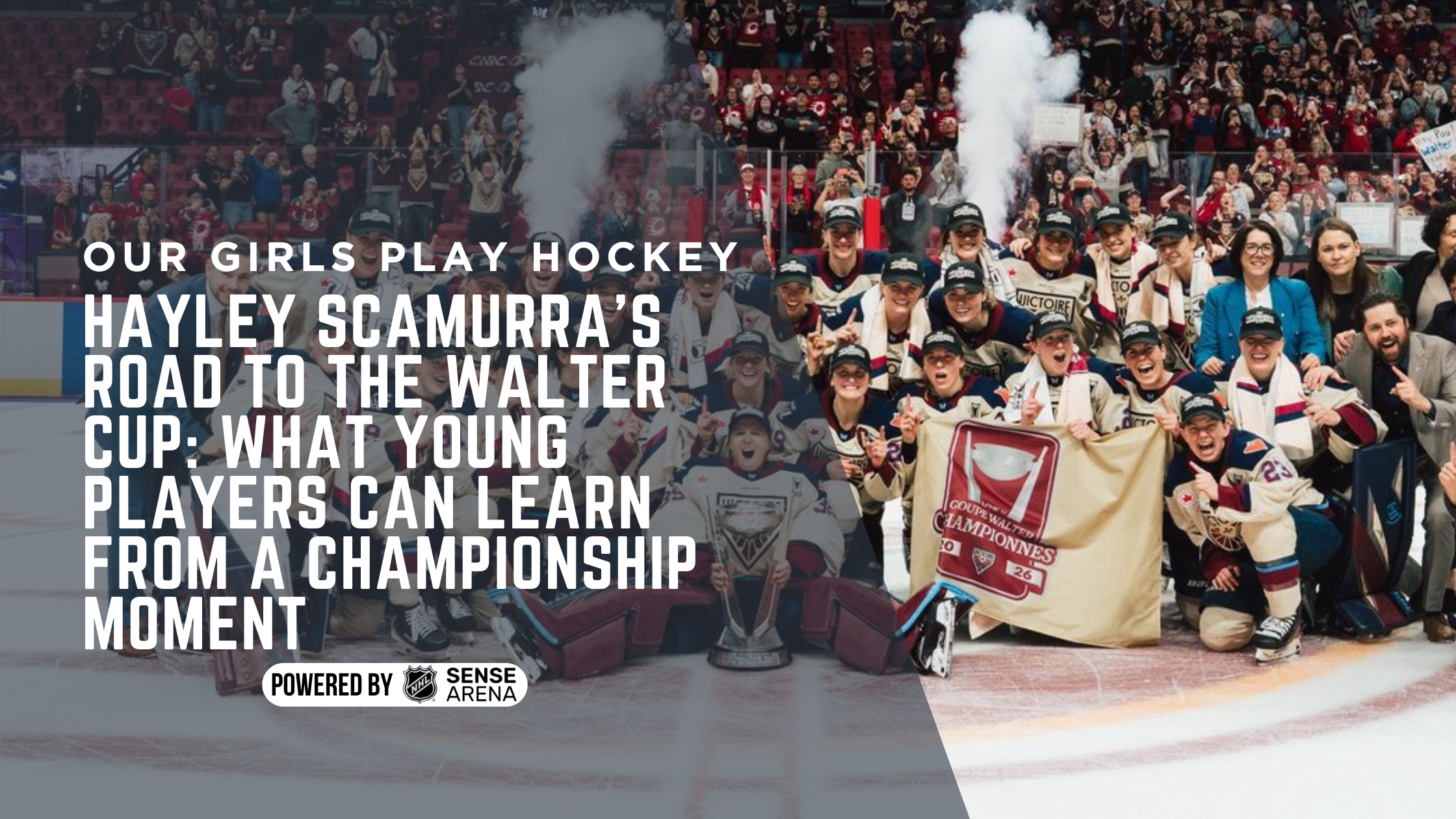
Hayley Scamurra’s Road to the Walter Cup: What Young Players Can Learn From a Championship Moment
There are championship recaps, and then there are championship stories.
This episode of Our Girls Play Hockey is the second one.
In Part 2 of our Day in the Life with Hayley Scamurra, Hayley takes us behind the scenes of Montreal’s unforgettable Walter Cup Final against Ottawa. Not just the goals. Not just the final score. Not just the celebration.
She takes us inside the emotional reality of trying to win a championship.
What happens when your team is seconds away from losing Game 1? What happens when a teammate goes down in pain? What happens when you can practically feel the trophy within reach — and then the game slips away? What happens when the final buzzer sounds and you realize you are officially a Walter Cup champion?
For hockey families, young players, and anyone who cares about the growth of the women’s game, this conversation is packed with lessons about pressure, confidence, resilience, and what it really means to be a teammate.
Championships Are Built in Razor-Thin Moments
One of the biggest themes from Hayley’s breakdown is just how close every moment was.
The Walter Cup Final was not a series where one team simply rolled through the other. It was tight. It was emotional. It was physical. It came down to inches, seconds, rebounds, and decisions.
Game 1 looked like it was slipping away from Montreal. Ottawa had the lead late in the third period, time was winding down, and Laura Stacey had been injured in a moment that clearly shook everyone watching.
But inside the team, Hayley said there was no panic.
There was concern, yes. There was urgency. But there was also belief.
Montreal found a way to tie the game with just seconds left, then won it in overtime after Stacey returned to the ice and helped create the game-winning goal. It was the kind of moment that can change a series — not because it guarantees anything, but because it confirms something a team already believes.
They could find a way.
For young players, that lesson matters. Games are rarely perfect. Championship teams are not teams that avoid adversity. They are teams that respond when adversity arrives.
Confidence Is Not the Same as Comfort
Hayley’s Game 3 goal was one of the most powerful teaching moments in the episode.
She described carrying the puck through the neutral zone, choosing possession instead of simply dumping it in, moving it to Maureen Murphy, driving the net, and then finishing when the puck came back to her in the perfect spot.
That play mattered because it was not random.
Earlier in the season, Hayley had talked about becoming more comfortable making plays with the puck instead of automatically giving it away. In the Walter Cup Final, under championship pressure, that growth showed up.
That is a huge message for young players.
Confidence does not mean a player never feels pressure. Confidence means trusting the work when the pressure is there.
Hayley did not overcomplicate the moment. She read the play, made a decision, drove to the right area, and was ready when the opportunity came. That is what coaches mean when they talk about “details.” Not every detail looks dramatic, but in the biggest moments, details often decide games.
For young players, especially girls learning to trust their instincts, this is a reminder:
- Keep developing your puck confidence.
- Learn when to possess and when to move it.
- Drive the net.
- Stay available after you make a pass.
- Believe that your preparation belongs in big moments.
Learning From Losing When the Trophy Is Right There
Game 3 may have been the hardest emotional moment of the series for Montreal.
Hayley scored. Montreal led. The Walter Cup was within reach. Then Ottawa tied the game and scored again late to force Game 4.
That kind of loss hurts differently.
Hayley described it as a moment where the team could feel how close they were. And that is what made it so difficult. They were not just losing a game. They were losing a chance to end the series.
But she also explained that the loss became a learning experience.
Montreal realized they may have started gripping their sticks a little too tightly. They may have played a little too cautiously after taking the lead. They had to take that lesson into Game 4 and stay aggressive instead of protecting the moment.
That is an important lesson for players at every level.
Sometimes playing “not to lose” feels safe, but it can pull a team away from what made it successful in the first place. Winning teams keep playing. They stay on their toes. They continue to trust their identity.
The best part? Montreal did exactly that in Game 4.
Game 4: Staying Locked In Until the Final Buzzer
Montreal won the final game 4–0, but Hayley’s description made it clear that the score does not tell the whole story.
Ottawa outshot Montreal. Montreal had no power plays. Ottawa had three. Ann-Renée Desbiens had to be outstanding, stopping every shot she faced.
But Montreal was efficient, committed, and locked in.
Once Montreal built the lead, the team did not mentally drift toward celebration. Instead, the focus shifted. Hayley talked about wanting to preserve the shutout for Desbiens. Players kept blocking shots. They kept defending. They kept sacrificing.
That is what championship habits look like.
When the game was nearly won, Montreal still found a reason to stay elite. The goal was no longer just “win the Walter Cup.” It became “finish this the right way.”
For young players, that mindset is everything. The scoreboard does not excuse you from doing the right things. The final minutes matter. Your goalie matters. Your teammates matter. Your habits matter.
Championship teams do not stop being championship teams because they are ahead.
The Power of Joy, Humor, and Staying Loose
One of the best moments in the episode came from a simple phrase: “Today is today.”
During Game 4, with emotions running high, Montreal needed to settle down. The coaching staff was trying to find a way to calm the bench. Hayley shared that teammate Lena Youngblut had accidentally said “today is today” instead of “today is the day” during a team moment — and it made everyone laugh.
That little inside joke helped the team breathe.
It is easy to think championship environments are only intense, serious, and locked in. And yes, they are intense. But great teams also know how to release pressure. They know how to laugh together. They know how to reset.
For young players, this matters. Being focused does not mean being tense. Being competitive does not mean being joyless. Sometimes the thing that helps a team perform is a moment that reminds everyone they are still playing a game they love.
What It Felt Like to Lift the Walter Cup
When the final buzzer hit, Hayley became a Walter Cup champion.
She talked about the extra meaning behind lifting the trophy after a full season of adversity. Montreal had players in and out of the lineup all year. Reserve players contributed. Everyone on the roster had a role in getting the team to that moment.
That is the beauty of team championships.
The trophy is lifted by individuals, but it is won by everyone.
Hayley also reflected on watching Marie-Philip Poulin lift the Walter Cup after everything she had battled through. For Hayley and her teammates, it was not just about seeing a captain lift a trophy. It was about seeing someone who had poured everything into the team finally get the one major championship she had been chasing.
Those are the moments that make sports bigger than the score.
A Historic Year for Hayley Scamurra
Hayley also accomplished something truly special: winning both a gold medal and the Walter Cup in the same year.
That is an extraordinary achievement, but what stood out most in the conversation was how Hayley talked about what it meant personally. She said the year helped her understand the value she brings to teams. She had focused on embracing her role, trusting her game, and recognizing how she contributes to winning.
That is a message every young player should hear.
Not every player contributes in the same way. Not every player’s value shows up only in goals and assists. Winning teams need players who understand who they are, what they bring, and how to do it consistently.
Hayley’s year is a powerful example of what can happen when talent, mindset, preparation, and self-belief come together.
The Bigger Picture: Women’s Hockey Is Being Celebrated
One of the most meaningful parts of this episode is what happened after the championship.
Hayley described Montreal embracing the team — sports bars, city hall visits, Canadiens fans chanting for the Victoire, team celebrations, and a parade.
That matters.
Not long ago, women’s hockey champions often did not receive this kind of public celebration. The fact that Montreal showed up for this team is a sign of where the game is going. The PWHL is not just giving elite women a place to play. It is giving fans, families, and young girls a chance to see women’s hockey treated with the stage, respect, and excitement it deserves.
For every young girl watching, that visibility matters.
They are not just seeing a championship. They are seeing possibility.
What Young Players Should Take From This Episode
Hayley’s Walter Cup story is full of lessons that apply far beyond professional hockey.
1. Stay calm when the moment gets big.
Montreal did not panic in Game 1. They found a way.
2. Trust the skills you have been building.
Hayley’s Game 3 goal came from confidence, timing, and decision-making.
3. Learn from painful losses.
Game 3 hurt, but Montreal used it to play better in Game 4.
4. Keep playing the right way, even when you are ahead.
The team protected the shutout and finished with pride.
5. Celebrate fully.
Championship moments are rare. Take them in.
6. Know your value.
Hayley’s historic year shows what can happen when a player embraces who they are and how they help teams win.
Final Thoughts
This episode is a celebration of Hayley Scamurra, the Montreal Victoire, and the continued rise of women’s hockey.
But it is also a teaching episode.
It teaches young players that confidence grows over time. It teaches teams that pressure can be handled together. It teaches hockey families that the biggest moments are often built from small decisions, honest reflection, and deep trust.
And maybe most importantly, it reminds every young girl listening that these dreams are real.
The Walter Cup is real. The stage is real. The celebration is real. And the next generation is watching.
From everyone at Our Girls Play Hockey, congratulations to Hayley Scamurra and Montreal on an unforgettable championship run. Keep learning, keep believing, and keep playing the game with joy.

What Really Makes a Great Young Goalie? Lessons from Andrew Raycroft