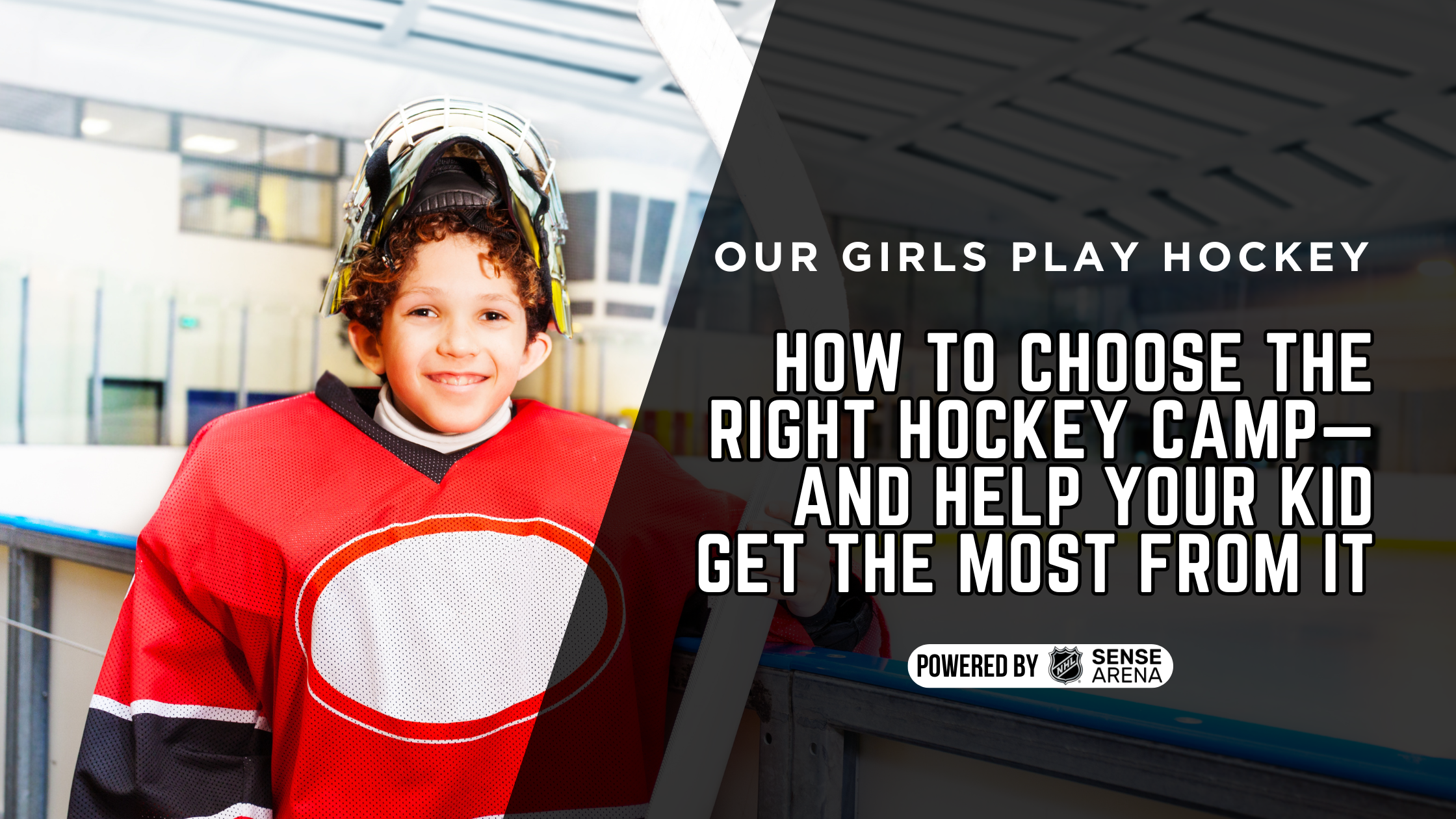
How to Choose the Right Hockey Camp—and Help Your Kid Get the Most From It
Hockey camps have become a familiar part of the youth hockey calendar.
There are summer day camps, skating clinics, shooting camps, goalie camps, position-specific programs, development camps, identification camps, and elite training experiences. Some last a few hours. Others last several days. Some are designed to be fun and social, while others promise focused instruction and serious development.
With so many options—and registration fees that can vary dramatically—families are left with an important question:
What makes a hockey camp worth attending?
In this episode of Our Girls Play Hockey, Olympic gold medalist and PWHL champion Hayley Scamurra joins Lee Elias to explore what separates a thoughtful, valuable camp from one that simply adds more ice time to a player’s summer.
Their conversation offers an important reminder for girls hockey players and their families: the goal of camp should not be to create a completely different player in a matter of days. The goal should be to provide knowledge, tools, relationships, and experiences that support continued growth.
Start by Understanding What Your Player Needs
There is no single camp that is right for every player.
A younger athlete who wants to spend time with friends, play games, and stay active during the summer may love a full-day recreational camp. These programs often include ice sessions, off-ice activities, competitions, and opportunities to socialize.
A player preparing for a competitive season may be looking for something different. She may benefit from a smaller skating clinic, shooting session, goalie camp, or position-specific program that allows for more repetition and individual feedback.
Before registering, families should discuss the purpose of the camp together.
Ask your daughter:
- Does this camp sound exciting to you?
- Is there a particular skill you want to improve?
- Are you looking for a fun experience or focused training?
- Would you feel comfortable attending without your regular teammates?
- What would make the camp feel successful?
That conversation matters. A player who feels included in the decision is more likely to arrive motivated, engaged, and ready to learn.
A camp should not feel like something a player is being sent to simply because there is an open week on the calendar. It should have a purpose that matches her current needs.
Look Beyond the Names on the Flyer
A recognizable coach, professional player, or elite-level athlete can make a camp sound exciting. Experience and credentials certainly matter, but they do not automatically guarantee a great learning environment.
Families should also look at how the camp is structured.
One of the most important considerations is the coach-to-player ratio.
If dozens of players are placed on the ice with only one or two people providing instruction, it becomes difficult for athletes to receive meaningful feedback. Even an excellent coach cannot carefully observe every stride, shot, decision, or technical detail at the same time.
The ideal ratio may vary depending on the activity. A skating instructor demonstrating a movement may be able to manage a larger group, especially when additional coaches are present to observe and correct players. A technical station focused on puck skills or individual mechanics may require much smaller groups.
The exact number matters less than the camp’s ability to answer a simple question:
Will my daughter receive individual attention?
Great camps are intentional about this. Coaches are not merely standing around the rink. They are watching, teaching, correcting, encouraging, and adapting.
Make Sure the Price Matches the Experience
Hockey is expensive, and running a camp also carries real costs.
Ice must be rented. Coaches must be compensated. Jerseys, equipment, facilities, insurance, off-ice spaces, and other resources may be included. Families should not expect meaningful programs to be free.
However, the price should make sense when compared with what the camp is offering.
Before registering, review the full schedule.
Does the fee include:
- Multiple ice sessions?
- Individual instruction?
- Off-ice training?
- Video review?
- Mentorship or classroom discussions?
- Meals or snacks?
- Apparel or equipment?
- Guest speakers?
- Small-group coaching?
- A written development plan?
- Opportunities for questions and feedback?
A high price is not automatically a sign of a bad camp, just as a low price does not automatically represent good value. The question is whether the experience, instruction, and attention justify the investment.
Parents should feel comfortable asking how many players will attend, who will be coaching, how groups will be divided, and what athletes are expected to gain.
Thoughtful camp organizers should be willing to explain their approach.
Fun and Development Do Not Have to Compete
Hayley’s experience running the Scamurra Camp in Buffalo demonstrates that a camp can be both meaningful and enjoyable.
The event included a mentorship conversation, off-ice band training, on-ice stations, games, and a family fun skate. Hayley coached alongside her father, who had coached her throughout her own youth hockey journey.
The family skate was an especially personal addition. Players could invite a parent, sibling, or other family member onto the ice to share the experience.
That element was not designed to make anyone faster or improve a specific technical skill. It was included because hockey is also about relationships, memories, and community.
This is especially valuable in girls hockey.
Young players benefit from seeing that serious athletes can compete, train, laugh, connect with their families, and enjoy the sport at the same time. Development does not have to be built entirely around pressure.
Fun can help players stay engaged. Relationships can help them feel that they belong. A welcoming environment can give a shy player the confidence to ask a question or attempt a new skill.
The best camps understand that emotional development and athletic development are connected.
Players Should Arrive Ready to Participate
A camp can be well designed and professionally coached, but the player still has a role in determining what she gains from it.
That begins with preparation.
Players should pack their equipment in advance, know the schedule, arrive early, eat appropriately, bring water, and be mentally ready to participate.
At the professional and international levels, punctuality is treated as one of the simplest ways to demonstrate respect and responsibility. Hayley shared the familiar standard that if a player is not early, she is already late.
Young athletes do not need to behave like professionals in every moment. They are still children, and camp should be enjoyable. But arriving on time and prepared gives them a better chance to settle in, understand the instructions, and begin the day confidently.
Rushing into the rink after the first drill has started creates unnecessary stress. It can also communicate to coaches and teammates that the experience is not being taken seriously.
Preparation is a skill, and camps are an excellent place to practice it.
Coachability May Be the Most Important Camp Skill
Players attend camp to be coached.
That sounds obvious, but receiving instruction is not always easy. Feedback can feel uncomfortable, especially when a player is already unsure of herself or is surrounded by athletes she does not know.
A correction does not mean a player is failing. It means a coach sees an opportunity to help her improve.
Coachability includes:
- Listening without immediately becoming defensive
- Trying the adjustment before deciding it will not work
- Asking questions when instructions are unclear
- Accepting constructive criticism
- Showing respect for the coach’s time
- Continuing to work even when a skill is difficult
Players who repeatedly respond with “I know” may unintentionally close themselves off from valuable information.
Knowing that a skill exists is different from consistently performing it. Understanding a concept is different from applying it under pressure.
Coachable players remain curious. They understand that every coach may describe a skill in a slightly different way—and sometimes a new explanation is exactly what helps the idea click.
Do Not Expect a Complete Transformation in One Week
A hockey camp cannot completely rebuild a player in a few days.
A skater will not suddenly master every edge. A shooter will not add dramatic speed to every release. A goalie will not perfect every movement. Long-term development requires repetition, practice, rest, feedback, and time.
That does not mean camps are ineffective.
A camp can help a player discover:
- A technical adjustment she had never considered
- A drill she can practice throughout the season
- A better way to prepare her body
- A mental strategy for managing mistakes
- A different method of reading the play
- A new source of confidence
- A clearer understanding of what she needs to improve
The most valuable result may be knowledge.
A player may leave camp understanding why a movement has been difficult or how to work on it more effectively. She may not have mastered the skill yet, but she now has a pathway forward.
That is real development.
Families should judge the experience by asking what the player learned, not only by looking for an immediate and dramatic change in performance.
Being Around Strong Players Is an Opportunity
Camps often bring together athletes from different teams, regions, age groups, and competitive levels.
That environment can be intimidating. A player may notice someone who skates faster, shoots harder, handles the puck more confidently, or appears more experienced.
The natural reaction may be to compare.
A more productive reaction is to observe.
What does that player do well? How does she prepare? What does her body position look like? How does she communicate? What questions does she ask? How does she respond after making a mistake?
Hayley explained that she has always wanted to play with great athletes because being around them elevates her own game. Strong teammates do not diminish the value of another player’s strengths. They create opportunities for everyone to learn.
Girls should be encouraged to enter camp thinking, “I hope there is someone here I can learn from,” rather than, “I hope no one is better than me.”
That shift replaces fear with curiosity.
It also helps players recognize their own strengths. A player may discover that while another athlete has a harder shot, she reads the ice exceptionally well. She may be a great communicator, a reliable defender, a creative passer, or a supportive teammate.
Camp can provide a broader and healthier understanding of what it means to be a valuable hockey player.
Meeting New People Is Part of Development
Girls hockey camps also create a powerful social opportunity.
Players may arrive knowing only one teammate—or no one at all. They are asked to share locker rooms, work through drills, compete in games, and communicate with new people in a short period of time.
Those experiences build life skills.
Introducing yourself, remembering someone’s name, asking a question, joining a conversation, and learning how to work with a new group all require confidence.
These skills matter in hockey, school, future employment, and relationships.
Parents can encourage this by giving their daughters a simple challenge:
Meet one new person today.
The goal does not need to be forming an instant lifelong friendship. The goal is practicing openness and communication.
Girls hockey continues to grow, and many players eventually cross paths again through tournaments, school teams, showcases, college hockey, professional leagues, coaching, or other parts of the hockey community.
The player beside you at camp may become a future teammate, opponent, mentor, coach, or friend.
Help Players Reflect on What They Learned
One of the best ways to extend the value of camp is through reflection.
At the end of each day, ask specific questions:
- What was one thing you learned?
- What was the most difficult drill?
- What correction helped you?
- Did you meet someone new?
- What do you want to try again tomorrow?
- What surprised you?
- What skill do you want to continue practicing?
Avoid turning the ride home into an interrogation or performance evaluation. The purpose is not to critique every moment. It is to help the player process the experience.
Some athletes may also benefit from keeping a hockey notebook.
They can write down three quick observations after each session. These notes do not need to be detailed. A few sentences about a drill, a technical cue, or a lesson from a coach may help the player remember and apply the information later.
Reflection turns a temporary experience into a longer-term development tool.
The Best Camps Build More Than Hockey Players
A meaningful hockey camp should help players improve their game. But its impact can extend much further.
Players can learn how to:
- Receive constructive criticism
- Manage frustration
- Prepare responsibly
- Communicate with unfamiliar teammates
- Show respect for coaches
- Ask for help
- Try something uncomfortable
- Recognize their strengths
- Learn from people who are more experienced
- Respond to mistakes with curiosity
These lessons are valuable whether a girl becomes an Olympian, plays college hockey, competes recreationally, coaches in the future, or eventually follows a completely different path.
Hockey provides the environment, but the growth belongs to the person.
Choose Curiosity Over Perfection
Families do not need to find a perfect camp.
They need to find an experience that is appropriate for their player, thoughtfully organized, reasonably priced, well coached, and aligned with what she hopes to gain.
Players do not need to arrive as the most talented athlete in the group.
They need to arrive ready to listen, work, meet people, ask questions, and learn.
The most successful camp experience may not produce an immediate highlight-reel moment. It may give a player one correction she remembers all season, one new friend who makes her feel welcome, or one experience that reminds her why she loves being on the ice.
Encourage your daughter to enter her next camp with an open mind and leave with more knowledge than she had when she arrived.
That is progress. That is development. And that is an experience worth investing in.
🎧 Listen to the full episode of Our Girls Play Hockey for more advice from Hayley Scamurra and Lee Elias, and share the conversation with another hockey family navigating summer camps and player development.
Keep asking questions, supporting one another, and helping every girl find her confidence and place in the game.

Prepare, Believe, Reset: Steve Briere’s Lessons for Young Hockey Players