How to Coach a Youth Hockey Bench Without Overcoaching the Game
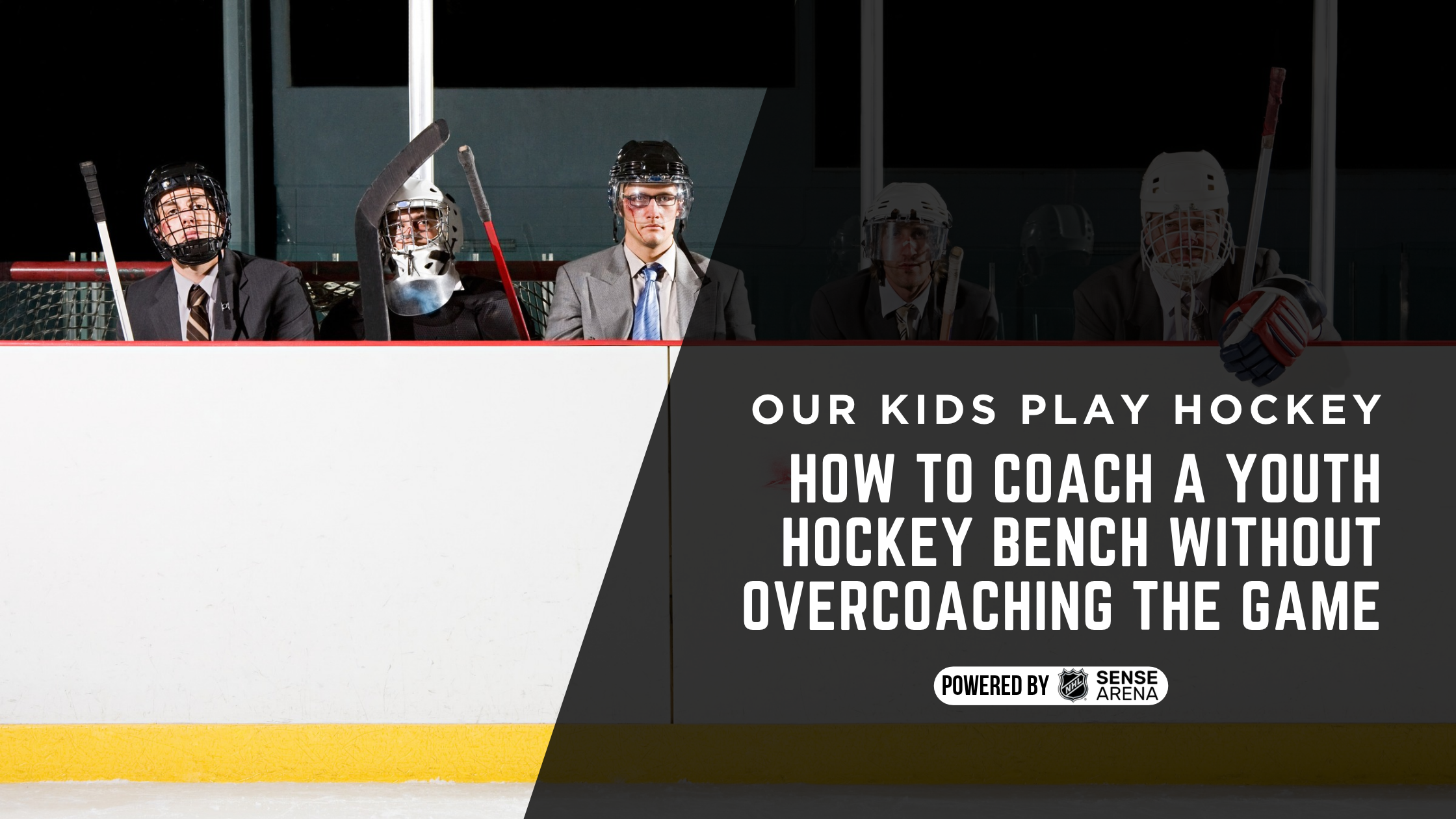
Walk into almost any youth hockey rink and you’ll eventually hear it.
“MOVE IT!”
“PASS!”
“SKATE!”
“BACK DOOR!”
“GET IT OUT!”
Sometimes the coach is practically providing live play-by-play while the players are trying to make decisions at full speed.
The intention is usually good.
The coach wants to help.
But there is an important question every youth hockey coach should ask:
Am I actually coaching right now—or am I just telling players what to do?
In this episode of Our Kids Play Hockey, Lee Elias and Mike Bonelli look at how their own bench coaching has changed after decades in the game.
Both admit the younger versions of themselves were more vocal. They yelled more instructions. They believed more communication during the game automatically meant more coaching.
Experience taught them something different.
The best bench coaching often involves saying less.
Players Need to Play the Game
Hockey moves incredibly fast.
A player carrying the puck is already processing:
-
Teammates
-
Opponents
-
Open ice
-
Pressure
-
The puck
-
The net
-
Contact
-
Time
-
Space
Now add a coach screaming another instruction from 30 feet away.
At younger ages especially, that may not help.
The player may actually stop, look toward the bench, and attempt to figure out what the coach is saying.
By then, the play is gone.
There are certainly situations where a coach can provide useful information.
A player might not see pressure coming from behind. There may be obvious open ice on the far side. A quick communication cue may help.
But those moments are different from trying to make every decision for the player.
Young athletes need opportunities to see the game, make choices, get some of those choices wrong, and learn.
Otherwise, coaches may accidentally create players who constantly look toward the bench for answers.
Teaching and Game Management Are Not the Same Thing
One of the strongest points from the episode is that coaches need to distinguish teaching from managing.
Practice is where you can stop.
Explain.
Demonstrate.
Repeat.
Correct.
Try again.
During a game, you rarely have that luxury.
The bench should therefore be less about installing brand-new hockey concepts and more about helping players apply things they already know.
A quick question can be much more useful than a lecture:
“Remember that drill we did Tuesday?”
“Yes.”
“What were we trying to accomplish?”
“Move the puck quickly.”
“Perfect. Let’s see it this shift.”
That is vastly different from attempting to install an entire breakout system while the game is already happening.
Give Players a Few Clear Priorities
Coaches notice everything.
A missed pass.
A poor angle.
A bad line change.
A turnover.
A defensive mistake.
A shot opportunity.
A positioning problem.
The temptation is to correct all of it.
Don’t.
Lee explains that he typically enters games with approximately three specific things he wants his team working on.
Those become the focus.
Unless something truly unusual happens that requires an immediate adjustment, he keeps coming back to those same priorities.
That requires patience.
And patience is one of the most important qualities in development.
Youth players are not supposed to understand every aspect of hockey immediately.
They are learning.
Know What Players Should Be Learning at Their Age
Good youth coaching requires understanding developmental benchmarks.
A 10U team should not necessarily be judged by the same tactical expectations as a high school, college, national, or professional team.
At younger ages, fundamentals matter enormously.
Can players skate effectively?
Can they handle the puck while moving?
Can they pass?
Can they receive passes?
Can they maintain possession?
Can they make decisions?
A sophisticated system does little good if the players lack the foundational skills required to execute it.
This is one reason coaches must resist the pressure to make every youth hockey game look like professional hockey.
You are not simply coaching the game in front of you.
You are building the player who will exist years from now.
Use Simple Language
One of the funniest—and most practical—examples from the episode involves code words.
Lee's team uses words including:
Donuts: move your feet and skate harder.
Butter: spread out.
Go hunting: aggressively pressure the puck.
To someone sitting in the stands, hearing a hockey bench yell “Donuts! Butter! Go hunting!” might sound ridiculous.
To the team, it makes perfect sense.
That is the point.
One word can represent an entire concept the team has already practiced.
Instead of giving a 10-second explanation during a five-second decision window, the coach communicates the reminder instantly.
Simple language works.
Make Sure Everyone Uses the Same Language
A phrase that seems obvious to one coach may mean something completely different to another.
Take “strong side.”
One coach may assume every player knows exactly what that means.
A player might have been taught another definition—or may never have heard the phrase at all.
Now imagine shouting that terminology across the rink.
The player cannot hear clearly.
The term may be unfamiliar.
There is no time to ask a follow-up question.
That is why terminology should be established in practice.
Players and coaches need shared language.
When everyone understands the same cues, bench communication becomes faster and calmer.
Your Opponent Can Hear You Too
There is another obvious but often overlooked reason to stop screaming your strategy across the ice:
The other team is listening.
If you yell exactly where you want your players attacking, what matchup you want exploited, or where the puck should move, you may be giving away useful information.
Imagine another sport where a team openly announced every strategic decision before making it.
It would make no sense.
Hockey should not be different simply because coaches are closer to the playing surface.
The Coach’s Emotion Becomes the Team’s Emotion
A bench has an emotional temperature.
Coaches help set it.
When the head coach is frantic, screaming at officials, throwing equipment, pacing aggressively, and reacting emotionally to every mistake, players notice.
Parents notice.
The other team notices.
And emotion spreads.
This does not mean coaches should become emotionless.
Competition matters.
Coaches care.
Coaches want to win.
The goal is not removing emotion. It is managing emotion.
There is an enormous difference between intensity and instability.
Young athletes frequently look to adults for cues about how serious a situation is.
If the coach treats every turnover like a disaster, the player may eventually start treating every turnover like a disaster too.
Parents: Let the Coaches Coach
The same principle applies to parents.
Parents yelling instructions from the stands may sincerely believe they are helping.
But they do not necessarily know what has been discussed on the bench.
They may not know what the team practiced.
They may not know today's developmental goals.
They may actually give instructions that directly conflict with what the coach has asked the player to do.
Now imagine being a 10-year-old.
Coach says one thing.
Dad says something different.
Mom is yelling something else.
A teammate is calling for the puck.
An opponent is approaching.
The player has a split second to decide.
That is not support.
That is noise.
Cheer.
Encourage.
Enjoy watching your child.
Let the coaching staff handle the instructions.
A Mistake During the Game Can Become Tomorrow’s Practice Plan
One of the most effective habits discussed in the episode is remarkably simple:
Take notes.
When Lee sees a recurring issue during a game, he may note it rather than trying to solve it immediately.
Maybe puck protection needs work.
Maybe passing under pressure is breaking down.
Maybe players need to improve positioning.
Those observations become information for the next practice.
This changes the coach's mindset.
Instead of thinking:
“I need to fix this right now!”
The coach can think:
“Great. Now I know what we need to teach.”
That is development.
Games reveal problems.
Practices give coaches time to solve them.
Practice Makes Bench Coaching Easier
If you want to coach less during games, coach better during practice.
Before practice, explain what players are doing.
Tell them why they're doing it.
Ask questions.
Have them explain the purpose back to you.
Then execute the drill.
When the same concept appears in a game, the coach no longer needs an elaborate explanation.
The coach simply needs a reminder.
That connection—
game → observation → practice → repetition → game
—is one of the fundamental cycles of player development.
Manage the Bench Before You Manage the Play
Mike brings another important perspective into the conversation.
He uses a structured lineup sheet and keeps detailed track of player rotation.
That is not glamorous coaching.
It is extremely important coaching.
Youth coaches need to know:
-
Who is next
-
Who just played
-
Who missed a shift
-
Who is killing the penalty
-
Who needs to rotate back into the lineup
-
Which combinations are currently together
-
Whether everyone is receiving appropriate opportunities
Without structure, kids get lost on the bench.
A player accidentally misses a rotation.
Another player receives three straight shifts.
A penalty disrupts everything.
Suddenly nobody remembers who should be going next.
Organization prevents those problems.
At many youth levels, the head coach's most important in-game responsibility may not be identifying the perfect tactical decision.
It may simply be managing the bench effectively and fairly.
Development Changes With Age
Good strategy is age-dependent.
At an elite level, coaches may match lines, shorten benches, identify opponent weaknesses, and make highly specific tactical adjustments.
At younger developmental levels, the strategy may simply be:
Everyone plays.
Everyone develops.
Everyone gets meaningful repetitions.
That does not mean coaches do not want to win.
They absolutely can.
But the definition of success must reflect the environment.
A national team and a 10U team should not be managed exactly the same way.
The mission is different.
Give Assistant Coaches Real Responsibility
Many head coaches try to do everything.
Manage lines.
Coach forwards.
Coach defense.
Watch the opponent.
Talk to officials.
Correct mistakes.
Track penalties.
Manage emotions.
Encourage players.
Adjust strategy.
That is too much.
Use assistant coaches.
Give someone responsibility for the forwards.
Give someone responsibility for defense.
Allow assistants to run drills.
Allow them to talk to players.
If the head coach needs to communicate with one group, talk with that group's coach rather than constantly overriding them.
Delegation gives the head coach something incredibly valuable:
The ability to observe.
And observation is one of the most powerful coaching tools.
Between Periods: Pick One Thing
Youth hockey coaches often imagine the intermission as a miniature NHL locker-room speech.
In reality, you may have seconds.
Players need water.
They're breathing heavily.
They're moving around.
The next period is about to begin.
This is not the moment for seven tactical corrections and a motivational speech.
Ask yourself:
If the team remembers only one thing from what I say right now, what should it be?
Say that.
Then stop.
If you have separate messages for forwards and defense, use your assistant coaches.
Communicate efficiently.
Sometimes You Need to Change What “Winning” Means
One of the most powerful responsibilities a coach has is reframing adversity.
Suppose your team is down badly entering the third period.
The scoreboard may no longer offer a realistic win.
That does not mean the game has nothing left to teach.
The new goal might become:
Win the period.
Compete until the buzzer.
Protect your teammate.
Stay disciplined.
Show character.
Finish with pride.
At higher levels, Lee describes using difficult games to evaluate how players respond when everything is going wrong.
That response matters.
Adversity reveals things that success sometimes hides.
The Same Is True When You're Winning Big
Coaches also have responsibilities when their team is dominating.
Youth players can learn empathy without learning to stop competing.
You can still skate.
Still pass.
Still defend.
Still play hard.
But you can also remind players:
“We were on the other side of this yesterday. Remember how that felt.”
Sportsmanship does not mean abandoning competition.
It means understanding that the opponents across the rink are kids too.
That is one of the life lessons youth sports can teach exceptionally well.
The Bench Should Be the Fun Part
Practice is where coaches construct the tools.
Video is where they explain the details.
Meetings are where they establish expectations.
Culture is built over months.
Then comes the game.
The game should be the opportunity to use everything that has already been developed.
As Lee puts it, practice is where coaches craft the chess pieces.
The game is where you finally get to play chess.
That is why constant in-game teaching can be counterproductive.
If the first time players hear an important concept is during the game, the preparation probably happened too late.
Coach the Players in Front of You
One of the greatest coaching skills is restraint.
You do not have to correct everything.
You do not have to control everything.
You do not have to speak every time you notice something.
Sometimes the most effective coaching decision is to watch.
Let the play happen.
Remember what you saw.
Teach it tomorrow.
Players need space to become hockey players.
That requires coaches who understand when to instruct—and when to trust.
The Final Takeaway
Mike summarized the conversation with one especially important point:
In-game bench management is probably the least effective time for detailed teaching.
Save the teaching for practice.
Save it for video.
Save it for the locker room.
Then use the bench for what it does best:
Communication.
Competition.
Organization.
Encouragement.
Adjustment.
Emotional leadership.
And helping players become the best version of themselves without trying to play the game for them.
Great youth coaching is not about having the loudest voice in the rink.
Sometimes the best thing a coach can do is prepare the players, manage the bench, give them a simple reminder—
and let them play.
Keep learning, keep evolving, and keep enjoying the opportunity to help young athletes grow. And keep listening to Our Kids Play Hockey for more conversations designed to make the youth hockey experience better for players, parents, and coaches alike.

Finding Your People, Leading with Confidence, and Handling Pressure in Hockey