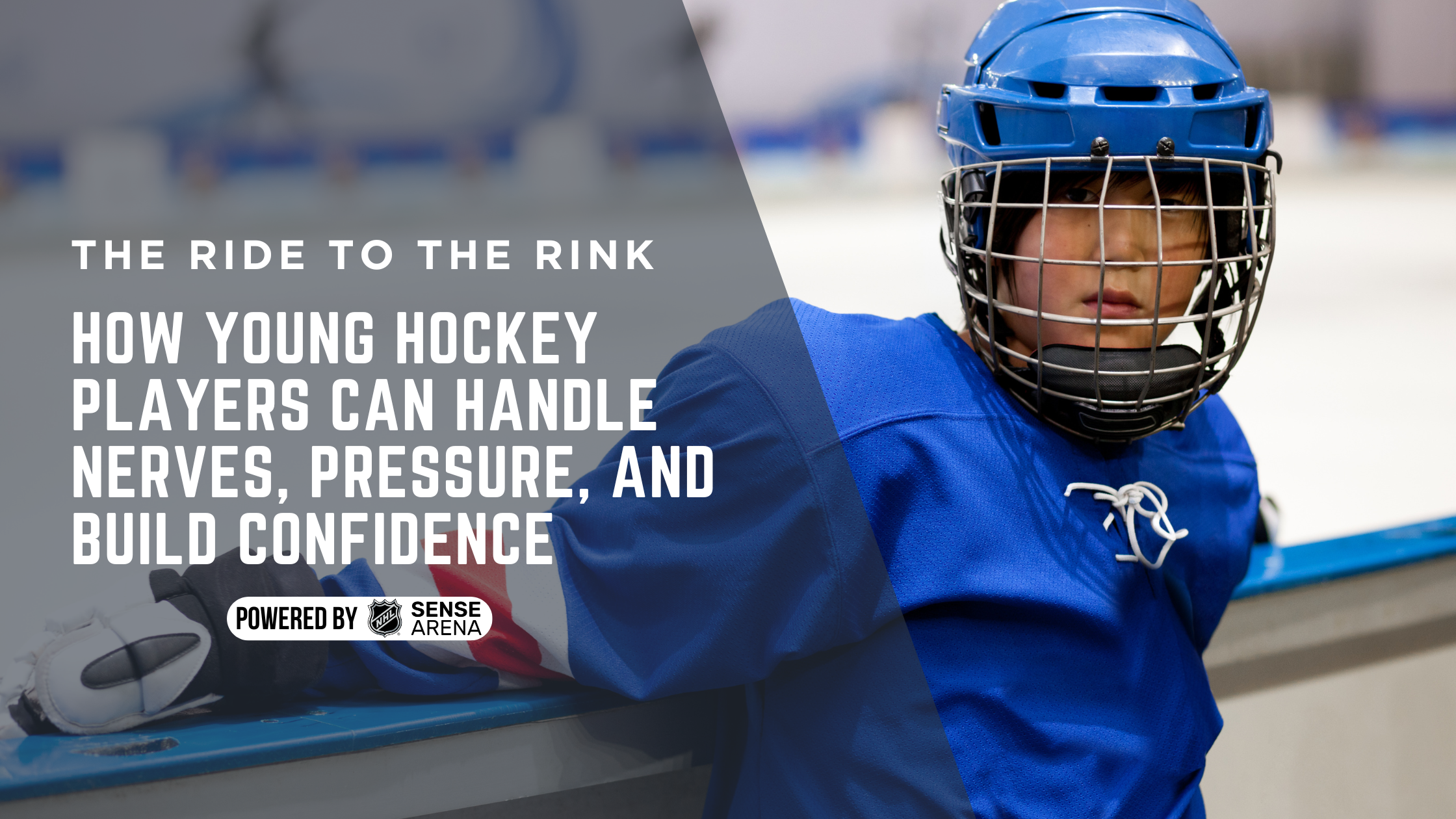
How Young Hockey Players Can Handle Nerves, Pressure, and Build Confidence
Every young hockey player will face it at some point.
That feeling in your stomach before a big game.
That voice in your head saying, What if I mess up?
That pressure to perform.
That moment where you know you love hockey, but for some reason, you just don’t feel like yourself.
On this episode of The Ride To The Rink, Lee, Mike, and Christie speak directly to young players about one of the most important parts of the game: learning how to understand your emotions and keep playing with confidence, even when you feel nervous.
Because here’s the truth every player needs to hear:
Feeling nervous does not mean you are weak. It means you care.
And once you learn how to recognize those feelings, name them, and work with them, you can start building a skill that goes far beyond hockey.
Nerves Are Normal — Even for Great Players
One of the biggest messages from this episode is simple: everybody gets nervous.
It can happen when you’re playing with new teammates.
It can happen at a new rink.
It can happen before a big game.
It can happen when you’re in a slump or not playing the way you want to play.
And it does not only happen to kids. Adults feel it too. Pro athletes feel it. Coaches feel it. Broadcasters feel it. Anyone who cares about doing something well has experienced nerves, doubt, or pressure.
That’s why Christie reminds players that their feelings are real. You don’t have to pretend you aren’t nervous. You don’t have to be embarrassed by it. You just have to learn what to do with it.
A young player who feels nervous before a game is not failing.
They’re human.
Step One: Name What You’re Feeling
Lee gives players one of the most useful tools they can carry into hockey and life:
Say what you’re feeling.
Not in front of the whole locker room. Not as a big announcement. Just to yourself.
“I’m nervous.”
“I’m angry.”
“I’m scared.”
“I’m frustrated.”
“I’m excited.”
“I’m not feeling confident today.”
That small act matters.
When you name the feeling, you start to take control of it. When you don’t name it, the feeling can take over your body. That’s when anger turns into yelling, frustration turns into quitting, or nervousness turns into playing scared.
Naming the emotion does not magically make it disappear. But it gives you a starting point.
Instead of being controlled by the feeling, you can say, “Okay, this is what’s happening. Now what can I do?”
That is a powerful skill for any young athlete.
Your Thoughts Are Not the Whole Story
One of the most important ideas in this episode is that players are not their thoughts.
You might have a thought that says:
“I’m going to mess up.”
“I’m not good enough.”
“I don’t belong here.”
“I can’t do this.”
But having that thought does not make it true.
Thoughts come and go. Emotions come and go. The goal is not to never feel nervous or never think something negative. The goal is to recognize it, understand it, and choose how you respond.
That’s where confidence begins.
Confidence is not the absence of nerves. Confidence is learning that you can feel nervous and still take the next stride.
Turn Nerves Into a Sign That You Care
When a player says, “I’m nervous because I don’t want to make a mistake,” that can feel negative at first.
But Lee reframes it beautifully:
That nervousness may mean you care.
You care about your team.
You care about playing well.
You care about improving.
You care about the game.
That is not a bad thing. In fact, it’s a good thing.
The challenge is learning how to take that caring energy and use it in a productive way. Instead of letting nerves become fear, players can learn to say:
“I’m nervous because this matters to me. That means I’m ready to compete.”
That mindset shift can change everything.
Use Positive Self-Talk Before You Hit the Ice
Mike talks about how, when he feels nervous before going on air or doing an interview, he reminds himself:
“I can do this.”
“I’m good at this.”
“I like doing this.”
“I’m prepared.”
That same idea applies to hockey players.
Before a game, players can use simple, realistic affirmations to help guide their mindset:
“I’m ready to work hard today.”
“I’m going to give my best effort.”
“I belong on this team.”
“I can help my teammates.”
“First shift, skate hard.”
“I am prepared.”
The key is to keep it believable and useful. You don’t need to tell yourself, “I’m going to score 47 goals today.” That’s not the point.
The point is to put strong, positive, focused thoughts into your mind before you step on the ice.
Because what you say to yourself matters.
Don’t Try to Become Someone You’re Not
Nervousness can show up in different ways.
Some players get quiet and shut down. They bury their feelings and stop communicating.
Other players go the opposite direction. They tease teammates, act tough, or try to make themselves feel bigger by making someone else feel smaller.
The episode makes an important point here: sometimes when a player is picking on others, it may be because they don’t know how to handle their own emotions.
That doesn’t make teasing okay. Locker rooms should be places where teammates build each other up. But it does help players understand that emotional control matters — not just for their own performance, but for the team around them.
You don’t need to act like someone else to handle nerves.
You need to be honest, prepared, and willing to work through what you’re feeling.
Build a Pregame Routine That Helps You Reset
Christie offers a practical tool every player can use: create a pregame ritual.
A routine gives your mind and body something familiar to return to before the game. It can help calm nerves, focus attention, and build confidence.
A pregame routine might include:
- Taking a few deep breaths
- Drinking water
- Repeating a positive phrase
- Taping your stick the same way
- Visualizing your first shift
- Saying, “First shift, skate hard”
- Thinking about one thing you want to do well
The routine doesn’t have to be complicated. It just has to help you feel grounded and ready.
Over time, that ritual becomes a signal to your brain: it’s time to play.
Try Gratitude Before the Game
Lee shares one of his own pregame tools: gratitude.
Before games, he would think about what he was thankful for:
His family.
The chance to play.
His teammates.
His opponent.
Even the referees — most of the time.
Gratitude may not sound like a competitive tool at first, but it can be. When you remember what you’re grateful for, you put yourself in a stronger mental place.
And as Lee explains, gratitude didn’t make him softer. It made him compete harder.
Why?
Because when you appreciate the people who support you and the opportunity in front of you, you want to give your best.
That’s a powerful way to approach the game.
A Note for Hockey Parents: Don’t Say “Don’t Feel That Way”
This episode also includes an important reminder for parents.
When a young player says, “I’m nervous,” it can be tempting to respond with:
“Don’t be nervous.”
“You shouldn’t feel that way.”
“There’s nothing to worry about.”
But as Lee points out, that doesn’t really help. The player does feel that way.
A better approach is to acknowledge the feeling and ask a better question:
“Why do you think you’re feeling nervous?”
“What part of today feels hard?”
“What can we focus on before you go in?”
“You’re prepared. What’s one thing you know you can do well?”
Parents don’t need to solve every emotion. Sometimes the best thing you can do is help your player name it, understand it, and move forward with support.
That kind of response teaches emotional strength.
Belief Is a Skill Bigger Than Hockey
Near the end of the episode, Lee shares a conversation he had with an NHL athlete. He asked what separates players at the highest level.
The answer was simple:
Belief.
At elite levels, everyone has skill. Everyone can skate. Everyone can shoot. Everyone has put in the work.
But the players who make it often believe they belong there. They are not just hoping. They have built a deep belief in themselves that helps carry them through pressure, nerves, and doubt.
That lesson matters for every young player.
You may not feel confident every day. You may not play your best every game. You may have moments where nerves show up.
But you can keep building belief.
One practice at a time.
One shift at a time.
One positive thought at a time.
One ride to the rink at a time.
Final Takeaway for Players
Before your next game, remember:
You can feel nervous and still be ready.
You can feel pressure and still compete.
You can make a mistake and still belong.
You can have a tough day and still keep growing.
Your emotions are real, but they don’t have to control you.
Name what you’re feeling.
Take a breath.
Use your routine.
Say something positive to yourself.
Step onto the ice with belief.
Because wherever you are on your hockey journey, we believe in you — and you should too.
🎧 Listen to this episode of The Ride To The Rink with your player before the next practice or game, and use it as a conversation starter on confidence, nerves, and building belief through hockey.

Want to Try That Hockey Move in a Game? Put in the Reps First