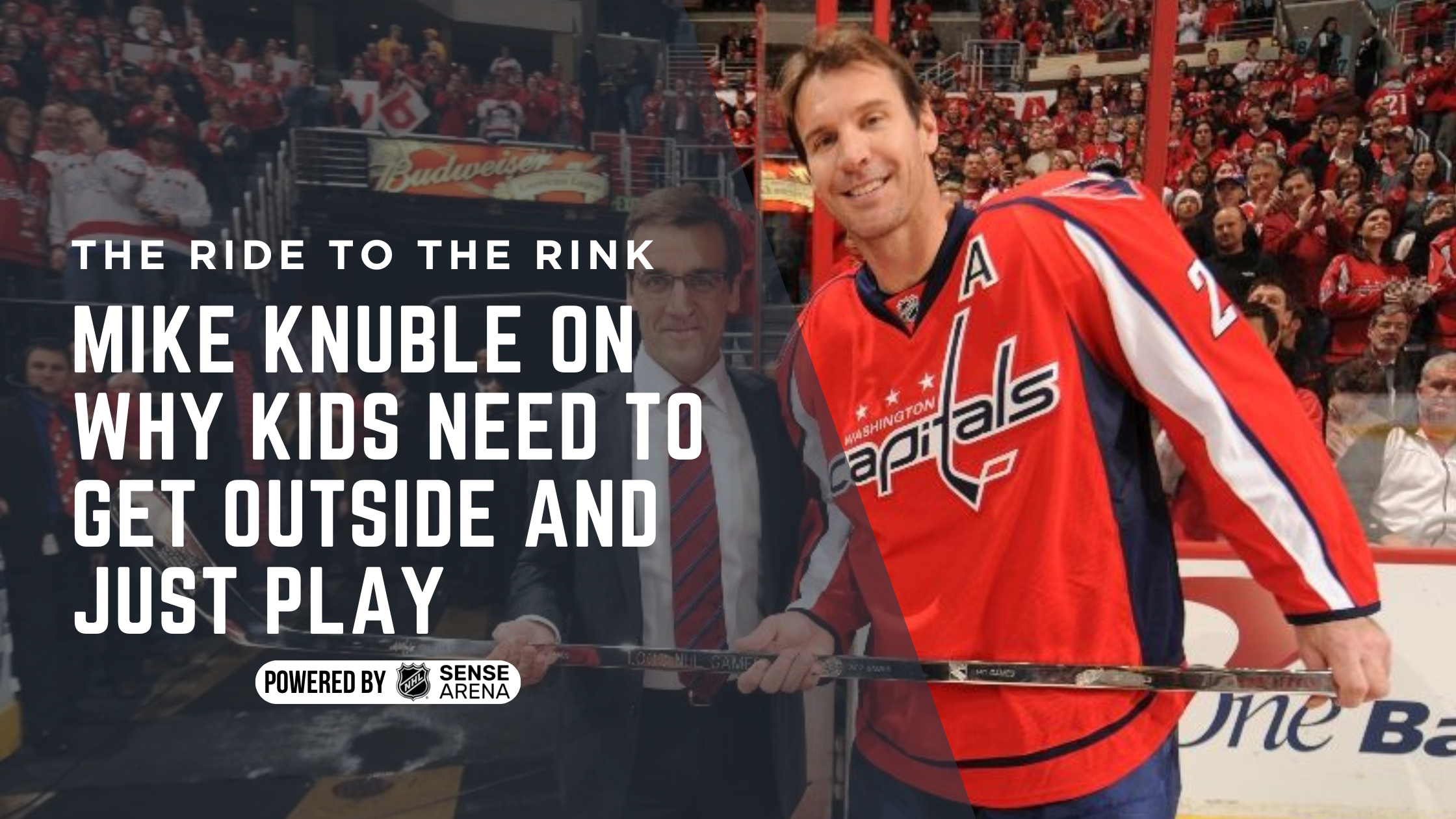
Mike Knuble on Why Kids Need to Get Outside and Just Play
🏒 Sometimes the best hockey development does not happen at the rink.
It happens in the driveway.
It happens on the street.
It happens at the park, in the backyard, on a bike, with a baseball glove, around a basketball hoop, or during a made-up game with friends.
On this episode of The Ride to the Rink, Lee Elias and Mike Bonelli are joined by longtime NHL forward Mike Knuble for a message aimed directly at young skaters and goalies:
Get outside. Be creative. Play.
That may sound simple, but in today’s world of structured practices, skills coaches, team calendars, private lessons, and training tools, it is a message worth repeating.
Not every hockey lesson needs a whistle.
Not every rep needs a coach.
Not every moment of growth needs to look like training.
Sometimes, the thing that helps you become a better hockey player is simply being an active, curious, creative kid.
Free Play Builds Something Coaches Cannot Always Teach
Coaches matter. Practices matter. Skill work matters.
But there is something special about free play.
Free play is when kids are outside figuring things out on their own. No coach is stopping the drill. No adult is telling them exactly where to stand. No one is drawing the perfect route on a whiteboard.
Instead, kids are solving problems in real time.
How do I beat this defender?
How do I get open?
How do I protect the ball or puck?
How do I make this game work with only three people?
How do I score on this goalie?
How do I adjust when the surface is bumpy, the net is homemade, or the teams are uneven?
That kind of learning is powerful.
It builds creativity. It builds confidence. It builds hockey sense. It teaches kids to compete, adapt, and think for themselves.
For young players, that matters because hockey is not a sport where everything goes exactly according to plan. The game changes constantly. Players have to read, react, adjust, and create.
Free play gives kids a place to practice that without even realizing they are practicing.
Other Sports Can Help Your Hockey Game
One of Mike Knuble’s biggest points in this episode is the idea of skill transfer.
That means skills learned in one sport can help you in another sport.
You may not think basketball, baseball, lacrosse, golf, swimming, fishing, or riding bikes have anything to do with hockey. But they can all help young athletes develop in different ways.
Basketball can help with explosiveness, jumping, body control, spacing, quick decisions, and changing direction.
Baseball can help with patience, tracking an object, hand-eye coordination, and thinking ahead.
Lacrosse has a natural connection to hockey because players are moving, passing, catching, defending, shooting, finding open space, and making plays on the run.
Golf teaches patience, focus, body control, and emotional discipline.
Swimming, biking, and outdoor games build general athleticism, coordination, endurance, and confidence.
And then there are activities like fishing, exploring, or just being outside. Those may not look like sports development, but they help kids reset, relax, and use their minds in a different way.
That matters too.
Young athletes do not need to be consumed by hockey every minute of every day. In fact, stepping away can help them come back more excited, more refreshed, and more ready to play.
Be the Kid Who Starts the Game
Mike Knuble also gives young players a challenge: be the leader who gets people outside.
It is easy to stay inside. It is easy to play video games. It is easy to wait for someone else to organize something.
But somebody has to start.
Maybe it begins with one friend. Maybe it is two kids shooting in the driveway. Maybe it is a sibling, a neighbor, or a parent. But when people see the fun happening, more kids often want to join.
That is how a small game becomes a bigger game.
One player becomes two.
Two becomes four.
Four becomes six.
Soon, there is a real game happening.
Young players do not need to wait for the perfect team, the perfect surface, or the perfect setup.
They can start with what they have.
A stick.
A ball.
A patch of pavement.
A driveway.
A wall.
A few friends.
That is enough to begin.
Parents Are Part of the Development Team
This episode is directed toward kids, but there is an important message for parents too.
When your child asks to go outside and play, that moment matters.
They may ask you to shoot pucks. They may ask for a net. They may ask to play catch. They may ask to hit balls, ride bikes, or practice something in the yard.
It is easy to be tired. It is easy to be busy. It is easy to look at your phone and say, “Give me a minute.”
But those invitations do not last forever.
Lee shares a story about his daughter asking to practice softball after a game was rained out. He was standing in the rain, not dressed for it, but he said yes. They stayed and hit balls together.
That is not just a sports memory.
That is a parent-child memory.
Mike Knuble makes the point clearly: development is not only on the kid. Parents help facilitate. If your child wants to shoot pucks and needs a net, help them figure it out. If a new net is too expensive, build something. Find a creative solution. Ask a handy friend. Use what you have.
Parents do not need to create a professional training facility in the backyard.
They just need to help create opportunity.
You Do Not Need Perfect Equipment
One of the best messages from this episode is that development is not about having the most expensive setup.
It is about being resourceful.
Today’s players have access to more training tools than ever before. That can be great. But the three adults in this conversation grew up without most of those tools — and still found ways to play.
You can shoot at a paper plate.
You can aim at a spot on the wall.
You can build a net.
You can use a tennis ball.
You can create your own game.
You can make a challenge with a sibling or friend.
Creativity is part of the training.
When kids have to invent the game, adjust the rules, or solve the problem of limited equipment, they are developing more than hockey skills.
They are developing imagination, independence, and resilience.
Those qualities help in hockey.
They help in life too.
Getting Away From Hockey Can Help You Love Hockey More
This may be one of the most important lessons in the episode.
Sometimes, the best thing a young hockey player can do is get away from the rink for a little while.
That does not mean quitting. It does not mean falling behind. It does not mean losing focus.
It means staying fresh.
When kids do other things — golf, fishing, swimming, biking, playing catch, exploring outside — they give their minds and bodies a break. That break can help them return to hockey with more energy and excitement.
Burnout is real. Even kids who love hockey need room to be kids.
A young player who only trains may eventually feel tired of the game. A young player who gets space to explore, laugh, play, and miss the rink may come back with a stronger love for it.
That love matters.
It is what keeps players going through hard practices, tough games, bad shifts, and long seasons.
Final Thoughts for Young Players
Here is the big message from Mike Knuble, Lee Elias, and Mike Bonelli:
Go play.
Go outside.
Grab a friend.
Try another sport.
Shoot at a homemade target.
Play catch.
Ride your bike.
Start a game.
Be creative.
Be active.
Be a kid.
You do not need perfect conditions to get better.
You need curiosity.
You need effort.
You need imagination.
You need the courage to start.
And parents, when your child asks you to join them, build something, throw a ball, shoot pucks, or simply make space for play — take the opportunity when you can.
Because those moments help build athletes, but they also build memories.
🎧 Listen to the full episode of The Ride to the Rink for more from Mike Knuble on free play, skill transfer, family support, and why getting outside still matters.
Wherever you are in your hockey journey, we believe in you — and you should too.

What Really Makes a Great Young Goalie? Lessons from Andrew Raycroft