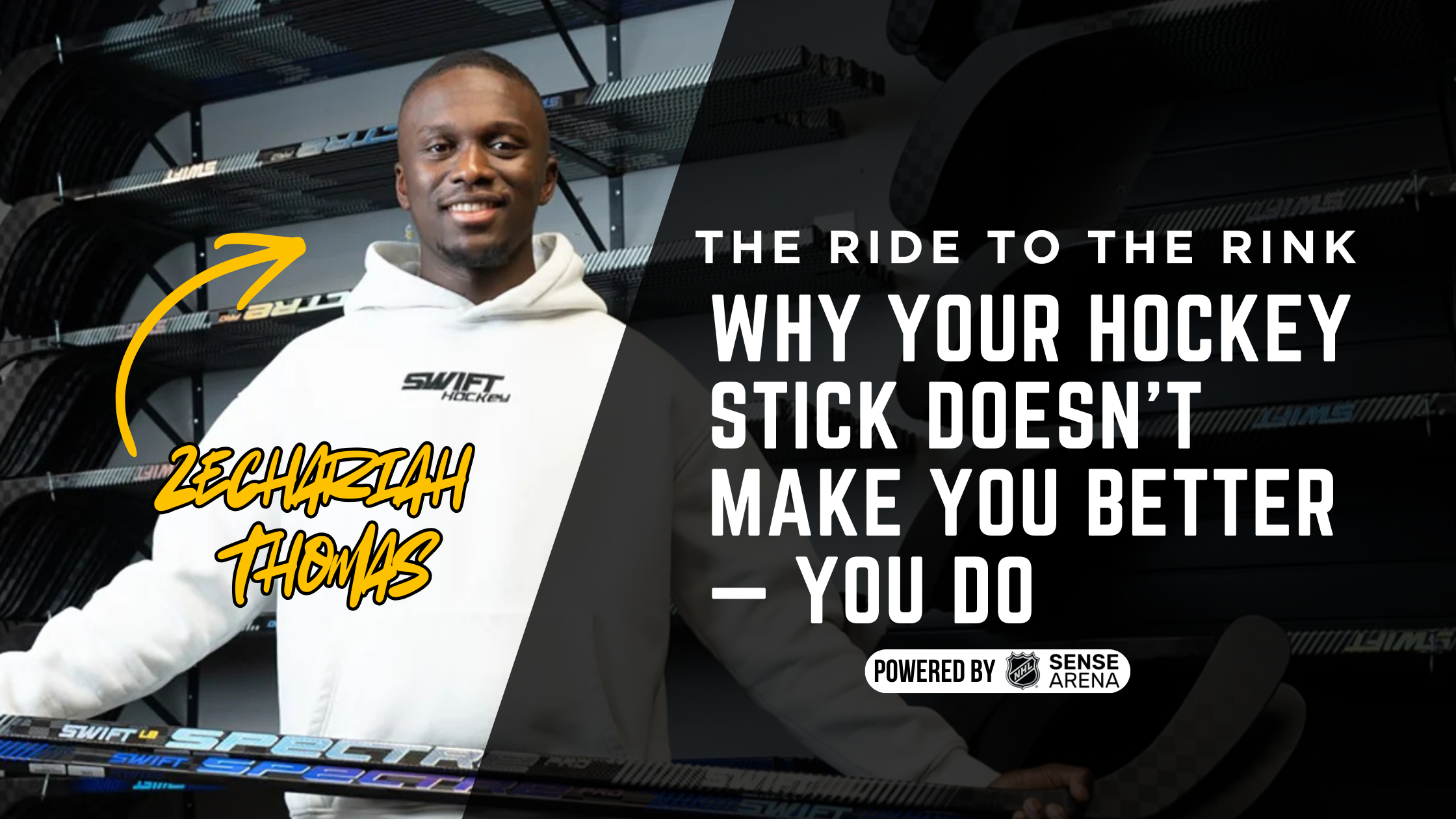
Why Your Hockey Stick Doesn’t Make You Better — You Do
Every hockey player knows the feeling.
You walk into the pro shop. You see the newest stick on the rack. It has the latest graphics, the big-name player attached to it, and the promise — spoken or unspoken — that this might be the thing that takes your game to the next level.
And sometimes, that thought feels exciting.
But on this episode of The Ride To The Rink, Lee and Zechariah Thomas, founder of Swift Hockey, deliver an important message to young players and hockey families everywhere:
The stick matters. But the player matters more.
This episode is not about saying gear is unimportant. Hockey players need equipment that fits, protects them, and allows them to play with confidence. But there is a big difference between choosing gear wisely and believing that a shiny new stick will magically turn you into a better player.
That is the lesson at the heart of this ride.
The Flashy Stick Is Not the Shortcut
Every year, hockey companies release new sticks. New colors. New graphics. New names. New promises.
And for young players, it is easy to believe that the newest stick must be the best stick.
But Lee makes the message clear: the strength, talent, timing, hockey sense, and skill that make good things happen on the ice are coming from you, not the stick.
A new stick will not take a player from 10 goals to 50 goals by itself. A different graphic will not create a better shot. A brand name will not replace practice.
What improves your game?
Repetition
Strength
Skating
Puck touches
Hockey IQ
Confidence
Commitment
Coachability
Consistent effort
That is not always as exciting as buying something new, but it is much more reliable.
The flashy thing does not make you better. You make you better.
Find What Works — Then Build With It
Zech brings a valuable perspective to this conversation because he is not only a former high-level player, he also owns a hockey stick company.
And his advice is refreshingly simple: find what works for you.
Not what looks coolest.
Not what your favorite player appears to be using.
Not what your teammate just bought.
Not what has the loudest marketing campaign.
Find the stick that feels right in your hands and helps you play your game.
That might mean paying attention to:
Flex
Curve
Height
Weight
Grip
Feel
Durability
Confidence when shooting and passing
Young players do not need to chase every new release. In fact, constantly switching sticks can sometimes make it harder to develop consistency. When you find equipment that fits your game, you can stop thinking about the gear and start focusing on the play.
That is when real development happens.
What NHL Players Can Teach Young Players About Gear
One of the most interesting points from the episode is that many elite players do not constantly change their gear just because something new comes out.
Lee and Zech point out that players at the highest levels often stick with what works. Sometimes the graphics change on the outside, but the base product, feel, or model may be much older than fans realize.
That is a powerful lesson.
The best players in the world are not always chasing the newest thing. They are chasing consistency. They know what feels right. They know what helps them perform. And once they find it, they often stay with it.
For young players, that is worth remembering.
The goal is not to look like a great player.
The goal is to build the habits, confidence, and consistency that help you become one.
Marketing Is Powerful — Be Smart About It
This episode also gives young players a peek behind the curtain of hockey marketing.
Zech reminds listeners that professional athletes are often paid to endorse products. That does not mean the products are bad. It does not mean players are doing anything wrong. But it does mean young athletes should understand that what they see in ads, videos, and graphics is not always the full story.
A pro player holding a stick does not automatically mean that is the perfect stick for every kid.
A commercial cannot know your shot.
A sponsored post cannot know your hands.
A graphic wrap cannot know your game.
That is why players and parents need to think critically. Ask better questions. Try things when possible. Pay attention to feel, fit, and function.
And most importantly, do not let marketing convince you that your current gear is the reason you are not improving.
Most of the time, the next level is not hiding inside a price tag. It is hiding inside your work ethic.
Spend More Energy Building Your Game
Lee speaks directly to young players in this episode with a message every hockey family can appreciate: when you are spending your parents’ money, think carefully.
Hockey is already expensive. Gear, ice time, tournaments, training, travel, and team costs add up quickly. That does not mean players should feel guilty for needing equipment. But it does mean they should understand the difference between a true need and a shiny want.
Before asking for the newest stick, a player might ask:
Does my current stick still work?
Is this new stick actually better for my game?
Am I choosing it because of performance or because of looks?
Would this money be better spent on training, ice time, or development?
Have I put in the work to maximize the gear I already have?
That last question matters most.
A great player can make many sticks work. A developing player should focus on becoming stronger, smarter, more skilled, and more consistent. When the player improves, the gear becomes a tool — not an excuse.
There Is More Than One Way to Make It in Hockey
The episode closes with a bigger message that goes beyond sticks and equipment.
Zech shares that hockey can stay in your life in many different ways. Not every player’s path looks the same. Not everyone reaches the NHL. Not everyone plays professionally. But that does not mean your connection to the game has to end.
There are so many ways to remain part of hockey:
Playing as long as you can
Coaching
Training players
Building equipment
Working in hockey media
Starting a hockey business
Officiating
Broadcasting
Supporting your local hockey community
Sharing the game with the next generation
That is an important message for kids to hear.
Yes, dream big. Yes, work hard. Yes, chase the highest level you can. But also understand that hockey is bigger than one roster spot, one team, or one season.
If you love the game, there is a way to stay connected to it.
The Real Lesson for Young Hockey Players
This episode of The Ride To The Rink is about gear, but it is really about ownership.
Young players need to understand that they are responsible for their own development. A stick can help. Good skates matter. Protective equipment matters. But no piece of gear can replace the daily decision to work, listen, learn, and compete.
The best investment a player can make is not always the newest product.
Sometimes the best investment is:
Taking extra shots
Working on skating
Sleeping well
Listening to coaches
Being a great teammate
Practicing with purpose
Building confidence
Believing in yourself
That is how players grow.
And when you combine smart gear choices with a strong mindset, that is when equipment becomes what it should be: a tool that supports the player, not the thing that defines them.
Final Thought
The next time you see a shiny new stick, it is okay to think it looks cool. It is okay to be excited about gear. Hockey players love their equipment, and that is part of the fun.
But remember this:
The stick does not score the goal by itself. The player does.
Choose your gear wisely. Respect what your family invests in your hockey journey. Find what works for you. Then put your energy into becoming the kind of player who can make any stick dangerous.
No matter where you are on your hockey journey, keep believing in your work, your growth, and your place in the game.
And as always, we believe in you. You should too.

Why Healthy Conflict Can Make Youth Hockey Teams Stronger